




Introduction
To embark on a journey through the top 25 artworks of Francisco José de Goya y Lucientes is to enter a world where beauty and brutality, light and shadow, hope and despair coexist with startling immediacy. It’s an encounter with the soul of Spain itself – a nation forged in centuries of faith, conquest, and profound human drama.
Born in 1746, Goya lived through an era of immense upheaval: the Enlightenment's promise, the French Revolution’s terror, Napoleon’s invasion, and the restoration of absolutist rule. His art is not merely a reflection of these events; it *is* those events – distilled into visceral images that speak to the universal human condition. Initially celebrated as a court painter, capturing the elegance and power of Spanish aristocracy, Goya underwent a radical transformation following a devastating illness in 1793 which left him deaf. This marked a turning point, unleashing an unprecedented level of artistic freedom and a willingness to confront the darkest aspects of existence.
His early works reveal a mastery of Rococo charm blended with Spanish realism, but it’s his later paintings – the Black Paintings , the Disasters of War , and his unflinching portraits – that truly captivate us. These are not simply historical records; they are profound meditations on violence, madness, and the fragility of life. Goya dared to depict the horrors of war with a rawness previously unseen, rejecting idealized representations in favor of brutal honesty.
Why do these artworks continue to resonate so powerfully today? Because they tap into something fundamental within us – our capacity for both great beauty and unspeakable cruelty. They remind us that beneath the veneer of civilization lies a primal darkness, and that even in moments of peace, suffering is never far away. They challenge us to confront uncomfortable truths about ourselves and the world we inhabit.
Prepare to be moved, disturbed, and ultimately transformed as we explore these 25 masterpieces – each one a window into the complex mind of an artist who dared to see too much, and paint it all for posterity.
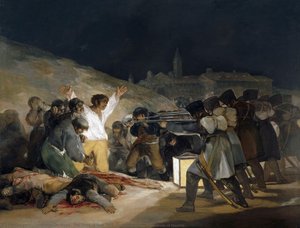
The Third of May, 1808 The Execution of the Defenders of Madrid - Francisco José de Goya y Lucientes
 The Third of May, 1808 The Execution of the Defenders of Madrid - Francisco José de Goya y Lucientes
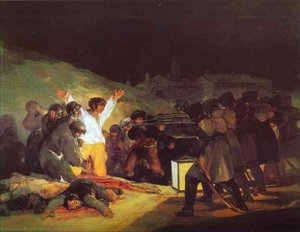
To stand before “The Third of May 1808” by Francisco Goya y Lucientes is to encounter a masterpiece that transcends its historical context, becoming a universal cry against brutality and injustice. This painting isn’t simply *about* the execution of Spanish rebels; it *is* the raw, visceral experience of terror, defiance, and loss.
What elevates this work to among the world's Top 25 is Goya’s revolutionary break from artistic convention. He abandoned idealized forms for unflinching realism, depicting the horrors of war with a starkness previously unseen. The central figure, arms outstretched in a pose echoing Christ’s crucifixion, embodies both individual suffering and collective resistance. The dramatic chiaroscuro , the intense contrast between light and shadow, amplifies the emotional impact, drawing us into the heart of the tragedy.
Goya's brushwork is loose and expressive, lending an immediacy to the scene – we feel as though we are witnessing the event unfold before our eyes. This departure from academic precision paved the way for Romanticism and influenced generations of artists seeking to convey emotion over form. Today, a reproduction of “The Third of May 1808” is more than just a striking visual statement; it’s a powerful reminder of humanity's capacity for both cruelty and courage – a legacy that resonates deeply within refined interiors and speaks to a discerning taste for art with enduring meaning.
For collectors seeking top 25 artworks of Francisco José de Goya y Lucientes , this piece represents not only artistic brilliance but also a profound historical and emotional weight. It’s an investment in a timeless narrative, a conversation starter, and a testament to the power of art to challenge and inspire.
Saturn Devouring His Son - Francisco José de Goya y Lucientes
 Saturn Devouring His Son - Francisco José de Goya y Lucientes
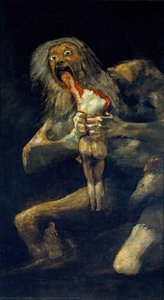
A silence hangs over “Saturn Devouring His Son” by Francisco Goya y Lucientes, a darkness so profound it seems to breathe on the canvas. This haunting masterpiece, part of his Black Paintings series, secures its place among the top 25 artworks of Francisco José de Goya y Lucientes not through beauty in the conventional sense, but through an unflinching portrayal of human despair and the relentless march of time.
Created in isolation within the walls of his Quinta del Sordo home, this work is a visceral embodiment of Goya’s personal turmoil. He abandoned the polished elegance of his earlier portraits for a raw, expressive style that foreshadowed Expressionism. The myth of Saturn – Cronus – devouring his children to prevent their overthrow becomes an allegory for Spain consumed by conflict, or perhaps the artist's own anxieties surrounding aging and mortality.
The limited palette of blacks, browns, and ochres amplifies the painting’s somber mood. Thick impasto creates a tactile surface, lending an immediacy that draws us into Saturn’s monstrous world. The distorted anatomy and dynamic composition evoke a sense of claustrophobia and terror. A reproduction of “Saturn Devouring His Son” is not merely a striking visual statement; it's a powerful meditation on the darker aspects of existence.
Within a contemporary interior, this artwork offers a compelling counterpoint to minimalist aesthetics – a reminder of the complexities beneath the surface, and a testament to the enduring power of art to confront uncomfortable truths. It’s an investment in a legacy that speaks to discerning taste and a profound appreciation for Goya's masterpieces .
La maja desnuda. . Madrid, Museo del Prado. - Francisco José de Goya y Lucientes
 La maja desnuda. . Madrid, Museo del Prado. - Francisco José de Goya y Lucientes
Before us lies a quiet revolution, a gaze that dared to meet its own – *La maja desnuda* by Francisco Goya y Lucientes. Painted around 1797–1800, this iconic work transcends mere portraiture; it’s an exploration of beauty, vulnerability, and the shifting boundaries of artistic convention, rightfully earning its place among the top 25 artworks of Francisco José de Goya y Lucientes .
Goya's masterful technique is immediately apparent in the fluid lines that trace the contours of the reclining figure. Soft, diffused lighting illuminates her form with a gentle intimacy, while a muted palette of earthy tones creates a somber yet captivating atmosphere. The painting’s historical context – commissioned by Manuel de Godoy and initially considered scandalous for its unashamed depiction of female nudity – underscores its boldness.
More than just a visual representation, *La maja desnuda* evokes emotions of tranquility and introspection. Her relaxed posture and direct gaze invite contemplation, drawing us into a private moment of connection. The dark background enhances the sense of solitude, making this artwork a profound meditation on human existence.
Today, a reproduction of *La maja desnuda* brings a touch of timeless elegance to any space. It’s a reminder that true beauty lies not just in form, but also in the courage to challenge convention and embrace vulnerability – a legacy that continues to inspire awe and admiration within Goya's masterpieces .
Witches' sabbath - Francisco José de Goya y Lucientes
 Witches' sabbath - Francisco José de Goya y Lucientes
A gathering shrouded in mystery, a vision born from darkness – *Witches' Sabbath* by Francisco Goya y Lucientes is more than just a painting; it’s an invitation into the depths of the human psyche. Created in 1821 as part of his intensely personal Black Paintings series, this work secures its place among the top 25 artworks of Francisco José de Goya y Lucientes through its unflinching exploration of fear, superstition, and societal unrest.
Goya’s technique is masterful. Dense composition, fluid lines, and dramatic chiaroscuro create a sense of unease and tension, drawing the viewer into the chaotic scene. The expressive brushstrokes and textured application of paint amplify the emotional impact, evoking a primal response to the unknown.
The symbolism within *Witches' Sabbath* is rich and open to interpretation – a central figure commanding attention, perhaps a leader or sorcerer, surrounded by figures consumed by fear and reverence. This artwork reflects Goya’s disillusionment with the Spanish Inquisition and the superstitious beliefs of his time.
Today, a reproduction of *Witches' Sabbath* adds a striking focal point to any collection. Its dark and moody atmosphere invites contemplation, sparking conversation about the complexities of human nature and the enduring power of myth. It’s a testament to Goya’s masterpieces , reminding us that even in darkness, there is beauty – and profound meaning.
Asmodea - Francisco José de Goya y Lucientes
 Asmodea - Francisco José de Goya y Lucientes
A fleeting moment of escape amidst chaos – *Asmodea* by Francisco Goya y Lucientes is a haunting vision from his Black Paintings series, a testament to the artist’s profound inner turmoil. This work, created between 1820 and 1823, earns its place among the top 25 artworks of Francisco José de Goya y Lucientes through its masterful blend of dramatic emotion and unsettling symbolism.
Two figures – a man and a woman – hover above a landscape consumed by conflict. The woman’s fearful gaze, covered by a vibrant red cloak, contrasts sharply with the turmoil below, where French soldiers clash with fleeing refugees. Goya's expressive brushwork and loose, gestural lines create a sense of urgency and movement, drawing us into this chaotic scene.
The muted color palette, dominated by earthy tones, amplifies the somber mood, while the striking red cloak serves as a focal point, symbolizing both danger and perhaps a desperate hope for refuge. The artwork’s title, derived from the demon king Asmodeus, adds another layer of intrigue.
Today, a reproduction of *Asmodea* offers more than just visual appeal; it's an invitation to contemplate the complexities of human existence. Its dark and evocative atmosphere can elevate any space, sparking conversation about resilience, hope, and the enduring power of Goya’s masterpieces .
The Naked Maja - Francisco José de Goya y Lucientes
 The Naked Maja - Francisco José de Goya y Lucientes
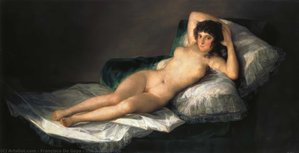
Before us lies a quiet confidence, a gaze that meets our own with unwavering serenity – *The Naked Maja* by Francisco Goya y Lucientes. Painted in 1798, this exquisite work transcends mere portraiture; it’s an exploration of female autonomy and natural beauty, rightfully earning its place among the top 25 artworks of Francisco José de Goya y Lucientes .
Goya's masterful technique is immediately apparent in the delicate attention to detail and striking realism. The subject’s relaxed pose exudes ease, inviting us into an intimate moment of connection. Her direct gaze challenges traditional notions of modesty, sparking contemplation about self-assurance and vulnerability.
The warm color palette, dominated by flesh tones and gentle pinks, creates a harmonious visual experience, while the subdued background accentuates her luminous form. This artwork reflects a period of social transformation, breaking away from mythological depictions to present an unidealized view of the human body.
Today, a reproduction of *The Naked Maja* offers more than just aesthetic appeal; it’s a celebration of individuality and quiet strength. Its timeless beauty can elevate any space, fostering a sense of serenity and inspiring admiration for Goya's masterpieces .
The Colossus - Francisco José de Goya y Lucientes
 The Colossus - Francisco José de Goya y Lucientes
A storm gathers on the canvas, a titan emerges from the shadows – *The Colossus* by Francisco Goya y Lucientes is a work of immense power and unsettling beauty. Painted in 1812 amidst Spain’s turbulent Peninsular War, this monumental masterpiece earns its place among the top 25 artworks of Francisco José de Goya y Lucientes through its raw emotional intensity and profound symbolism.
Goya's vigorous brushstrokes and rich texture evoke a sense of chaos and movement. The colossal figure, rendered with muscular detail, embodies both divine power and human vulnerability. Stark contrasts between light and dark heighten the drama, drawing us into this world of mythic grandeur.
Often interpreted as a symbol of national strength or the tumult of war itself, *The Colossus* reflects the collective spirit of resilience during a time of crisis. Its ambiguous posture – walking, standing firm, or buried – adds layers of meaning, representing the uncertainty and upheaval of the era.
Today, a reproduction of *The Colossus* brings a sense of awe-inspiring presence to any space. It’s a reminder of the enduring power of the human spirit and Goya's masterpieces , inviting contemplation and inspiring reverence within refined homes and offices.
Sharing the Old Woman - Francisco José de Goya y Lucientes
 Sharing the Old Woman - Francisco José de Goya y Lucientes
A chilling descent into despair – *Sharing the Old Woman* by Francisco Goya y Lucientes is a harrowing etching from his *Los Desastres de la Guerra*, a series that laid bare the brutal realities of human existence. This stark monochromatic work, created in 1810, earns its place among the top 25 artworks of Francisco José de Goya y Lucientes through its unflinching portrayal of mortality and grief.
Goya’s masterful technique – a combination of etching and drypoint – creates a remarkable range of tonal values and textures. Sharply defined lines convey urgency and violence, while meticulous detail simulates shading with incredible precision. The monochromatic palette amplifies the somber mood, stripping away any distraction from the core emotional impact.
The scene depicts an elderly man violently dragged to the ground by figures representing Death and Grief – a raw confrontation with fate. This isn’t simply a depiction of physical struggle; it's a visceral exploration of loss and the fragility of life during a time of intense political upheaval.
Today, a reproduction of *Sharing the Old Woman* offers more than just aesthetic appeal; it’s a powerful reminder of our shared humanity. Goya’s masterpieces , faithfully reproduced by AllPaintingsStore, allow you to bring this profound emotional resonance into your home, fostering contemplation and inspiring reverence.
Capricho 22 Pobrecitas! (Poor Little One!) - Francisco José de Goya y Lucientes
 Capricho 22 Pobrecitas! (Poor Little One!) - Francisco José de Goya y Lucientes
A haunting whisper from the shadows – *Capricho 22 Pobrecitas! (Poor Little One!)* by Francisco Goya y Lucientes is a masterclass in unsettling beauty. Created as part of his groundbreaking *Los Caprichos* series, this etching and aquatint earns its place among the top 25 artworks of Francisco José de Goya y Lucientes for its poignant exploration of vulnerability and societal critique.
Goya’s innovative use of printmaking techniques – etching and aquatint – creates a remarkable range of tonal effects, resulting in an image that is both intricate and expressive. The dramatic contrasts between light and shadow heighten the sense of unease, drawing us into this dimly lit world.
The scene depicts three young women, their expressions ranging from fear to resignation. The title’s irony – “Poor Little Ones” – underscores the artist’s commentary on innocence lost and the plight of those marginalized by society. This isn't merely a depiction of figures; it’s a visceral exploration of human suffering.
Today, a reproduction of *Capricho 22* offers more than just aesthetic appeal; it’s a powerful reminder of our shared humanity and Goya’s masterpieces . AllPaintingsStore faithfully reproduces these iconic works, allowing you to bring this profound emotional resonance into your home, fostering contemplation and inspiring dialogue.
Cardinal Luis Maria de Borbon y Vallabriga - Francisco José de Goya y Lucientes
 Cardinal Luis Maria de Borbon y Vallabriga - Francisco José de Goya y Lucientes
A gaze that holds centuries – *Cardinal Luis Maria de Borbon y Vallabriga* by Francisco Goya y Lucientes is a portrait of profound dignity and quiet strength. Painted in 1800, this monumental canvas earns its place among the top 25 artworks of Francisco José de Goya y Lucientes for its masterful balance of power, faith, and subtle psychological insight.
Goya’s exquisite use of oil paint – rich impasto and a harmonious palette dominated by deep reds and cool blues – creates a textural surface that breathes life into the Cardinal's likeness. The dramatic interplay of light and shadow intensifies his gaze, conveying a sense of inner contemplation and unwavering resolve.
More than just a depiction of ecclesiastical authority, this portrait captures a man grappling with the anxieties of a nation on the brink of upheaval. Holding both a book – symbolizing theological scholarship – and a crucifix, he embodies the duality of intellectual leadership and moral responsibility.
Today, a reproduction of *Cardinal Luis Maria de Borbon y Vallabriga* brings a sense of timeless sophistication to any space. Goya’s masterpieces , faithfully reproduced by AllPaintingsStore, allow you to experience this profound emotional resonance firsthand, fostering contemplation and inspiring reverence within your home.
Tubercio Pérez Cuervo - Francisco José de Goya y Lucientes
 Tubercio Pérez Cuervo - Francisco José de Goya y Lucientes
A quiet intimacy amidst a turbulent age – *Tubercio Pérez Cuervo* by Francisco Goya y Lucientes is more than just a portrait; it’s a profound meditation on friendship and the enduring power of human connection. Completed in 1820, this remarkable canvas earns its place among the top 25 artworks of Francisco José de Goya y Lucientes for its subtle psychological depth and masterful execution.
Goya’s skillful use of directional lighting – sculpting Pérez’s features with meticulous detail while casting deep shadows across his clothing – creates a sense of solemn contemplation. The restrained palette, dominated by muted browns and blacks, further enhances the painting's introspective mood.
This portrait transcends mere representation; it captures not just likeness but also the essence of Pérez’s character. His gaze, directed upwards, suggests confidence mingled with introspection – a testament to Goya’s ability to reveal the inner life of his subjects.
Today, a reproduction of *Tubercio Pérez Cuervo* brings a sense of timeless sophistication and quiet dignity to any space. Goya’s masterpieces , faithfully reproduced by AllPaintingsStore, allow you to experience this profound emotional resonance firsthand, fostering contemplation and inspiring connection within your home.
Mariana de Pontejos - Francisco José de Goya y Lucientes
 Mariana de Pontejos - Francisco José de Goya y Lucientes
Sunlight dappled through leaves, a quiet stroll with a beloved companion – *Mariana de Pontejos* by Francisco Goya y Lucientes is a portrait of grace tinged with an unsettling melancholy. Painted in 1786, this canvas earns its place among the top 25 artworks of Francisco José de Goya y Lucientes for its masterful blend of Rococo elegance and subtle psychological depth.
Goya’s exquisite technique – thin glazes creating luminous colors and meticulous attention to detail – captures Mariana's beauty with breathtaking realism. Yet, it is her gaze that truly captivates; a piercing stare directed towards the viewer hints at an inner turmoil beneath the outward serenity.
More than just a depiction of aristocratic life, this portrait reflects the anxieties of a changing era—the tension between reason and emotion. The lush garden setting and elegant attire are juxtaposed with Mariana’s quiet dignity, creating a sense of both beauty and vulnerability.
Today, a reproduction of *Mariana de Pontejos* brings a touch of timeless sophistication and contemplative calm to any space. Goya’s masterpieces , faithfully reproduced by AllPaintingsStore, allow you to experience this profound emotional resonance firsthand, fostering reflection and inspiring a sense of quiet prestige within your home.
Accuse the Time - Francisco José de Goya y Lucientes
 Accuse the Time - Francisco José de Goya y Lucientes
A silent scream etched in charcoal – *Accuse the Time* by Francisco Goya y Lucientes is a haunting portrait of despair, born from the tumultuous years of Spain’s Napoleonic occupation. Executed in 1812, this powerful drawing earns its place among the top 25 artworks of Francisco José de Goya y Lucientes for its unflinching portrayal of human anguish and its enduring resonance as a symbol of resistance.
Goya’s expressive realism—a departure from idealized depictions—captures a man grappling with overwhelming disillusionment. His raised hands, a gesture of both defiance and vulnerability, convey the palpable weight of societal anxieties during a time of political upheaval.
The stark monochrome palette amplifies the dramatic tension, focusing intently on the solitary figure’s emotional state. Subtle gradations of tone guide the viewer’s gaze, intensifying the feeling of isolation and despair.
Today, a reproduction of *Accuse the Time* brings a sense of quiet contemplation and historical awareness to any space. Goya’s masterpieces , faithfully reproduced by AllPaintingsStore, allow you to experience this profound emotional resonance firsthand, preserving the texture and emotion of the original within your home.
Old Women or Time - Francisco José de Goya y Lucientes
 Old Women or Time - Francisco José de Goya y Lucientes
A stillness that speaks volumes – before you stands *Old Women or Time* by Francisco Goya y Lucientes, a haunting meditation on mortality and the quiet dread of an uncertain future. Painted sometime before 1800, this work earns its place among the top 25 artworks of Francisco José de Goya y Lucientes for its unsettling beauty and profound psychological depth.
Goya’s somber palette – browns, greys, and muted blues – bathes three figures in an almost theatrical gloom. A woman with a book, another gazing into the distance, and a man attempting to sweep away shadows—their shared solitude is palpable, creating a sense of claustrophobia within this intimate tableau.
Goya’s masterful technique moves beyond rigid formality, employing loose brushwork and *sfumato* to soften forms and create texture. The faces are rendered with remarkable detail, capturing not just likeness but also an underlying weariness and sorrow.
Today, a reproduction of *Old Women or Time* brings a sense of contemplative quietude to any space. Goya’s masterpieces , faithfully reproduced by AllPaintingsStore, allow you to experience this profound emotional resonance firsthand, transforming your home into a sanctuary for reflection and introspection.
Josefa de Castilla Portugal y van Asbrock de Garcini (1775–about 1850) - Francisco José de Goya y Lucientes
 Josefa de Castilla Portugal y van Asbrock de Garcini (1775–about 1850) - Francisco José de Goya y Lucientes
Unveiled to discerning eyes – *Josefa de Castilla Portugal y van Asbrock de Garcini (1775–about 1850)* by Francisco Goya y Lucientes is a portrait that transcends mere representation, offering an intimate glimpse into domestic life and subtly echoing the grandeur of artistic masters. Painted in 1804, this work earns its place among the top 25 artworks of Francisco José de Goya y Lucientes for its bold departure from tradition and profound psychological depth.
Goya abandons idealized beauty, opting for a naturalistic approach characterized by loose brushstrokes and subtle tonal variations. The muted yet luminous palette prioritizes atmospheric perspective, creating a sense of depth and realism as Josefa rests in repose, holding a book—a symbol of contemplation.
The painting resonates with the monumental canvases of Peter Paul Rubens, particularly his depictions of women imbued with vitality. Goya’s artistic vision also echoes Rembrandt’s psychological intensity, capturing a moment of quiet introspection beneath an outwardly serene surface.
Today, a reproduction of *Josefa de Castilla Portugal y van Asbrock de Garcini* brings a sense of refined elegance and timeless beauty to any space. Goya’s masterpieces , faithfully reproduced by AllPaintingsStore, allow you to experience this profound emotional resonance firsthand, elevating your home with a legacy of artistic excellence.
Portrait of the Matador Pedro Romero - Francisco José de Goya y Lucientes
 Portrait of the Matador Pedro Romero - Francisco José de Goya y Lucientes
A portrait of courage and control – *Portrait of the Matador Pedro Romero* by Francisco Goya y Lucientes captures the essence of a legend, painted in 1795 at the height of his fame. This work earns its place among the top 25 artworks of Francisco José de Goya y Lucientes for its masterful depiction of character and subtle echoes of Velázquez’s influence.
Goya portrays Romero shortly before his retirement, capturing not just his handsome appearance but also the composure that defined his revolutionary style of bullfighting. The rich fabric of his black jacket and silver waistcoat—painted with deft brushwork wet-in-wet—contrast beautifully with the bright white of his shirt.
The artist’s study of Velázquez is apparent in the composition, yet Goya infuses the portrait with a unique psychological depth. Romero's gaze meets yours directly, conveying both confidence and an underlying sense of intensity. This isn’t merely a likeness; it’s a window into the soul of a man who faced death with skill and elegance.
Today, a reproduction of *Portrait of the Matador Pedro Romero* brings a sense of timeless strength and refined artistry to any space. Goya’s masterpieces , faithfully reproduced by AllPaintingsStore, allow you to experience this profound emotional resonance firsthand, adding a touch of historical grandeur to your home.
Singing and Dancing (Cantar y bailar) - Francisco José de Goya y Lucientes
 Singing and Dancing (Cantar y bailar) - Francisco José de Goya y Lucientes
Imagine a night alive with music—a spontaneous burst of song and dance echoing through the streets of Spain. This is the world captured in *Singing and Dancing (Cantar y bailar)* by Francisco Goya y Lucientes, painted in 1823. This work earns its place among the top 25 artworks of Francisco José de Goya y Lucientes for its raw energy and poignant depiction of human connection.
Goya’s expressive lines and monochromatic palette—varying shades of gray created through masterful hatching—convey a sense of immediacy. A woman sings, supported by a man holding a bowl, while a guitarist provides the melody. The scene is dynamic, figures overlapping in a crowded space, radiating vitality.
More than just a depiction of merriment, *Singing and Dancing* speaks to the resilience of the human spirit—a fleeting moment of joy amidst hardship. It’s a reminder that even in times of darkness, music and community can offer solace and hope.
Today, a reproduction of this powerful drawing brings a sense of warmth and authenticity to any space. Goya’s masterpieces , faithfully reproduced by AllPaintingsStore, allow you to experience this profound emotional resonance firsthand, enriching your home with a timeless celebration of life.
The Infanta Doña María Josefa - Francisco José de Goya y Lucientes
 The Infanta Doña María Josefa - Francisco José de Goya y Lucientes
A portrait that whispers stories of dignity and decline – *The Infanta Doña María Josefa* by Francisco Goya y Lucientes is a profoundly moving work that transcends mere representation. Painted during a period of immense political upheaval in Spain, this masterpiece earns its place among the top 25 artworks of Francisco José de Goya y Lucientes for its masterful depiction of psychological depth and quiet resilience.
Goya’s evolving style moves away from Rococo lightness towards Romanticism, employing dramatic chiaroscuro to draw the viewer's eye to the Infanta’s face. Her direct yet melancholic gaze conveys a sense of inner sadness, while loose brushwork and a somber black background intensify the focus on her vulnerability.
More than just a likeness, this portrait is rich with subtle symbolism—her attire lacking ostentatious display, perhaps reflecting diminished political importance. It’s a poignant meditation on aging, status, and the quiet dignity of a life lived within the confines of royalty.
Today, a reproduction of *The Infanta Doña María Josefa* brings a sense of timeless elegance and emotional resonance to any space. Goya’s masterpieces , faithfully reproduced by AllPaintingsStore, invite reflection on humanity, perception, and the enduring power of the human spirit.
Hunter lying near a spring - Francisco José de Goya y Lucientes
 Hunter lying near a spring - Francisco José de Goya y Lucientes
A moment suspended between action and repose – *Hunter Lying Near a Spring* by Francisco Goya y Lucientes captures a serene vision of humanity’s connection with the natural world. This work earns its place among the top 25 artworks of Francisco José de Goya y Lucientes for its masterful use of color, light, and composition to evoke a sense of tranquility and contemplation.
Goya’s loose brushwork and rich oil palette bring the scene to life—a hunter in a striking yellow coat resting beside a cascading waterfall. The natural elements dwarf the human figure, emphasizing the power and beauty of the landscape while subtly suggesting our place within it.
More than just a genre scene, this painting embodies the core tenets of Romanticism—prioritizing emotion, imagination, and individual experience. The hunter’s relaxed posture invites us to share in his quiet observation, fostering a deeper appreciation for the beauty and stillness of nature.
Today, a reproduction of *Hunter Lying Near a Spring* brings a sense of peaceful escape to any space. Goya’s masterpieces , faithfully reproduced by AllPaintingsStore, inspire modern interiors with their timeless elegance and evocative atmosphere.
Self-Portrait. Frontpiece to Caprichos - Francisco José de Goya y Lucientes
 Self-Portrait. Frontpiece to Caprichos - Francisco José de Goya y Lucientes
A gaze that pierces through centuries – *Self-Portrait. Frontpiece to Caprichos* by Francisco Goya y Lucientes is not merely a likeness, but an invitation into the soul of a revolutionary artist. This powerful image earns its place among the top 25 artworks of Francisco José de Goya y Lucientes for its unflinching honesty and profound psychological depth.
Created as the frontispiece to his groundbreaking series *Los Caprichos*, this self-portrait reveals a Goya grappling with societal ills and artistic ambition. His intense gaze, coupled with the dark, moody background, conveys a sense of both vulnerability and determination.
More than just an introduction to a collection of prints, it’s a statement of intent—a bold declaration of artistic freedom and social commentary. The etching's masterful use of light and shadow captures not only Goya’s physical appearance but also his inner turmoil and intellectual spirit.
Today, AllPaintingsStore allows you to experience the power of this iconic image firsthand with our faithful reproductions—preserving the emotion and texture of the original for your own collection. Bring a piece of Goya’s genius into your home and invite contemplation on the enduring themes of art, society, and the human condition.
Hannibal Crossing the Alps (Anibal Cruzando los Alpes) - Francisco José de Goya y Lucientes
 Hannibal Crossing the Alps (Anibal Cruzando los Alpes) - Francisco José de Goya y Lucientes
A testament to ambition and the sheer force of will – *Hannibal Crossing the Alps (Anibal Cruzando los Alpes)* by Francisco Goya y Lucientes captures a moment of epic scale and human endeavor. This dramatic scene earns its place among the top 25 artworks of Francisco José de Goya y Lucientes for its dynamic composition, masterful use of light and shadow, and evocative portrayal of historical grandeur.
Commissioned as a tapestry cartoon for the Royal Palace, this work depicts Hannibal’s legendary journey across the treacherous Alps with his army—a feat that symbolized both military prowess and audacious risk. Goya's interpretation is not merely a depiction of events but an exploration of human determination in the face of overwhelming odds.
The painting’s swirling composition, filled with figures and elephants struggling through the mountainous terrain, conveys a sense of chaos and movement. The dramatic lighting emphasizes the scale of the undertaking and the vulnerability of those involved. It's a powerful reminder of the human capacity for both triumph and tragedy.
Today, AllPaintingsStore allows you to bring this iconic scene into your home with our faithful reproductions—preserving the emotion and texture of Goya’s original vision. Experience the power of history and artistry firsthand, and let Hannibal's journey inspire your own explorations.
They say 'yes' and give their hand to the first comer - Francisco José de Goya y Lucientes
 They say 'yes' and give their hand to the first comer - Francisco José de Goya y Lucientes
A breath held before a decision – *They say ‘yes’ and give their hand to the first comer* by Francisco José de Goya y Lucientes captures a moment of unsettling social pressure and veiled judgment. This haunting etching, part of his groundbreaking *Los Caprichos* series, earns its place among the top 25 artworks of Francisco José de Goya y Lucientes for its masterful exploration of human folly and societal expectation.
The scene depicts a bride extending her hand to an unseen figure, surrounded by onlookers whose expressions range from polite amusement to detached indifference. Goya’s genius lies in his ability to convey layers of meaning through subtle gestures and the expressive power of line. The dense hatching and cross-hatching create a sense of unease, while the monochromatic palette heightens the dramatic effect.
More than just a satirical critique of marriage customs, this work speaks to the universal anxieties surrounding choice, conformity, and the weight of social norms. It’s a powerful reminder that even in moments of apparent celebration, there can be hidden currents of doubt and uncertainty.
Today, AllPaintingsStore allows you to experience the emotional resonance of this iconic image with our faithful reproductions—preserving the intricate details and haunting atmosphere of Goya’s original vision. Bring a touch of contemplative beauty into your home and invite reflection on the complexities of human relationships.
Judith and Holofernes - Francisco José de Goya y Lucientes
 Judith and Holofernes - Francisco José de Goya y Lucientes
A moment suspended between courage and horror – *Judith and Holofernes* by Francisco José de Goya y Lucientes is a visceral exploration of power, vulnerability, and the desperate acts born from oppression. This painting, created during a period of personal turmoil for Goya, rightfully claims its place among the top 25 artworks of Francisco José de Goya y Lucientes , transcending biblical narrative to become a timeless symbol of resistance.
The scene depicts Judith poised with her sword, severing Holofernes’s head. Goya’s masterful use of chiaroscuro—the dramatic contrast between light and shadow—heightens the tension and immediacy of the act. The loose, expressive brushstrokes convey a raw energy, capturing not just the physical struggle but also the psychological weight of Judith’s decision.
More than simply a depiction of violence, this work speaks to the enduring human capacity for defiance in the face of tyranny. It's a powerful reminder that even in moments of darkness, courage can emerge from unexpected sources. The painting’s emotional intensity and unflinching honesty continue to resonate with viewers today.
With AllPaintingsStore , you can experience the power of this iconic image firsthand—faithful reproductions preserving the emotion and texture of Goya’s original vision. Bring a touch of contemplative strength into your home, inviting reflection on the complexities of human nature and the enduring struggle for freedom.
Duro es el paso! - Francisco José de Goya y Lucientes
 Duro es el paso! - Francisco José de Goya y Lucientes
There are moments when the weight of the world feels impossibly heavy – a relentless climb against an unseen force. *Duro es el paso!* (“The Road Is Hard”) by Francisco José de Goya y Lucientes captures this feeling with haunting precision, securing its place among the top 25 artworks of Francisco José de Goya y Lucientes . Created during his exile, this etching is not merely a depiction of struggle; it’s a visceral embodiment of human endurance.
Goya masterfully uses line and shadow to convey the arduous journey. The steep slope represents the challenges we face, while the precarious ladder symbolizes hope—a fragile path toward liberation. Each figure’s strained posture speaks volumes about their desperation and determination.
More than just a historical document, this work resonates with universal themes of resilience and resistance. It reminds us that even in moments of darkness, the human spirit can endure. With AllPaintingsStore , you can experience the emotional power of this iconic image firsthand—faithful reproductions preserving the intricate details and raw energy of Goya’s original vision.
Bring a touch of contemplative strength into your home, inviting reflection on the challenges we face and the enduring power of hope.
Pretty teacher - Francisco José de Goya y Lucientes
 Pretty teacher - Francisco José de Goya y Lucientes
A fleeting moment caught between dream and reality – *Pretty Teacher* by Francisco José de Goya y Lucientes is a captivating enigma, a work that lingers long after you’ve turned away. This etching, part of his groundbreaking “Los Caprichos” series, earns its place among the top 25 artworks of Francisco José de Goya y Lucientes not for its conventional beauty, but for its unsettling power and masterful storytelling.
Goya’s dynamic composition—a woman seemingly airborne on a broomstick, guided by a cackling figure—is a whirlwind of movement. The swirling lines and dramatic contrasts create an atmosphere of both wonder and unease. Is this a scene of liberation or corruption? Goya leaves the interpretation open, inviting us to confront our own biases and anxieties.
More than just a satirical print, “Pretty Teacher” is a profound exploration of female agency and societal pressures. With AllPaintingsStore , you can experience this captivating work firsthand—faithful reproductions preserving the intricate details and haunting atmosphere of Goya’s original vision. Bring a touch of enigmatic beauty into your home, inviting contemplation and sparking conversation.
Conclusion
As we conclude our journey through the world of Francisco José de Goya y Lucientes, it’s clear that his legacy extends far beyond the canvas and etching plate. These top 25 artworks are not simply historical treasures; they are living presences—echoes of a turbulent past that continue to resonate with profound emotional power.
Goya's unflinching honesty, his masterful use of light and shadow, and his ability to capture the complexities of the human spirit have cemented his place as one of art history’s most influential figures. His paintings invite us to confront uncomfortable truths, to question societal norms, and to embrace the full spectrum of human experience.
But beyond their historical significance, these works possess a remarkable ability to transform our everyday spaces. A Goya reproduction can bring a touch of contemplative strength to your home—a reminder of resilience in times of hardship, or a spark of intellectual curiosity. They are not merely decorations; they are invitations to dialogue, moments of quiet reflection, and windows into the soul.
At AllPaintingsStore , we believe that great art should be accessible to all. We’re honored to offer faithful reproductions of Goya’s masterpieces—preserving the emotion, texture, and enduring beauty of his original vision. Explore our full collection and discover the transformative power of art for yourself.





