x


Hand-painted oil on canvas in your size and frame, made to order by our artists.





























Pick from our preset sizes that match the artwork's original proportions.

You may enter your own dimensions to fit a specific frame or space. If your selected size does not match the original image's proportions, we will either crop the artwork or extend the painting with additional hand-painted elements. A digital mockup will be sent for your approval before production begins.
Please note that the on-screen preview does not reflect the actual cropping or extension. Only the mockup will accurately show the final composition.
While custom sizes are available, we recommend selecting a dimension from the predefined list to preserve the original proportions.
Worldwide Delivery () in 3/4 weeks instead of standard 5 weeks. (16 July). No compromise on quality.


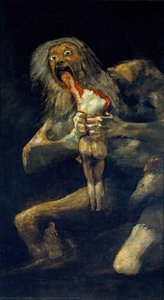
Saturn Devouring His Son
Reproduction Size
Francisco Goya's “Saturn Devouring His Son” is arguably one of the most disturbing and powerfully emotive works in Western art history. This haunting image, part of his famed Black Paintings series, transcends mere depiction to become a visceral embodiment of fear, tyranny, and the relentless passage of time.
Created between 1819 and 1823, during a period of intense personal and political turmoil for Goya, this painting was not intended for public display. It adorned the walls of his own home, “Quinta del Sordo” (House of the Deaf Man), reflecting a deeply private and troubled state of mind. Departing from the Neoclassical conventions of his earlier career, Goya embraced the burgeoning Romantic movement, prioritizing emotional intensity and subjective experience over idealized form. This work foreshadows aspects of Expressionism, marking a pivotal shift in artistic expression.
The artwork depicts the Greek myth of Cronus (Roman Saturn), who, fearing a prophecy that his children would overthrow him, devoured them upon their birth. Goya’s interpretation is far from a classical rendering; it's a brutal and terrifying scene. Beyond the literal narrative, the painting resonates with layers of symbolism. It can be interpreted as an allegory for Spain consumed by internal conflict, the destructive nature of power, or even the anxieties surrounding aging and mortality. The child represents innocence lost, hope extinguished, and the inevitable triumph of time.
Goya’s technique is characterized by loose, expressive brushwork and a dramatic use of chiaroscuro – the stark contrast between light and dark. Thick impasto creates a rough, tactile surface that heightens the sense of rawness and immediacy. The limited color palette, dominated by blacks, browns, ochres, and grays, amplifies the painting’s somber mood. Anatomical accuracy is sacrificed for emotional impact; Saturn's distorted form emphasizes his monstrous nature and uncontrollable rage. The composition, with its tightly framed figures and dynamic diagonal lines, creates a claustrophobic and unsettling atmosphere.
“Saturn Devouring His Son” is not merely a painting to be observed; it’s an experience that evokes primal fear and profound despair. Its enduring power lies in its ability to tap into universal anxieties about power, mortality, and the darkness within human nature. This work continues to captivate and disturb viewers centuries after its creation, solidifying Goya's legacy as a master of psychological insight and emotional intensity.
A reproduction of this iconic artwork adds a powerful statement to any interior space. Its dramatic presence and complex symbolism invite contemplation and conversation. Whether displayed in a study, living room, or gallery wall, it serves as a constant reminder of the enduring power of art to confront difficult truths and explore the depths of the human condition.

1746 - 1828 , Spain
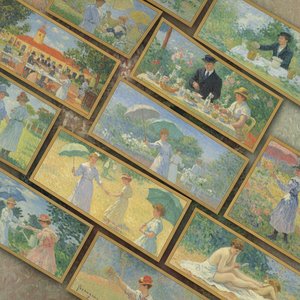
Explore 25 iconic Pierre-Auguste Renoir paintings! Discover the stories behind Impressionist masterpieces like 'Dance at Le Moulin de la Galette' & 'Luncheon of the Boating Party'. Find museum-quality art reproductions and elevate your home decor with BuyPopArt.com.
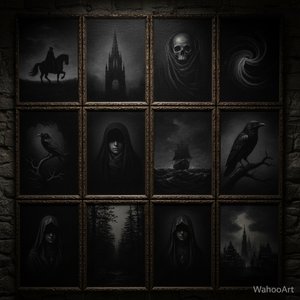
Explore 10 iconic paintings dominated by black tones, from Rembrandt’s chiaroscuro to Goya's dark expressions. Discover the stories behind these masterpieces & find museum-quality art reproductions for your home at .

Explore the life & works of Francisco Goya, Spain's Romantic master. Discover his evolution from court painter to a visionary chronicler of war and social injustice. A comprehensive guide for art enthusiasts.

Explore 10 famous snow paintings by Monet, Degas & more! Discover the stories behind these serene winter landscapes and iconic artworks. Find museum-quality art reproductions for your home at BuyPopArt.com.
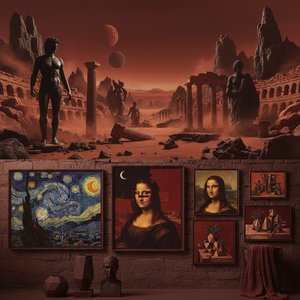
Delve into the power of 'Mars Black' with 10 iconic paintings by masters like Rembrandt & Caravaggio. Explore dramatic chiaroscuro, gothic art, and timeless beauty. Find museum-quality reproductions & elevate your home decor on .


Stay updated with the latest art news, exclusive offers, and decoration ideas.
Tell us about your project and our art experts will provide you with 3 personalized art suggestions.
Let Us Curate 3 Options Just for You - Free!


 Buy print
 Send
Send Share
Share
 Details

 Download
 Similars
 X-Ray
X-Ray Diaporama

 Read More







 Glass option is only available in size under 110 CM