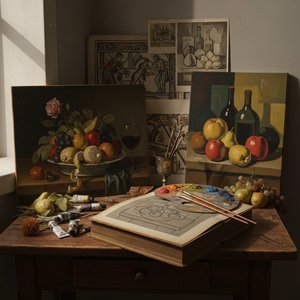
A Life Dedicated to the Intimate World of Art
Jeanne Magnin (1855-1937) was a figure whose life, though perhaps less celebrated than some of her contemporaries, embodies a profound dedication to art and an astute collector’s sensibility. Born into a family with burgeoning artistic interests in Dijon, France, Jeanne, alongside her brother Maurice, cultivated a passion that would ultimately transform their ancestral home, the Hôtel Lantin, into the Musée Magnin – a unique testament to the discerning eye of amateur connoisseurs. Unlike artists who actively sought fame through exhibition and public acclaim, Jeanne’s legacy resides in the carefully assembled collection she and her brother bequeathed to the French state in 1938.
Jeanne received formal training as a painter under Henri Harpignies, a respected landscape artist of the Barbizon school. While she produced some small paintings herself, her true calling lay not in creation but in curation. She possessed an exceptional understanding of art history, honed through self-study and frequent attendance at auctions held at the Hôtel Drouot in Paris. This knowledge, combined with a keen eye for quality and a willingness to champion lesser-known masters, defined her approach to building the collection that would become her lasting contribution.
The Hôtel Lantin: A Cabinet of Curiosities
The Magnins’ collecting philosophy was remarkably unconventional for their time. Rather than chasing established names or adhering to prevailing trends, they sought out works that resonated with their personal taste and filled gaps in the broader narrative of art history. They deliberately avoided acquiring pieces solely based on reputation, instead prioritizing artistic merit and historical significance. This resulted in a diverse collection encompassing French paintings from the 16th to the 19th centuries, alongside significant holdings of Northern Italian, Flemish, Dutch, and British works.
The Hôtel Lantin itself played a crucial role in shaping the character of the museum. The Magnins resisted altering the townhouse’s historic ambiance, choosing instead to display their collection within the context of their family home. This created an intimate atmosphere—a “cabinet of curiosities” as it was often described—where paintings mingled with furniture, sculptures, and objets d'art, offering visitors a glimpse into the lives of passionate art lovers. The decision to preserve this domestic setting was explicitly stipulated in their will, ensuring that the museum would remain a testament to their personal vision.
A Focus on Forgotten Masters
Jeanne Magnin’s influence is most evident in the collection's emphasis on artists who were often overlooked by mainstream art institutions. She and her brother actively sought out works by painters like Crespi, known as Cerano, Dorigny, van Bijlert, and van der Helst—artists whose contributions had been largely overshadowed by more celebrated figures. This commitment to rediscovering forgotten masters broadened the scope of art historical understanding and challenged conventional notions of artistic value.
The collection also reveals a particular fascination with specific schools and movements. The Magnins amassed an exceptional group of 17th-century French paintings, highlighting the Parisian Atticism of artists like Laurent de La Hyre, Eustache Le Sueur, and Sébastien Bourdon. They were equally drawn to Italian art, particularly Venetian works from the 16th and 18th centuries, as well as Lombardian and Neapolitan schools. This eclectic mix reflects their broad intellectual curiosity and willingness to explore diverse artistic traditions.
Legacy and Historical Significance
While Jeanne Magnin may not have achieved widespread recognition as a painter in her own right, her legacy as a collector and art historian is undeniable. The Musée Magnin stands as a unique institution—a testament to the power of personal vision and the importance of preserving artistic diversity. Her dedication to championing lesser-known masters broadened the scope of art historical understanding and challenged conventional notions of artistic value.
The museum’s continued existence, faithfully adhering to the Magnins' original stipulations, ensures that their collection remains a source of inspiration for scholars, artists, and art enthusiasts alike. It is a place where visitors can experience the intimate world of two passionate collectors—a world defined by curiosity, discernment, and a deep appreciation for the enduring power of art.