Acrylic On CanvasWallArtNeo-Expressionism
 1989
1989 200.0 x 240.0 cm
 MoMA
MoMAImpresiones giclée o en lienzo de calidad de museo con producción rápida y opciones de acabado flexibles. ( Comprar pintura hecha a mano Comprar imagen)





























Elija entre nuestros tamaños predefinidos que respetan las proporciones originales de la obra.

Puede introducir sus propias dimensiones para adaptarse a un marco o espacio específico. Si el tamaño seleccionado no coincide con las proporciones de la imagen original, recortaremos la obra de arte o extenderemos la imagen con un borde con efecto espejo o de color sólido. Se enviará una maqueta digital para su aprobación antes de que comience la producción.
Tenga en cuenta que la vista previa en pantalla no refleja el recorte o la extensión real. Solo la maqueta mostrará con precisión la composición final.
Aunque existen tamaños personalizados, recomendamos seleccionar una dimensión de la lista predefinida para preservar las proporciones originales.
Envío a todo el mundo () en 2 semanas en lugar de las 4/5 semanas estándar. (13 agosto)


Untitled
Tamaño de la reproducción
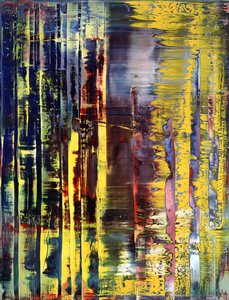
Albert Oehlen's "Untitled," painted in 1989, isn’t merely a depiction of color; it’s an immersive exploration of the act of painting itself. This large-scale work, measuring a substantial 200 x 240 cm, immediately draws the viewer into a vibrant, almost chaotic field of pinks, yellows, and blues. Yet, beneath this initial impression of unrestrained exuberance lies a meticulously considered process – a testament to Oehlen’s radical approach to abstraction and his deliberate rejection of traditional artistic conventions.
The painting's style defies easy categorization. It leans heavily into the gestural qualities of Abstract Expressionism, particularly the work of Pollock, but with a crucial difference: Oehlen doesn’t aim for spontaneous, uncontrolled drips. Instead, he employs a system – a carefully calibrated layering of acrylic paint applied through a combination of brushing and spraying. This technique creates a surface that is both intensely textured and remarkably controlled. The squares, arranged in seemingly random patterns, aren't haphazard; they are the product of repeated application and subtle adjustments, suggesting an underlying structure beneath the apparent chaos.
Oehlen’s work emerged during a pivotal moment in German art history—the late 1970s and early 1980s, a period marked by a reaction against the prevailing Neo-Expressionist movement. Artists like Oehlen, Martin Kippenberger, and Georg Herold sought to dismantle the established hierarchies of the art world, questioning notions of originality, skill, and even beauty. Oehlen famously coined the term “bad painting” – not as an insult, but as a deliberate provocation. He embraced imperfections, mistakes, and the visible traces of his hand, arguing that the process of creation was more important than the finished product.
This philosophy is powerfully evident in "Untitled." The slightly uneven edges of the squares, the subtle variations in color saturation, and the evidence of brushstrokes all contribute to a sense of immediacy and authenticity. Oehlen isn’t striving for photographic realism or idealized beauty; he's presenting us with the raw materials of his artistic practice – the paint itself, the tools he uses, and the act of applying them to canvas.
While seemingly chaotic, “Untitled” is underpinned by a subtle sense of order. The grid-like arrangement of the squares creates a visual framework that anchors the composition. However, this structure isn’t rigid or imposed; it emerges organically from Oehlen's process. The repetition of shapes and colors suggests a system, while the variations within those patterns introduce an element of surprise and unpredictability.
Some art historians interpret the squares as representing the fragmented nature of modern experience – a world increasingly dominated by mass media, advertising, and consumer culture. The bright, synthetic colors evoke the vibrancy of billboards and posters, while the grid-like structure suggests the uniformity and standardization of contemporary society. Yet, Oehlen’s deliberate use of imperfections and gestural marks hints at a resistance to this homogenization, a desire to reclaim individuality and spontaneity.
"Untitled" stands as a cornerstone in Albert Oehlen's oeuvre, demonstrating his commitment to exploring the fundamental principles of painting. Reproductions capture much of the original’s energy and texture, offering an accessible way to experience this complex work. However, nothing truly replicates the immediacy and physicality of the original canvas. The subtle variations in color, the evidence of brushstrokes, and the overall sense of process are all crucial elements that contribute to the painting's unique character.
For collectors seeking a piece with historical significance and artistic depth, or for interior designers aiming to inject a vibrant, thought-provoking element into a space, an authentic reproduction of Albert Oehlen’s “Untitled” offers a compelling connection to one of the most innovative artists of our time. It's a painting that invites contemplation, challenges conventional notions of beauty, and celebrates the enduring power of the creative process.


1954 - , Alemania

Discover the power of Neo-Abstract art. Explore how bold geometric forms and high-impact visual energy are redefining modern design. Learn to curate sophisticated, high-energy spaces with the latest trends in contemporary abstraction and structural color.

Discover the high-impact world of Geometric Abstraction. From Cubist roots to modern urban trends, explore how bold shapes and colors redefine contemporary design. Elevate your space with expert art insights and custom-made abstract masterpieces.

Master the high-impact world of contemporary abstraction. Discover how bold colors, textures, and modern movements like Abstract Expressionism can transform your space with premium, high-energy art curated for the design-conscious professional.


Manténgase al día con las últimas noticias de arte, ofertas exclusivas e ideas de decoración.
Cuéntanos sobre tu proyecto y nuestros expertos en arte te ofrecerán 3 sugerencias de obras personalizadas.
Dejamos que nosotros seleccionemos 3 opciones exclusivas para ti – ¡Gratis!


 Vista previa
 Compartir
 Compartir
 Ver detalles

 Descargar
 Ver similares
 Radiografía
 Presentación de diapositivas
 Leer más







 La opción de vidrio solo está disponible en tamaños inferiores a 110 cm.