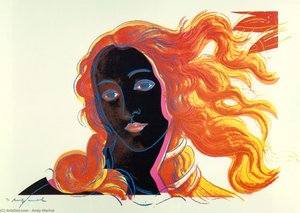
Adquiera una imagen digital de alta resolución y optimizada, muy superior a la vista previa en línea.
Cada archivo es preparado meticulosamente por nuestros especialistas internos mediante el uso de herramientas avanzadas y un experto retoque manual. Nos aseguramos de que cada imagen posea una claridad excepcional, una precisión cromática impecable y un detalle minucioso.
El archivo final se entrega por correo electrónico en un plazo de 72 horas, optimizado para su uso inmediato en entornos profesionales, editoriales y de impresión. Esta es la misma calidad en la que confían los estudios de diseño, las editoriales y las galerías de primer nivel.
Descarga un archivo de alta resolución para exhibición personal, impresión y proyectos creativos. ( Pedir impresión Encargar reproducción pintada a mano)
Al elegir BuyPopArt.com, no solo está adquiriendo una imagen; está recibiendo una obra de arte digital mejorada profesionalmente, elaborada con precisión y respaldada por una garantía de satisfacción. Esto es todo lo que incluye su pedido, automáticamente:

Recibirá su archivo de imagen digital en alta resolución por correo electrónico en un plazo de 72 horas tras realizar su pedido, listo para su uso inmediato.

Su obra de arte se optimiza profesionalmente mediante herramientas avanzadas de IA y edición manual, garantizando el máximo detalle, claridad y precisión cromática.

¿Has borrado o perdido tu archivo por error? No te preocupes: te lo volveremos a enviar en cualquier momento, sin coste adicional.

Disfrute de su obra de arte al instante sin aduanas, aranceles ni gastos de envío; las descargas digitales siempre están libres de impuestos.

Garantizamos que su imagen digital refleje los colores originales con la mayor fidelidad posible, mediante el uso de herramientas profesionales y gestión del color.

Si no está satisfecho con su imagen digital, la revisaremos o le reembolsaremos el 100% en un plazo de 60 días, sin preguntas.

¿No está satisfecho? Obtenga un reembolso completo dentro de los 60 días posteriores a la recepción de su archivo digital, sin necesidad de explicaciones.

Compra 3 imágenes, ahorra 10% - Compra 5, ahorra 15% - Compra 10+, ahorra 20%. Ideal para proyectos creativos, galerías y agencias.
Andy Warhol was born Andrew Warhola Jr. in Pittsburgh, Pennsylvania, in 1928. In 1945 he entered the Carnegie Institute of Technology (now Carnegie Mellon University) where he majored in pictorial design. Upon graduation, Warhol moved to New York where he found steady work as a commercial illustrator. He worked as an illustrator for several magazines including Vogue, Harper's Bazaar and The New Yorker and did advertising and window displays for retail stores such as Bonwit Teller and I. Miller. Prophetically, his first assignment was for Glamour magazine for an article titled “Success is a Job in New York.” Throughout the 1950s, Warhol enjoyed a successful career as a commercial artist, winning several commendations from the Art Director's Club and the American Institute of Graphic Arts. In these early years, he shortened his name to “Warhol.” In 1952, the artist had his first individual show at the Hugo Gallery, exhibiting Fifteen Drawings Based on the Writings of Truman Capote. His work was exhibited in several other venues during the 1950s, including his first group show at The Museum of Modern Art in 1956. The 1960s was an extremely prolific decade for Warhol. Appropriating images from popular culture, Warhol created many paintings that remain icons of 20th-century art, such as the Campbell’s Soup Cans, Disasters and Marilyns. In addition to painting, Warhol made several 16mm films, which have become underground classics such as Chelsea Girls, Empire and Blow Job. In 1968, Valerie Solanis, founder and sole member of SCUM (Society for Cutting Up Men) walked into Warhol's studio, known as the Factory, and shot the artist. The attack was nearly fatal. At the start of the 1970s, Warhol renewed his focus on painting. Works created in this decade include Maos, Skulls, Hammer and Sickles, Torsos and Shadows and many commissioned portraits.
To fully appreciate *Butterfly*, one must understand its context within Warhol’s 1983 *Endangered Species* series. Commissioned by Ronald and Freyda Feldman, dedicated art collectors and environmental activists, the project aimed to raise awareness about animals facing extinction. This commission marked a shift for Warhol, moving beyond his iconic portrayals of consumerism and celebrity culture towards a more explicitly political and conservationist stance. While he approached the subject matter with his characteristic detachment and aesthetic sensibility – referring to the creatures as being “in makeup” due to their heightened coloration – the underlying message is undeniably potent. The butterfly, a symbol of transformation and fleeting life, becomes a poignant emblem of what stands to be lost if environmental concerns are ignored. Warhol’s masterful use of silkscreen printing is central to understanding *Butterfly*. The process allowed for bold color saturation and a distinctive flatness, characteristics that define his style. The layering of colors creates a luminous quality in the butterfly’s wings, while the stark contrast with the black and white background amplifies its visual impact.
Warhol's deliberate lack of painterly brushstrokes further emphasizes the work’s connection to mass production and commercial art – a nod to Warhol’s early career as a successful illustrator. The butterfly isn’t presented as a naturalistic study, but rather as a stylized symbol, a brand even, demanding attention and prompting reflection.
Like much of Warhol's work, *Butterfly*, continues to resonate with contemporary audiences. It serves not only as a beautiful decorative element for interior spaces – its vibrant colors and striking composition lending themselves well to modern aesthetics – but also as a powerful reminder of our responsibility towards the natural world.
The image is a painting of a butterfly with blue wings and yellow spots. The butterfly has long antennae and is perched on top of a branch. The background features a black and white color scheme, which contrasts the vibrant colors of the butterfly. The painting appears to be an artistic representation of nature, capturing the beauty of the butterfly in its natural habitat.
Unknown
Unknown
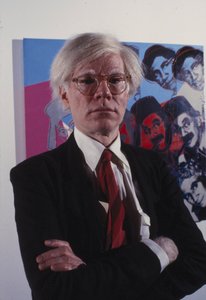
1928 - 1987 , Estados Unidos de América


Manténgase al día con las últimas noticias de arte, ofertas exclusivas e ideas de decoración.
Cuéntanos sobre tu proyecto y nuestros expertos en arte te ofrecerán 3 sugerencias de obras personalizadas.
Dejamos que nosotros seleccionemos 3 opciones exclusivas para ti – ¡Gratis!


 Vista previa
 Compartir
 Compartir
 Ver detalles

 Descargar
 Ver similares
 Radiografía
 Presentación de diapositivas

 Leer más