Oil On CanvasWallArtEarly Modern
 1948
1948 132.0 x 99.0 cm
 Galería de Arte Walker
Óleo sobre lienzo pintado a mano en el tamaño y marco de su elección, realizado por encargo por nuestros artistas. ( Cambiar a impresión Cambiar a imagen)





























Elija entre nuestros tamaños predefinidos que respetan las proporciones originales de la obra.

Puede ingresar sus propias dimensiones para adaptarse a un marco o espacio específico. Si el tamaño seleccionado no coincide con las proporciones de la imagen original, recortaremos la obra o extenderemos la pintura con elementos adicionales pintados a mano. Se le enviará una maqueta digital para su aprobación antes de comenzar la producción.
Tenga en cuenta que la vista previa en pantalla no refleja el recorte o la extensión reales. Solo la maqueta mostrará con precisión la composición final.
Si bien existen tamaños personalizados, recomendamos seleccionar una dimensión de la lista predefinida para preservar las proporciones originales.
Envío a todo el mundo () en 3-4 semanas en lugar de las 5 semanas estándar. (6 agosto). Sin comprometer la calidad.


Sketch
Tamaño de la reproducción
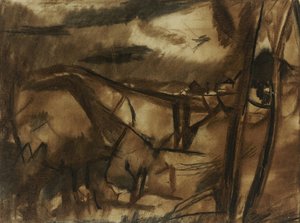
David Bomberg’s “Sketch,” painted in 1948, isn’t merely a depiction of a scene; it’s an embodiment of the artist’s evolving vision during a pivotal period in British art. Born into a Polish-Jewish family in Birmingham and deeply influenced by the avant-garde movements swirling around London – Cubism, Futurism, and the radical ideas championed by Roger Fry – Bomberg sought to translate these complex influences into a distinctly personal language. This particular work, created shortly after his expulsion from the Slade School of Art for his perceived “audacity,” reflects both a rejection of academic constraints and an embrace of dynamic abstraction. The painting’s raw energy and fragmented forms speak volumes about the anxieties and transformations shaping the post-war artistic landscape.

Bomberg’s technique in “Sketch” is immediately arresting. He employs a bold, almost aggressively simplified palette dominated by vibrant reds, oranges, and yellows – colors that evoke both heat and intensity. These hues are layered and blended with remarkable skill, creating a sense of depth and movement despite the painting's predominantly geometric structure. The composition itself is fractured, composed of interlocking planes and angular shapes that seem to vibrate with energy. This deliberate fragmentation isn’t chaotic; rather, it mirrors the artist’s exploration of form and his desire to capture not just what he *saw*, but how he *felt* about what he saw. The use of thick impasto – applying paint in heavy layers – adds a tactile quality to the work, inviting the viewer to engage with its surface.
Bomberg was part of the “Whitechapel Boys,” a group of young artists who challenged the established artistic conventions of early 20th-century London. This collective, including Mark Gertler and Stanley Spencer, were deeply influenced by the avant-garde movements emerging from Paris and Italy. His time at the Slade School of Art, under the tutelage of Henry Tonks, provided a crucial foundation, but Bomberg quickly surpassed his teacher’s more traditional approach. His work reflects this trajectory, incorporating elements of Cubism – particularly in its emphasis on multiple perspectives – alongside the dynamism of Futurism and the emotional intensity of Expressionism. Further research reveals that Bomberg's exploration of Jerusalem Church (as documented in a separate BuyPopArt article) demonstrates his continued interest in capturing spiritual themes through abstract forms.
“Sketch” is more than just a visually striking composition; it's an exploration of emotional states. The intense colors and fragmented forms evoke feelings of both excitement and unease. Some art historians interpret the painting as a reflection of Bomberg’s personal struggles, particularly his experiences in the trenches during World War I. The dynamism of the composition suggests a restless spirit, while the underlying geometric structure hints at an attempt to impose order on chaos. Ultimately, “Sketch” invites viewers to contemplate the complexities of human experience and the power of art to capture the intangible.
Nacido en Birmingham, hijo de inmigrantes judíos polacos, Abraham y Rebecca Bomberg. La familia se mudó a Whitechapel, Londres, en 1895.
Inicialmente estudió en la Escuela Técnica de Arte y Artesanía de la Ciudad y el Condado antes de formarse como litógrafo en Birmingham.
Estudió bajo Walter Sickert en la Escuela de Arte Westminster (1908-1910), donde se vio influenciado por el enfoque de Sickert en la forma y la vida urbana.
Gran exposición a Paul Cézanne a través de la exposición de 1910 de Roger Fry "Manet y los Postimpresionistas".
Asistió a la Escuela de Arte Slade (1911), ganando el Premio Tonks por su dibujo del compañero estudiante Isaac Rosenberg.
Las experiencias como soldado privado durante la Primera Guerra Mundial impactaron profundamente su visión artística, lo que llevó a un alejamiento de la abstracción.
La década de 1920 vio a Bomberg adoptar un estilo más figurativo, centrándose en retratos y paisajes dibujados directamente de la naturaleza.
Desarrolló una técnica cada vez más expresionista, marcada por el impasto texturizado y la intensidad emocional.
Extensos viajes por Oriente Medio (especialmente Palestina) y Europa influyeron significativamente en su obra posterior. Sus representaciones de Jerusalén son particularmente notables.

1890 - 1957 , Reino Unido
Descubre las 25 obras maestras de Mark Rothko, pionero del expresionismo abstracto. Explora la historia, el significado y los colores vibrantes que definen su arte emocional. Reproducciones de alta calidad en BuyPopArt.com.
Descubre las 25 obras maestras de Claude Monet, el padre del impresionismo. Explora la historia, técnica y belleza de sus paisajes, nenúfares y 'Impresión, sole levant'. Encuentra reproducciones de arte exclusivas en BuyPopArt.com.
Descubre las 25 obras maestras de Paul Cézanne que revolucionaron el arte moderno. Explora su técnica, inspiración y significado en paisajes, bodegones y retratos. Reproducciones de alta calidad para decorar tu hogar con arte inolvidable. ¡Explora la colección completa en BuyPopArt.com!

Descubre los 10 cuadros más famosos dominados por el gris. Explora la historia, técnica y significado de obras maestras de Monet, Van Gogh, Hopper y otros artistas icónicos. Encuentra reproducciones de arte en .

Descubre las 25 obras maestras de Winslow Homer, el pintor estadounidense del realismo y los paisajes marinos. Explora su técnica en óleo y acuarela, e inspírate para decorar tu hogar con arte atemporal. Reproducciones de alta calidad en BuyPopArt.com.


Manténgase al día con las últimas noticias de arte, ofertas exclusivas e ideas de decoración.
Cuéntanos sobre tu proyecto y nuestros expertos en arte te ofrecerán 3 sugerencias de obras personalizadas.
Seleccionamos 3 opciones exclusivas para ti – ¡Gratis!


 Vista previa
 Compartir
 Compartir
 Ver detalles

 Descargar
 Ver similares
 Radiografía
 Presentación de diapositivas
 Leer más







 La opción de vidrio solo está disponible en tamaños inferiores a 110 cm.