

Impresiones giclée o en lienzo de calidad de museo con producción rápida y opciones de acabado flexibles. ( Encargar reproducción pintada a mano Comprar descarga)





























Elija entre nuestros tamaños predefinidos que respetan las proporciones originales de la obra.

Puede introducir sus propias dimensiones para adaptarse a un marco o espacio específico. Si el tamaño seleccionado no coincide con las proporciones de la imagen original, recortaremos la obra de arte o extenderemos la imagen con un borde con efecto espejo o de color sólido. Se enviará una maqueta digital para su aprobación antes de que comience la producción.
Tenga en cuenta que la vista previa en pantalla no refleja el recorte o la extensión real. Solo la maqueta mostrará con precisión la composición final.
Aunque existen tamaños personalizados, recomendamos seleccionar una dimensión de la lista predefinida para preservar las proporciones originales.
Envío a todo el mundo () en 2 semanas en lugar de las 4/5 semanas estándar. (19 agosto)


Schiele Gerti Schiele
Tamaño de la reproducción
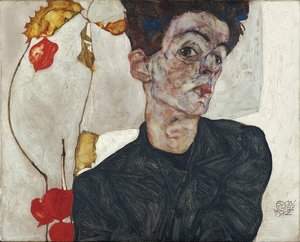
Egon Schiele's portrayal of his sister, Gerti Schiele, is more than just a likeness; it’s a hauntingly beautiful exploration of youth, vulnerability, and the burgeoning anxieties of a rapidly changing era. Painted around 1909, during a pivotal moment in both Schiele’s artistic development and the broader cultural landscape of Vienna, this work embodies the transition from Art Nouveau's decorative elegance to the raw emotional intensity that would define Expressionism. The painting captures Gerti with her back partially turned, an elegant black dress clinging to her form, hinting at a nascent maturity while simultaneously preserving a sense of youthful mystery. The subtle suggestion of a corset beneath the fabric speaks to societal constraints and expectations placed upon women during this period, adding layers of symbolic weight to the composition.
To understand “Gerti Schiele” is to understand the artistic ferment of early 20th-century Vienna. The city was a crucible of ideas, grappling with the decline of the Austro-Hungarian Empire and the rise of modern psychology. Gustav Klimt, a dominant figure in the Viennese art scene, served as an early mentor to Schiele, influencing his use of decorative elements and flowing lines. However, Schiele quickly diverged from Klimt’s opulent style, stripping away ornamentation to reveal the underlying emotional core of his subjects. This painting demonstrates that transitional phase beautifully – the elegant curves and refined color palette echo Art Nouveau sensibilities, but a nascent psychological depth begins to emerge in Gerti’s posture and the overall mood of introspection. Schiele wasn’t merely interested in *how* something looked; he was obsessed with conveying *what it felt like* to exist within its form.
Schiele’s technique in this portrait is masterful, even at this early stage in his career. The delicate rendering of Gerti’s hair, styled in an updo and adorned with a pearl necklace, contrasts sharply with the more angular lines defining her back and shoulders. This interplay between softness and sharpness creates a visual tension that mirrors the emotional complexity of the subject. The limited color palette—dominated by blacks, grays, and subtle flesh tones—further enhances the painting’s somber mood. Schiele’s use of line is particularly striking; it isn’t simply used to define form but to convey emotion, with each stroke imbued with a sense of nervous energy and psychological insight. The way Gerti glances over her shoulder adds an element of unease, as if she is both inviting and withdrawing from the viewer’s gaze. This ambiguity invites us to project our own emotions onto the figure, forging a deeply personal connection with the artwork.
Beyond its aesthetic qualities, “Gerti Schiele” resonates powerfully with broader cultural anxieties of the time. The corset represents the restrictive social conventions imposed upon women—a visual reminder of the pressures to conform to societal expectations. Schiele’s deliberate use of muted colors contributes to a sense of melancholy and introspection, reflecting the psychological concerns prevalent in Expressionist art. Furthermore, the posture of Gerti herself—her slight turn away from the viewer—suggests vulnerability and a hidden inner life, inviting contemplation about identity and experience.
“Gerti Schiele” stands as an exceptional example of Schiele’s artistic breakthrough. It exemplifies his commitment to portraying emotion with uncompromising honesty, marking him as one of the pioneers of Expressionism. Its enduring appeal lies in its ability to capture a moment of profound psychological depth—a glimpse into the soul of a young woman grappling with the complexities of adolescence and the anxieties of a world undergoing rapid transformation. Reproductions of this masterpiece offer an opportunity to experience Schiele’s visionary style firsthand, transporting viewers back to Vienna's artistic crucible.
1890 - 1918 , Croacia

Unleash raw emotion in your space. Explore the high-impact world of Expressionism through BuyPopArt.com’s premium hand-painted oil reproductions and custom photo transformations. Bold, confident, and curated for those who live for visual impact. Shop the revolution today!

Dive into the raw, visceral world of Figurative Expressionism. Explore how icons like Schiele and Bacon use bold textures and intense human forms to redefine modern aesthetics. Discover high-impact art that brings unapologetic energy and emotional depth to your contemporary space.


Manténgase al día con las últimas noticias de arte, ofertas exclusivas e ideas de decoración.
Cuéntanos sobre tu proyecto y nuestros expertos en arte te ofrecerán 3 sugerencias de obras personalizadas.
Dejamos que nosotros seleccionemos 3 opciones exclusivas para ti – ¡Gratis!


 Vista previa
 Compartir
 Compartir
 Ver detalles

 Descargar
 Ver similares
 Radiografía
 Presentación de diapositivas

 Leer más







 La opción de vidrio solo está disponible en tamaños inferiores a 110 cm.


