

Impresiones giclée o en lienzo de calidad de museo con producción rápida y opciones de acabado flexibles. ( Encargar reproducción pintada a mano Comprar descarga)





























Elija entre nuestros tamaños predefinidos que respetan las proporciones originales de la obra.

Puede introducir sus propias dimensiones para adaptarse a un marco o espacio específico. Si el tamaño seleccionado no coincide con las proporciones de la imagen original, recortaremos la obra de arte o extenderemos la imagen con un borde con efecto espejo o de color sólido. Se enviará una maqueta digital para su aprobación antes de que comience la producción.
Tenga en cuenta que la vista previa en pantalla no refleja el recorte o la extensión real. Solo la maqueta mostrará con precisión la composición final.
Aunque existen tamaños personalizados, recomendamos seleccionar una dimensión de la lista predefinida para preservar las proporciones originales.
Envío a todo el mundo () en 2 semanas en lugar de las 4/5 semanas estándar. (18 agosto)


Sin título (6645)
Tamaño de la reproducción
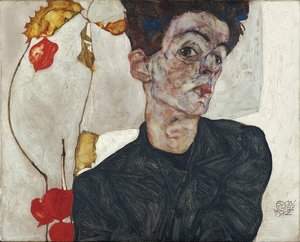
To stand before Egon Schiele’s untitled (6645) is to enter a realm where the boundaries between the physical body and the psychological soul dissolve into a singular, breathless moment. This striking black and white composition serves as a profound testament to the anxieties of the early 20th century, capturing a scene that feels less like a captured moment and more like an unearthed memory. At its heart, the painting presents two figures seated upon the earth, locked in an embrace that is simultaneously intimate and fraught with an unspoken tension. Schiele, a master of the Austrian Expressionist movement, eschews the comfort of traditional beauty to instead offer a visual distillation of existential dread and human vulnerability.
The composition is masterfully orchestrated to direct the viewer’s gaze through a landscape of stark contrasts. While the central figures command our attention with their raw, naked presence, Schiele subtly anchors the scene with a solitary chair positioned in the upper left corner. This element introduces a sense of domesticity that feels strangely displaced, heightening the feeling of isolation within a minimal, almost void-like environment. The presence of other figures, partially obscured or receding into the background, adds layers of complexity to the narrative, suggesting a world that is watching, yet remains fundamentally disconnected from the central intimacy.
Schiele’s technique is nothing short of revolutionary, characterized by an expressive line that seems to vibrate with nervous energy. Eschewing the soft, blended transitions of his contemporaries, he utilizes bold, jagged contours to define the anatomy of his subjects. The bodies are often rendered with a deliberate distortion—elongated limbs and exaggerated musculature that amplify the emotional weight of the piece. This is not mere anatomical inaccuracy; it is a purposeful use of form to convey internal psychological states. The skin tones, even when interpreted through the monochrome lens, suggest a sickly pallor, hinting at the fragility of life and the pervasive presence of mortality that haunted Schoup’s personal history.
For the discerning collector or interior designer, this piece offers a sophisticated interplay of light and shadow. The absence of color forces the eye to focus on the structural integrity of the drawing and the dramatic tension created by the heavy blacks against the stark whites. This monochromatic palette lends the work a timeless, archival quality, making it an ideal centerpiece for spaces that value intellectual depth and avant-garde elegance. It is a work that does not merely decorate a wall; it commands the atmosphere of a room, inviting contemplation and deep emotional resonance.
Created during the turbulent years surrounding 1916-1918, this work is deeply embedded in the historical zeitgeist of World War I. The pervasive sense of instability and the looming shadow of death are woven into the very fabric of the painting. Schiele’s obsession with the intersection of Eros and Thanatos—sexuality and death—finds its most potent expression here. The nakedness of the figures represents a total lack of defense, a stripping away of societal pretenses to reveal the primal truth of human existence. In an era defined by the collapse of old empires and the rise of psychoanalysis, Schiele’s work mirrors the collective psyche of a generation grappling with loss and the fragmentation of identity.
Investing in a high-quality reproduction of this masterpiece allows one to bring this profound dialogue between beauty and anguish into a modern setting. Whether placed in a curated gallery-style living room or a quiet study, untitled (6645) serves as a window into the turbulent heart of Modernism. It remains an enduring icon for those who find inspiration in the raw, unvarnished truth of the human condition and seek art that challenges, moves, and lingers in the mind long after the first encounter.
1890 - 1918 , Croacia

Discover why black & white photography remains a powerful force in contemporary art. Explore the impact of light, shadow, and texture through a visual journey of monochrome mastery and learn how to elevate your space with timeless grayscale aesthetics.

Master the monochrome aesthetic with high-impact Black & White art from BuyPopArt.com. From custom hand-painted oils to iconic pop culture remixes, discover the ultimate design flex for your urban space. Elevate your decor with bold, premium, and timeless monochrome masterpieces.


Manténgase al día con las últimas noticias de arte, ofertas exclusivas e ideas de decoración.
Cuéntanos sobre tu proyecto y nuestros expertos en arte te ofrecerán 3 sugerencias de obras personalizadas.
Dejamos que nosotros seleccionemos 3 opciones exclusivas para ti – ¡Gratis!


 Vista previa
 Compartir
 Compartir
 Ver detalles

 Descargar
 Ver similares
 Radiografía
 Presentación de diapositivas

 Leer más







 La opción de vidrio solo está disponible en tamaños inferiores a 110 cm.


