

 Oil On CanvasWallArtExpressionist Movement
 193419th Century
 37.0 x 49.0 cm
Óleo sobre lienzo pintado a mano en el tamaño y marco de su elección, realizado por encargo por nuestros artistas. ( Comprar impresión Comprar imagen)





























Elija entre nuestros tamaños predefinidos que respetan las proporciones originales de la obra.

Puede ingresar sus propias dimensiones para adaptarse a un marco o espacio específico. Si el tamaño seleccionado no coincide con las proporciones de la imagen original, recortaremos la obra o extenderemos la pintura con elementos adicionales pintados a mano. Se le enviará una maqueta digital para su aprobación antes de comenzar la producción.
Tenga en cuenta que la vista previa en pantalla no refleja el recorte o la extensión reales. Solo la maqueta mostrará con precisión la composición final.
Si bien existen tamaños personalizados, recomendamos seleccionar una dimensión de la lista predefinida para preservar las proporciones originales.
Envío a todo el mundo () en 3-4 semanas en lugar de las 5 semanas estándar. (25 agosto). Sin comprometer la calidad.


Practising Dancer
Dimensiones de la reproducción
Ernst Ludwig Kirchner’s “Practicing Dancer,” painted in 1934, isn’t merely a depiction of movement; it’s an intensely felt embodiment of the anxieties and exhilarations that defined the German Expressionist movement. This striking oil painting, rendered in a palette of vibrant yet unsettling hues, immediately draws the viewer into a world where form and emotion are inextricably linked. The subject, a woman lost in her dance, is presented with a deliberate distortion – a calculated exaggeration of musculature and posture – reflecting Kirchner’s desire to bypass representational accuracy and tap directly into the subconscious. It's a raw, almost brutal honesty captured on canvas, revealing a profound engagement with the human condition.
“Practicing Dancer” is a quintessential product of the Brücke group – a collective of artists who sought to challenge the prevailing artistic norms of their time. Founded in 1905, Die Brücke (The Bridge) represented a radical departure from traditional German art, influenced by Post-Impressionism and Symbolism but ultimately forging its own intensely personal path. Kirchner, along with Erich Heckel, Karl Schmidt-Rottluff, and Max Pechstein, sought to express the alienation and psychological distress of modern life through emotionally charged imagery. The Brücke’s influence can be seen in Kirchner's exploration of urban landscapes, distorted figures, and a preoccupation with themes of isolation and anxiety – all powerfully evident in this work.
The painting’s creation coincides with a period of significant social and political upheaval in Germany, reflecting the anxieties of a nation grappling with rapid industrialization and societal change. Kirchner's art serves as a poignant reflection of these tensions, capturing a sense of unease that resonates even today.
While seemingly straightforward in its depiction, “Practicing Dancer” is rich with symbolic potential. The dancer herself can be interpreted as representing the struggle for self-expression, the pursuit of beauty amidst chaos, or perhaps even a confrontation with one’s own inner demons. The act of dancing – a primal human activity – becomes elevated to a symbol of defiance and liberation. Kirchner's deliberate distortion of form amplifies this symbolism, suggesting that true expression requires a willingness to break free from conventional constraints.
The painting’s emotional impact is undeniable. It evokes a sense of both vulnerability and strength, inviting the viewer to contemplate the complexities of human emotion and experience. The raw energy captured on canvas speaks to the enduring power of art to confront difficult truths and offer profound insights into the human condition.
This exceptional oil painting reproduction, meticulously crafted by skilled artisans, offers an unparalleled opportunity to own a piece of art history. Each reproduction faithfully captures the original’s vibrant colors, dynamic brushstrokes, and emotional intensity. Presented in a size of 37 x 49 cm, it's suitable for a wide range of interior design settings – from modern minimalist spaces to more traditional interiors seeking a touch of artistic drama.
Bring the power and beauty of Kirchner’s “Practicing Dancer” into your home or office. For high-quality art reproductions and further information, please visit BuyPopArt.com.
Ernst Ludwig Kirchner, una figura clave del Expresionismo alemán, nació el 6 de mayo de 1880 en Aschaffenburg, Baviera. Su herencia prusiana familiar y la ascendencia hugonota de su madre moldearon significativamente su identidad artística. Las frecuentes mudanzas durante su infancia – debido a la búsqueda de empleo de su padre – llevaron a Kirchner a asistir a escuelas en Frankfurt y Perlen antes de establecerse en Chemnitz cuando su padre consiguió un puesto en el colegio tecnológico local.
En 1901, Kirchner comenzó a estudiar arquitectura en la Königliche Technische Hochschule (Real Escuela Técnica) en Dresde. Sin embargo, pronto se sintió atraído por la pintura, encontrando inspiración en las obras de artistas como Albrecht Dürer y desarrollando una perspectiva radical sobre el arte junto con su amigo, Fritz Bleyl.
Un punto de inflexión en la carrera de Kirchner llegó en 1905 cuando cofundó Die Brücke (“El Puente”) con Bleyl, Karl Schmidt-Rottluff y Erich Heckel. Este grupo tenía como objetivo cerrar la brecha entre los estilos académicos tradicionales y una forma de expresión más moderna y cargada emocionalmente. Buscaron inspiración en el arte primitivo, particularmente del África y Oceanía, así como en las obras de Vincent van Gogh y Edvard Munch.
El estilo artístico de Kirchner se caracteriza por sus colores audaces, pinceladas expresivas y composiciones a menudo inquietantes. Representaba con frecuencia escenas urbanas, retratando la alienación y las ansiedades de la vida moderna a principios del siglo XX en Alemania. Su obra también presenta un número significativo de desnudos femeninos dentro de paisajes naturales, mostrando su fascinación por el movimiento y la forma.
Algunas de las obras más notables de Kirchner incluyen:
La vida de Kirchner estuvo marcada por el tormento personal. Sufrió un colapso mental durante la Primera Guerra Mundial y posteriormente se retiró a Suiza. El auge del nazismo trajo consigo nuevas dificultades; más de 600 de sus obras fueron confiscadas y consideradas “arte degenerado”. Enfrentando persecución y deterioro de su salud, Kirchner trágicamente se suicidó en Davos, Suiza, el 15 de junio de 1938.
A pesar de este trágico final, el legado de Ernst Ludwig Kirchner perdura. Sigue siendo una figura central del Expresionismo alemán, influyendo en generaciones de artistas con su estilo audaz y sus representaciones emocionalmente resonantes de la vida moderna. Su obra continúa expuesta en importantes museos de todo el mundo y es muy solicitada por coleccionistas.
Influenciado Por: Albrecht Dürer, Vincent van Gogh, Edvard Munch, Arte Primitivo (Africano y Oceanía)
Influyó en: La obra de Kirchner impactó profundamente a generaciones posteriores de artistas expresionistas y modernos. Su exploración de temas psicológicos y su uso innovador del color y la forma continúan inspirando prácticas artísticas contemporáneas.

1880 - 1938 , Alemania

Explore the world of giclée prints with BuyPopArt. Learn about archival quality, aesthetic nuances & investment potential. Expert guidance for discerning art collectors seeking museum-quality reproductions and lasting value.

Descubre 10 obras de arte audaces que definen la pasión y el impacto visual. Explora la historia detrás de artistas como Van Gogh, Matisse y Kahlo. Encuentra reproducciones de museo en BuyPopArt.com.
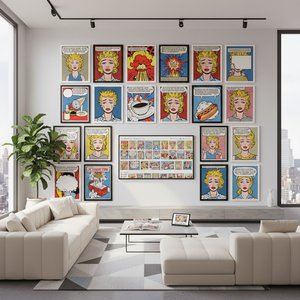
Descubre las 25 obras maestras de Roy Lichtenstein, ícono del Pop Art. Explora su innovadora técnica, colores vibrantes y el impacto cultural de sus cuadros más famosos. Reproducciones de arte exclusivas en BuyPopArt.com.

Master the nuances of Giclée printing with our expert guide. Discover how pigment-based inks and museum-grade substrates create fade-resistant, high-fidelity art reproductions designed for discerning collectors seeking unparalleled quality and longevity.

Explore the profound history and technical mastery of woodcut relief printing. From ancient origins to German Expressionism, discover how artists use the subtractive process to create iconic works. A definitive guide for art students, collectors, and historians.


Manténgase al día con las últimas noticias de arte, ofertas exclusivas e ideas de decoración.
Cuéntanos sobre tu proyecto y nuestros expertos en arte te ofrecerán 3 sugerencias de obras personalizadas.
Permítenos seleccionar 3 opciones exclusivas para ti – ¡Gratis!


 Ver en contexto
 Enviar
 Compartir
 Detalles

 Descargar
 Similares
 Radiografía
 Presentación de diapositivas
 Ver más







 La opción de vidrio solo está disponible en tamaños inferiores a 110 cm.


