

Impresiones giclée o en lienzo de calidad de museo con producción rápida y opciones de acabado flexibles. ( Encargar reproducción pintada a mano Comprar descarga)
Elija entre nuestros tamaños predefinidos que respetan las proporciones originales de la obra.

Puede introducir sus propias dimensiones para adaptarse a un marco o espacio específico. Si el tamaño seleccionado no coincide con las proporciones de la imagen original, recortaremos la obra de arte o extenderemos la imagen con un borde con efecto espejo o de color sólido. Se enviará una maqueta digital para su aprobación antes de que comience la producción.
Tenga en cuenta que la vista previa en pantalla no refleja el recorte o la extensión real. Solo la maqueta mostrará con precisión la composición final.
Aunque existen tamaños personalizados, recomendamos seleccionar una dimensión de la lista predefinida para preservar las proporciones originales.
Envío a todo el mundo () en 2 semanas en lugar de las 4/5 semanas estándar. (16 agosto)


Untitled
Tamaño de la reproducción
Eva Hesse's "Untitled" from 1965 isn’t merely a drawing; it’s a distilled essence of the artist’s turbulent yet profoundly inventive mind. Emerging during a pivotal period in her career, this work—characterized by its urgent black lines dancing across a stark white field—offers a glimpse into the genesis of Hesse's sculptural language and the deeply personal anxieties that fueled her artistic exploration. It represents a crucial bridge between her earlier, more restrained drawings and the increasingly complex, materially rich sculptures that would define her legacy. The piece feels simultaneously chaotic and meticulously controlled, mirroring the internal landscape of an artist grappling with displacement, loss, and the search for new forms of expression.
The immediate impact of “Untitled” is dominated by its relentless network of thin black lines. These aren’t confident, assertive strokes; rather, they possess a hesitant quality, as if drawn with a quick hand, almost feverishly. Their varying thicknesses and weights create a dynamic rhythm across the page, suggesting movement and an underlying tension. The composition itself is deliberately asymmetrical, eschewing any sense of formal balance or hierarchical arrangement. Elements are scattered seemingly at random, yet within this apparent chaos lies a subtle logic—a visual echo of the fragmented self Hesse was attempting to articulate. Notice how overlapping lines create layers of ambiguity, inviting the viewer to lose themselves in the intricate details and reconstruct their own interpretation.
To understand “Untitled,” it's essential to consider Eva Hesse’s personal history. Born in Hamburg during the rise of Nazism, her family’s escape to America profoundly shaped her identity as a displaced person. The trauma of her mother’s suicide at a young age further compounded this sense of loss and instability. These experiences—the constant shifting of location, the emotional wounds—manifest themselves powerfully within her art. Hesse frequently explored themes of vulnerability, fragmentation, and the ephemeral nature of existence. “Untitled” embodies these concerns through its fractured forms, its ambiguous subject matter, and its overall feeling of unease. The lines can be interpreted as representing broken connections, unresolved anxieties, or perhaps even the fragmented memories of a childhood marked by upheaval.
Research Note:As documented in recent research (see additional links below), Hesse’s time in Germany during 1965 proved transformative. The abandoned textile factory provided a rich source of inspiration—the angular forms of discarded machinery and tools became visual metaphors for her own internal struggles.
While Hesse resisted definitive interpretations of her work, “Untitled” undeniably possesses a potent symbolic resonance. The stark contrast between the black lines and the white background creates a sense of isolation and vulnerability. The fragmented forms—suggesting human figures, architectural elements, and mechanical components—evoke themes of alienation and dehumanization. Crucially, Hesse’s embrace of imperfection – the hesitant lines, the visible marks of her hand – is central to the work's power. It rejects the polished perfection often associated with Abstract Expressionism, instead prioritizing emotional honesty and a direct engagement with the materials themselves. This deliberate roughness speaks to the artist’s own experience of navigating a world marked by instability and uncertainty.
This piece stands as a testament to Hesse’s innovative approach—a raw, emotionally charged exploration of form, line, and the complexities of the human condition. It's a work that continues to resonate with viewers today, inviting us to contemplate the beauty and power found within imperfection and the enduring legacy of an artist who dared to embrace her own vulnerability.

1936 - 1970 , Alemania

Explore the revolutionary art of André Masson – pioneer of automatism & Surrealist expression. Discover his powerful imagery, innovative techniques, and lasting influence on modern art. Learn more at BuyPopArt.

Explore the captivating world of Hiro Yamagata’s innovative sculptures & paintings. Discover his pioneering use of laser technology, immersive installations, and abstract forms – a must-read for discerning art collectors.
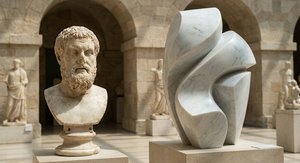
Explore the captivating history of marble sculpture from ancient Greece to modern art. Discover renowned artists like Canova & Michelangelo, carving techniques, and investment insights at BuyPopArt.

Explore the revolutionary world of Alexander Calder's kinetic sculptures & mobiles. Discover insights for collectors, acquisition advice, and the enduring legacy of this modern master. Expert analysis & art valuation.

Explore the powerful work of Gabor Peterdi (1915-2001), a Hungarian-American master of abstract expressionism and intaglio printmaking. Discover his artistic journey, key themes, and lasting influence on American art.


Manténgase al día con las últimas noticias de arte, ofertas exclusivas e ideas de decoración.
Cuéntanos sobre tu proyecto y nuestros expertos en arte te ofrecerán 3 sugerencias de obras personalizadas.
Dejamos que nosotros seleccionemos 3 opciones exclusivas para ti – ¡Gratis!


 Compartir
 Compartir
 Ver detalles

 Descargar
 Ver similares
 Presentación de diapositivas


 Leer más




































 La opción de vidrio solo está disponible en tamaños inferiores a 110 cm.


