Encargar reproducción Encargar reproducciónComprar imagen en alta resolución Comprar imagen en alta resolución EnviarEnviar
DetallesDetalles Añadir a favoritos Añadir a favoritos DescargarDescargar SimilaresSimilares RadiografíaRadiografía Presentación de diapositivasPresentación de diapositivas

Branch

Explore Fernand Léger’s surrealist Branch painting—a striking juxtaposition of sculpture and vibrant color! Created in 1952, this monumental artwork embodies the machine age aesthetic with its bold blues and yellows, inviting viewers to contemplate form and innovation.

Explore el arte de Fernand Léger (1881-1955), un pionero del Cubismo y 'Tubismo'. Descubre sus audaces pinturas figurativas que celebran la vida moderna, las máquinas y la forma humana. ¡Un precursor del Pop Art!

Giclée / Impresión de arte

Impresión giclée o en lienzo de calidad de museo con producción rápida y opciones de acabado flexibles.

P118B $10
P118H $10
P118W $10
P438Z $10
P508JH $12
P508YH $12
P805H $10
P805Z $10
P919BZ $10
P919G $10
P919XJ $10
P959ZH $10
P968JZ $12
W106C $8
W218G $10
W218JH $8
W218Y $10
W307PJ $10
W316G $10
W316PJ $8
W316Y $10
W398PJ $8
W4111J $10
W500HY $15
W500JH $15
W692G $12
W849H $8
W940BG $15
W953PJ $8

Standard
custom
CM
INCH

Elija entre nuestros tamaños predefinidos que respetan las proporciones originales de la obra.

ancho
altura

Puede introducir sus propias dimensiones para adaptarse a un marco o espacio específico. Si el tamaño seleccionado no coincide con las proporciones de la imagen original, recortaremos la obra de arte o extenderemos la imagen con un borde con efecto espejo o de color sólido. Se enviará una maqueta digital para su aprobación antes de que comience la producción.
Tenga en cuenta que la vista previa en pantalla no refleja el recorte o la extensión real. Solo la maqueta mostrará con precisión la composición final.
Aunque existen tamaños personalizados, recomendamos seleccionar una dimensión de la lista predefinida para preservar las proporciones originales.

Entrega mundial () en 2 semanas en lugar de las 4/5 semanas estándar. (21 julio)

why_choose_icon
Envío exprés gratuito a todo el mundo
why_choose_icon
Lienzo de lino de alta calidad
why_choose_icon
Seguro de envío total
why_choose_icon
Garantía de reembolso de impuestos aduaneros
why_choose_icon
Garantía de fidelidad de color
why_choose_icon
Política de devolución de 60 días (solo por defectos)
why_choose_icon
Garantía de devolución del 100% del dinero
why_choose_icon
Descuento por pedido múltiple

Precio total

-

reproduction

Branch

Giclée / Impresión de arte

Tamaño de la reproducción

-

Precio total final

-

Datos clave

  • Artistic style: Geometric abstraction
  • Movement: Surrealism
  • Title: Branch
  • Year: 1952
  • Subject or theme: Industrial landscape
  • Medium: Painting
  • Notable elements or techniques: Sculpture integration

Descripción de la obra

A Symphony of Blue and Yellow: Exploring Fernand Léger’s “Branch”

Fernand Léger's "Branch," painted in 1952, isn’t merely an image; it’s a carefully constructed dialogue between organic form and industrial influence—a hallmark of Léger’s distinctive artistic approach. Measuring 63 x 35 cm, this surrealistic artwork immediately draws the eye with its bold color palette dominated by serene blues contrasted against vibrant yellows, creating a visual tension that speaks volumes about Léger's preoccupation with reconciling nature and technology. The painting itself depicts a sculpture of a figure holding an object resembling either a tennis racket or baseball bat—a deliberate juxtaposition designed to provoke contemplation on humanity’s relationship with tools and the evolving landscape of modern life.
  • Style: Léger's style is undeniably Surrealist, yet it transcends simple categorization. He eschewed pure abstraction, opting instead for a “Constructivist” aesthetic informed by his fascination with geometric forms and industrial machinery. This approach sought to represent the world not as it appears to the eye but as it *feels*, prioritizing underlying structure and rhythm over superficial detail.
  • Technique: Léger employed a technique characterized by thick, textured brushstrokes—a deliberate departure from Impressionism’s focus on capturing fleeting light effects. He utilized encaustic paint, layering wax onto pigment, resulting in surfaces that possess remarkable durability and luminosity. This method allowed him to achieve an expressive quality unattainable with conventional oil paints, emphasizing the materiality of the artwork itself.
The sculpture accompanying “Branch” serves as a crucial element in understanding Léger’s artistic intent. Crafted from wood—a material symbolizing stability and tradition—it stands in stark opposition to the abstract painting, highlighting the artist's desire to explore the tension between past and future. The object held by the figure – resembling either a tennis racket or baseball bat – represents the pervasive influence of sport and leisure activities within the industrialized society Léger envisioned. This deliberate inclusion underscores his belief that even amidst technological advancements, human experience retains its fundamental connection to primal instincts and physical activity. Historical Context: Léger’s work emerged during a period of significant societal transformation—the aftermath of World War I and the rapid expansion of industrialization across Europe. Artists like Léger responded to these changes by grappling with questions about humanity's role in the new world order, rejecting sentimental idealism for a more pragmatic engagement with reality. He was deeply influenced by Constructivism, championed by artists like Vladimir Tatlin and Aleksandr Rodchenko, who sought to create art that served as propaganda for the Soviet Union—a movement focused on simplifying forms and conveying powerful messages through geometric abstraction. Léger’s vision aligned perfectly with this ethos, reflecting a conviction that art could contribute to shaping social consciousness. Symbolism: Beyond its formal qualities, “Branch” is laden with symbolic significance. The branch itself represents growth, resilience, and connection to the natural world—a counterpoint to the coldness of industrial machinery. However, it’s also positioned before a sculpture embodying human activity, suggesting that progress doesn't negate our inherent need for physical engagement and connection to nature. Léger’s deliberate use of color – blue representing tranquility and contemplation alongside yellow symbolizing energy and optimism – reinforces this overarching theme. Ultimately, “Branch” transcends mere visual representation; it invites viewers to contemplate the complexities of modernity and humanity’s enduring relationship with its environment. Its textured surface and striking color scheme offer a captivating glimpse into Léger's artistic genius—a testament to his ability to synthesize seemingly disparate influences into a powerfully evocative artwork that continues to resonate today.

Biografía del artista

vida temprana y formación

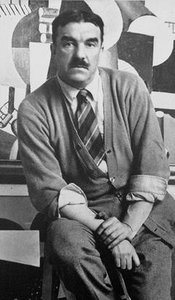
fernand léger, un pintor, escultor y cineasta francés, nació el 4 de febrero de 1881 en Argentán, Orne, Baja Normandía. Su padre criaba ganado, y Léger inicialmente se formó como arquitecto de 1897 a 1899. Luego se mudó a París en 1900, ganándose la vida como dibujante arquitectónico.

desarrollo artístico

El trabajo temprano de Léger estuvo influenciado por el impresionismo, como se ve en le jardin de ma mère (mi madre's garden) (1905). Después de asistir a la escuela de artes decorativas y la academia Julian, comenzó a trabajar seriamente como pintor a los 25 años. Su estilo evolucionó hacia una forma personal del cubismo, que los críticos denominaron "tubismo" por su énfasis en las formas cilíndricas.

cubismo y el grupo puteaux

En 1910, Léger expuso en el salón de otoño junto a jean metzinger y henri le fauconnier. Se unió al grupo puteaux, también conocido como la sección dorada (la sección de oro), junto con otros artistas como francis picabia y marcel duchamp.

guerra y su influencia en el trabajo de léger

Las experiencias de Léger en la Primera Guerra Mundial impactaron significativamente su obra. Durante su tiempo en el frente, produjo dibujos de piezas de artillería, aviones y soldados compañeros. Su pintura soldier with a pipe (1916) refleja este período.

obra posterior y legado

La obra posterior de Léger, caracterizada por formas mecánicas y elegantes, lo vinculó a la tradición de la pintura figurativa francesa. Sus paisajes animados de 1921 mostraron figuras y animales en formas armoniosas y aerodinámicas. obras clave: museos que exhiben el trabajo de léger:
Fernand Léger

Fernand Léger

1881 - 1955 , Francia

Datos clave

  • Artistas Influenciados Por: ['Pop Art']
  • Artistas Que Influyeron:
    • Cézanne
    • Impresionismo
  • Fecha De Nacimiento: 4 de febrero de 1881
  • Lugar De Nacimiento: Argentan, Francia
  • Movimiento Artístico:
    • Cubismo
    • Tubismo
  • Nacionalidad: Francés
  • Nombre Completo: Fernand Léger
  • Obras Notables:
    • La Mujer Sentada
    • Elemento de Máquina
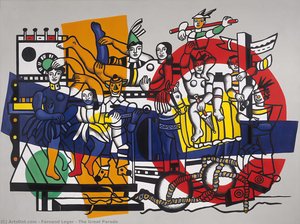
    • El Gran Desfile
    • Paisajes Animados
Explore obras de arte organizadas por temas, estilos y características.