Impresiones giclée o en lienzo de calidad de museo con producción rápida y opciones de acabado flexibles. ( Cambiar a pintura hecha a mano Cambiar a imagen)





























Elija entre nuestros tamaños predefinidos que respetan las proporciones originales de la obra.

Puede introducir sus propias dimensiones para adaptarse a un marco o espacio específico. Si el tamaño seleccionado no coincide con las proporciones de la imagen original, recortaremos la obra de arte o extenderemos la imagen con un borde con efecto espejo o de color sólido. Se enviará una maqueta digital para su aprobación antes de que comience la producción.
Tenga en cuenta que la vista previa en pantalla no refleja el recorte o la extensión real. Solo la maqueta mostrará con precisión la composición final.
Aunque existen tamaños personalizados, recomendamos seleccionar una dimensión de la lista predefinida para preservar las proporciones originales.
Envío a todo el mundo () en 2 semanas en lugar de las 4/5 semanas estándar. (10 agosto)


Eiffel Tower
Tamaño de la reproducción
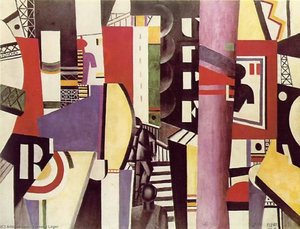
Fernand Léger's “Eiffel Tower,” painted around 1927, offers a captivating glimpse into the artist’s unique vision of the burgeoning modern world. This striking black and white cityscape isn’t merely a depiction of Paris; it’s a carefully constructed tableau reflecting Léger’s fascination with industrial forms and his distinctive approach to Naïve Art – a style he championed that blended elements of Primitivism with a deliberate, almost childlike clarity. The painting immediately draws the eye to the monumental presence of the Eiffel Tower, rendered with a bold, geometric simplification that emphasizes its structural essence rather than romanticized beauty. Léger’s use of flattened perspective and simplified shapes contributes to an overall sense of dynamism, mirroring the rapid changes occurring in urban life during this period.
Léger’s artistic journey began in rural Normandy before he moved to Paris, where he was profoundly influenced by the rise of industrialization. He deliberately rejected traditional academic techniques, opting instead for a style characterized by bold outlines, simplified forms, and a vibrant use of color – though this particular rendition is monochrome, the underlying principles remain consistent with his broader oeuvre. This “Naïve Art” approach wasn’t about creating an illusion of reality; it was about distilling the *essence* of objects and experiences into their most fundamental shapes. The inclusion of smaller towers scattered throughout the scene reinforces this concept – each a self-contained, geometric unit contributing to the overall composition.
The painting’s subject matter—the Eiffel Tower itself—holds significant symbolic weight. Constructed for the 1889 World's Fair, it quickly became an emblem of Paris and France, representing technological progress and modernity. Léger’s interpretation elevates this symbol to something almost archetypal, stripping away extraneous detail to reveal its core structural identity. The lone figure in the painting adds another layer of interest, perhaps a solitary observer contemplating the scale and impact of this new urban landscape. This figure could be interpreted as an individual grappling with the changes brought about by industrialization – a theme central to Léger’s artistic concerns.
Created in 1927, “Eiffel Tower” exemplifies Léger's mature style, firmly rooted in his exploration of Naïve Art. The painting demonstrates a meticulous attention to detail within the simplified forms, showcasing his mastery of line and shape. It’s important to note that Léger was a key figure in the development of Cubism, though he ultimately diverged from its more abstract tendencies, retaining a connection to observable reality. This work reflects the broader artistic currents of the interwar period, a time of rapid technological advancement and social upheaval – themes powerfully articulated by Léger through his distinctive visual language.
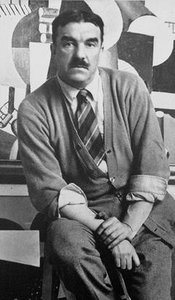
1881 - 1955 , Francia
Descubre las 25 obras maestras de Goya, el genio español. Explora retratos icónicos, 'Los Caprichos' y 'Las Pinturas Negras'. Reproducciones de arte en lienzo de alta calidad para decorar tu hogar con estilo. ¡Encuentra tu obra favorita en BuyPopArt.com!
Explore the captivating world of vintage art prints! Discover their history, collecting tips & enduring appeal. Expert insights on chromolithography and building a legacy collection with BuyPopArt.

Descubre los 10 lienzos cubistas que revolucionaron el arte moderno. Explora la historia de Picasso, Braque y otros maestros del cubismo en . Reproducciones de alta calidad para tu hogar.
Descubre las 25 obras maestras de Katsushika Hokusai, el genio del ukiyo-e. Explora 'La Gran Ola', paisajes japoneses y su impacto en el arte moderno. Reproducciones de alta calidad para tu hogar en BuyPopArt.com.
Descubre los 10 cuadros más impactantes dominados por el negro marfil. Explora la historia de Rembrandt, Van Gogh y otros maestros del arte clásico y moderno. Encuentra reproducciones de alta calidad para tu hogar en


Manténgase al día con las últimas noticias de arte, ofertas exclusivas e ideas de decoración.
Cuéntanos sobre tu proyecto y nuestros expertos en arte te ofrecerán 3 sugerencias de obras personalizadas.
Dejamos que nosotros seleccionemos 3 opciones exclusivas para ti – ¡Gratis!


 Vista previa
 Compartir
 Compartir
 Ver detalles

 Descargar
 Ver similares
 Radiografía
 Presentación de diapositivas

 Leer más







 La opción de vidrio solo está disponible en tamaños inferiores a 110 cm.