x


 Comprar impresión Comprar imagen en alta resolución
 Enviar
 Detalles
 Añadir a favoritos
 Descargar
 Similares
 Radiografía
 Presentación de diapositivas
 Acrylic On CanvasWallArtPurist Cubism
 1950Modern
 92.0 x 73.0 cm
Óleo sobre lienzo pintado a mano en el tamaño y marco de su elección, realizado por encargo por nuestros artistas.





























Elija entre nuestros tamaños predefinidos que respetan las proporciones originales de la obra.

Puede ingresar sus propias dimensiones para adaptarse a un marco o espacio específico. Si el tamaño seleccionado no coincide con las proporciones de la imagen original, recortaremos la obra o extenderemos la pintura con elementos adicionales pintados a mano. Se le enviará una maqueta digital para su aprobación antes de comenzar la producción.
Tenga en cuenta que la vista previa en pantalla no refleja el recorte o la extensión reales. Solo la maqueta mostrará con precisión la composición final.
Si bien existen tamaños personalizados, recomendamos seleccionar una dimensión de la lista predefinida para preservar las proporciones originales.
Entrega mundial () en 3-4 semanas en lugar de las 5 semanas estándar. (20 julio). Sin compromisos con la calidad.


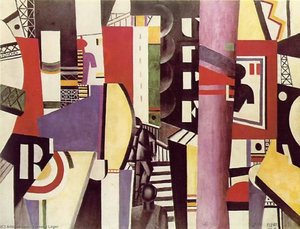
Forms in space
Tamaño de la reproducción
Fernand Léger’s “Forms in Space,” painted in 1950, is more than just a still life; it's a vibrant declaration of the machine age rendered through the distinctive lens of Purism. Measuring 92 x 73 cm, this artwork immediately draws the eye with its bold palette – assertive reds, cool blues, sunny yellows, verdant greens, and grounding blacks – all meticulously applied to construct a dynamic composition dominated by geometric shapes. The scene depicts a domestic interior, anchored by a chair, a clock, and an umbrella, objects imbued with a sense of purposeful functionality that speaks directly to Léger’s fascination with industrial forms.
Léger's technique is characterized by a deliberate application of paint, often built up in thick layers – impasto – to create a tactile surface that emphasizes the three-dimensionality of his forms. The brushstrokes are visible, contributing to the painting’s energetic and somewhat rough quality. He employed a palette knife alongside brushes, further enhancing the textural effect and allowing for precise control over color placement. The use of bold, unmixed colors contributes significantly to the work's impact, reflecting Léger's desire to present a raw, unfiltered view of modern life. The canvas itself is primed with a robust gesso, ensuring the longevity and vibrancy of the pigments.
While seemingly straightforward in its depiction, “Forms in Space” carries deeper symbolic weight. The geometric shapes represent not just physical objects but also the underlying structure of modern society – a world increasingly defined by logic, efficiency, and industrial production. The presence of the clock suggests the relentless march of time, while the umbrella symbolizes protection from the elements, both literal and metaphorical. Léger’s work can be interpreted as an optimistic vision of progress, albeit one tempered with a keen awareness of the potential disruptions caused by technological advancement.
Painted in 1950, “Forms in Space” reflects the post-war landscape of Europe, where industrialization continued to reshape society. Léger’s work stands as a testament to his enduring influence on modern art, bridging the gap between abstraction and representation. His exploration of form and color paved the way for subsequent generations of artists, solidifying his place as one of the most important figures in 20th-century painting. This reproduction offers an exceptional opportunity to own a piece of art history, bringing Léger’s powerful vision into your space.
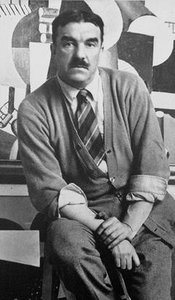
1881 - 1955 , Francia

Descubre las 25 obras maestras de Kazimir Malevich, pionero del Suprematismo. Explora la historia, el significado y la belleza del arte abstracto moderno. Reproducciones de alta calidad para inspirar tu hogar en BuyPopArt.com.

Descubra reproducciones de arte pintadas a mano por artistas expertos. Calidad excepcional, personalización total y un compromiso con la sostenibilidad. Enriquezca su hogar con belleza atemporal.
Explore the evolution of geometric abstraction from Cubism to contemporary art. Discover key artists like Malevich & Mondrian, investment insights, and expert collecting advice at BuyPopArt.

Descubre las 10 obras maestras de la abstracción geométrica que revolucionaron el arte moderno. Explora a Mondrian, Malevich y Kandinsky en BuyPopArt.com. Reproducciones de alta calidad para tu hogar.
Descubre las 25 obras maestras de Fernand Léger, pionero del tubismo y la vanguardia francesa. Explora su estética industrial, composiciones geométricas y vibrantes colores. Reproducciones de arte exclusivas en BuyPopArt.com.


Manténgase al día con las últimas noticias de arte, ofertas exclusivas e ideas de decoración.
Cuéntanos sobre tu proyecto y nuestros expertos en arte te ofrecerán 3 sugerencias de obras personalizadas.
Permítenos seleccionar 3 opciones solo para ti – ¡Gratis!


 Compartir

 Ver más







 La opción de vidrio solo está disponible en tamaños inferiores a 110 cm.