

Adquiera una imagen digital de alta resolución y optimizada, muy superior a la vista previa en línea.
Cada archivo es preparado meticulosamente por nuestros especialistas internos mediante el uso de herramientas avanzadas y un experto retoque manual. Nos aseguramos de que cada imagen posea una claridad excepcional, una precisión cromática impecable y un detalle minucioso.
El archivo final se entrega por correo electrónico en un plazo de 72 horas, optimizado para su uso inmediato en entornos profesionales, editoriales y de impresión. Esta es la misma calidad en la que confían los estudios de diseño, las editoriales y las galerías de primer nivel.
Descarga un archivo de alta resolución para exhibición personal, impresión y proyectos creativos. ( Pedir impresión Encargar reproducción pintada a mano)
Al elegir BuyPopArt.com, no solo está adquiriendo una imagen; está recibiendo una obra de arte digital mejorada profesionalmente, elaborada con precisión y respaldada por una garantía de satisfacción. Esto es todo lo que incluye su pedido, automáticamente:

Recibirá su archivo de imagen digital en alta resolución por correo electrónico en un plazo de 72 horas tras realizar su pedido, listo para su uso inmediato.

Su obra de arte se optimiza profesionalmente mediante herramientas avanzadas de IA y edición manual, garantizando el máximo detalle, claridad y precisión cromática.

¿Has borrado o perdido tu archivo por error? No te preocupes: te lo volveremos a enviar en cualquier momento, sin coste adicional.

Disfrute de su obra de arte al instante sin aduanas, aranceles ni gastos de envío; las descargas digitales siempre están libres de impuestos.

Garantizamos que su imagen digital refleje los colores originales con la mayor fidelidad posible, mediante el uso de herramientas profesionales y gestión del color.

Si no está satisfecho con su imagen digital, la revisaremos o le reembolsaremos el 100% en un plazo de 60 días, sin preguntas.

¿No está satisfecho? Obtenga un reembolso completo dentro de los 60 días posteriores a la recepción de su archivo digital, sin necesidad de explicaciones.

Compra 3 imágenes, ahorra 10% - Compra 5, ahorra 15% - Compra 10+, ahorra 20%. Ideal para proyectos creativos, galerías y agencias.
In the vibrant tapestry of early twentieth-century modernism, few works capture the rhythmic pulse of the machine age as evocatively as Fernand Léger’s "Postcard." Painted during his most prolific creative era between 1925 and 1930, this masterpiece serves as a profound meditation on the intersection of human tradition and technological progress. At first glance, the viewer is greeted by three women, poised in a moment of quiet contemplation as they hold books to their chests. Yet, beneath this serene surface lies Léger’s signature Tubism—a style that celebrates the beauty of cylindrical forms and the geometric precision of an industrializing world. The painting does not merely depict a scene; it constructs a visual language where the organic and the mechanical dance in a delicate, colorful equilibrium.
The technique employed by Léger is nothing short of transformative. While his contemporaries often retreated into pure abstraction, Léger utilized a sophisticated blend of Cubist fragmentation and bold, saturated color palettes to create an illusionistic depth that defies simple representation. The figures are rendered with simplified, almost sculptural shapes, yet they possess a weight and presence that feels remarkably tangible. Through masterful tonal modulation, he breathes life into the canvas, allowing light to play across the geometric planes of the women’s garments and the surrounding environment. This approach creates a sense of movement and vitality, making the artwork feel less like a static image and more like a living, breathing fragment of a modern metropolis.
Beyond its striking aesthetic, "Postcard" is rich with symbolic layers that invite deep intellectual engagement. Léger masterfully weaves elements of nature into an otherwise mechanized composition to suggest a world where progress and biology coexist. The inclusion of two birds—one soaring near the top left and another nestled toward the bottom right—acts as a poignant metaphor for freedom and the boundless aspirations of the human spirit. These organic flourishes are balanced by the presence of a potted plant, which embodies resilience and the enduring strength of life amidst the steel and stone of urban existence. Even the prominent clock positioned at the upper center serves as a silent narrator, reminding us of the relentless march of time that shapes both our personal histories and the evolution of art itself.
For the discerning collector or interior designer, this artwork offers more than just visual splendor; it provides an emotional anchor. The juxtaposition of the women’s intellectual pursuits—symbolized by their books—against a backdrop of industrial geometry creates a narrative of intellectual grace within a fast-paced world. It is a piece that commands attention in any sophisticated space, offering a sense of structured calm and historical depth. Whether placed in a contemporary gallery setting or a classic study, "Postcard" inspires a sense of wonder, reminding us that even in an age of machines, the human soul remains the ultimate architect of beauty.
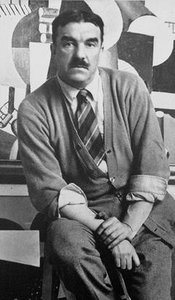
1881 - 1955 , Francia


Manténgase al día con las últimas noticias de arte, ofertas exclusivas e ideas de decoración.
Cuéntanos sobre tu proyecto y nuestros expertos en arte te ofrecerán 3 sugerencias de obras personalizadas.
Dejamos que nosotros seleccionemos 3 opciones exclusivas para ti – ¡Gratis!


 Vista previa
 Compartir
 Compartir
 Ver detalles

 Descargar
 Ver similares
 Radiografía
 Presentación de diapositivas

 Leer más