Óleo sobre lienzo pintado a mano en el tamaño y marco de su elección, realizado por encargo por nuestros artistas. ( Cambiar a impresión Cambiar a imagen)





























Elija entre nuestros tamaños predefinidos que respetan las proporciones originales de la obra.

Puede ingresar sus propias dimensiones para adaptarse a un marco o espacio específico. Si el tamaño seleccionado no coincide con las proporciones de la imagen original, recortaremos la obra o extenderemos la pintura con elementos adicionales pintados a mano. Se le enviará una maqueta digital para su aprobación antes de comenzar la producción.
Tenga en cuenta que la vista previa en pantalla no refleja el recorte o la extensión reales. Solo la maqueta mostrará con precisión la composición final.
Si bien existen tamaños personalizados, recomendamos seleccionar una dimensión de la lista predefinida para preservar las proporciones originales.
Envío a todo el mundo () en 3-4 semanas en lugar de las 5 semanas estándar. (10 agosto). Sin comprometer la calidad.


Beech
Tamaño de la reproducción
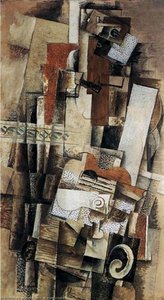
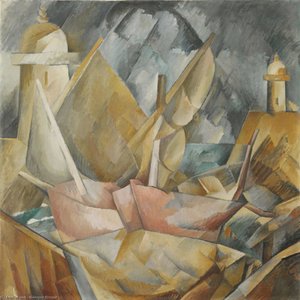
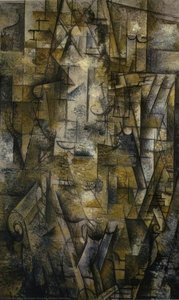
Georges Braque’s “Beech,” painted in 1906, isn’t merely a depiction of a woodland scene; it’s a profound exploration of perception and the very nature of representation. Born amidst the burgeoning artistic ferment of early 20th-century Paris, Braque was deeply influenced by Paul Cézanne's radical approach to capturing form – his insistence on analyzing objects into their fundamental geometric components. “Beech” embodies this legacy, yet it transcends simple imitation, forging a distinctly Cubist vision that simultaneously dismantles and reassembles the familiar world.
The painting immediately arrests the eye with its muted palette—a symphony of grays, ochres, and subtle blues – creating an atmosphere of quiet contemplation. It’s not a vibrant, celebratory landscape; rather, it possesses a melancholic beauty, suggesting a scene viewed through a veil of memory or perhaps even dream. The dominant tree, the beech itself, is rendered with fragmented planes and overlapping perspectives, its form dissolving into a series of interlocking geometric shapes. This isn't an attempt to create photographic realism, but instead to convey the *experience* of seeing – how our eyes perceive multiple viewpoints simultaneously.
Braque’s approach aligns closely with the principles of early Cubism, a movement he co-founded with Pablo Picasso. Cubists rejected traditional single-point perspective, opting instead to present objects from various angles at once. This technique creates an illusion of depth and volume through the layering of shapes and planes. In “Beech,” we see not just one beech tree, but several simultaneous views of it – a trick of the eye that challenges our ingrained assumptions about how things are supposed to look. The rough edges and uneven canvas suggest a deliberate rejection of smooth surfaces and polished finishes, reflecting the movement’s desire to break free from academic conventions.
Beyond its purely formal innovations, “Beech” carries a subtle symbolic weight. Beech trees are often associated with resilience, longevity, and strength – qualities mirrored in the painting’s solid, grounded presence despite its fragmented form. The inclusion of what appears to be a stream or river winding through the landscape adds an element of fluidity and movement, suggesting the passage of time and the interconnectedness of nature. The splash of red—a small, almost defiant burst of color—could represent life force, vitality, or perhaps even a hint of human presence within this otherwise austere environment.
Furthermore, the painting’s title itself – “Beech” – is significant. It's not simply naming the subject; it’s anchoring the abstraction in a tangible reality, inviting us to contemplate the essence of the tree and its place within the broader landscape. The artist’s signature, visible on the lower right corner, reinforces this connection, reminding us that we are looking at an original work created by a master of modern art.
“Beech” stands as a pivotal work in the development of Cubism and a testament to Braque’s pioneering spirit. It demonstrates his willingness to experiment with new techniques and challenge established artistic conventions, paving the way for future generations of artists. Reproductions of this painting offer a captivating glimpse into the mind of one of the 20th century's most influential figures – an artist who redefined our understanding of space, form, and representation. Its enduring appeal lies in its ability to simultaneously challenge and soothe, inviting viewers to engage with the complexities of perception and the beauty of the natural world.
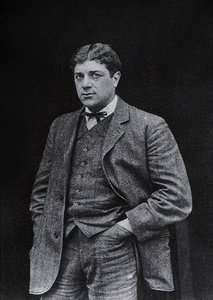
1882 - 1963 , Francia

Explore the captivating landscapes of Alfred Worthington (1834-1927), a pivotal figure bridging Victorian realism & early Impressionism. Discover his Welsh hunting scenes, artistic evolution, and collecting guide.

Explore the life & art of George Barret Sr., a pioneer of British pastoral painting. Discover his influence on Romantic landscape art, patronage, and collecting tips from BuyPopArt.

Explore the captivating landscapes of George Elbert Burr, a pioneer of American Tonalism. Discover his masterful etchings, drypoints & watercolors – and learn about collecting this influential artist's work.

Explore the evolution of cityscape painting from Realism to contemporary art with BuyPopArt. Discover key artists & invest in timeless urban visions. Expert guidance, museum-quality reproductions.

Explore the rich history of trees in painting! Discover symbolism, Romantic masterpieces by Caspar David Friedrich & beyond. A curated journey for art enthusiasts.


Manténgase al día con las últimas noticias de arte, ofertas exclusivas e ideas de decoración.
Cuéntanos sobre tu proyecto y nuestros expertos en arte te ofrecerán 3 sugerencias de obras personalizadas.
Dejamos que nosotros seleccionemos 3 opciones exclusivas para ti – ¡Gratis!


 Vista previa
 Compartir
 Compartir
 Ver detalles

 Descargar
 Ver similares
 Radiografía
 Presentación de diapositivas
 Leer más







 La opción de vidrio solo está disponible en tamaños inferiores a 110 cm.