

 Acrylic On CanvasWallArtContemporary Realism
 1976Contemporary
 73.0 x 105.0 cm
Impresiones giclée o en lienzo de calidad de museo con producción rápida y opciones de acabado flexibles. ( Encargar reproducción pintada a mano Comprar descarga)





























Elija entre nuestros tamaños predefinidos que respetan las proporciones originales de la obra.

Puede introducir sus propias dimensiones para adaptarse a un marco o espacio específico. Si el tamaño seleccionado no coincide con las proporciones de la imagen original, recortaremos la obra de arte o extenderemos la imagen con un borde con efecto espejo o de color sólido. Se enviará una maqueta digital para su aprobación antes de que comience la producción.
Tenga en cuenta que la vista previa en pantalla no refleja el recorte o la extensión real. Solo la maqueta mostrará con precisión la composición final.
Aunque existen tamaños personalizados, recomendamos seleccionar una dimensión de la lista predefinida para preservar las proporciones originales.
Envío a todo el mundo () en 2 semanas en lugar de las 4/5 semanas estándar. (14 agosto)


Vesuvius
Tamaño de la reproducción
Gerhard Richter’s “Vesuvius,” painted in 1976, isn't merely a depiction of the Italian volcano; it’s an exploration of how memory shapes perception. Richter, deeply influenced by his formative years under Nazi Germany—a period characterized by displacement and uncertainty—employs his signature technique of layering semi-transparent squares of color onto a photographic print to achieve a mesmerizing effect.
Richter's fascination with photography stems from a profound belief that it possesses an inherent honesty—a quality he seeks to preserve while simultaneously transforming it into something new. He argues that photographs capture moments in time with unparalleled accuracy, yet they are inherently incomplete representations of experience. By reworking these images through color washes, Richter acknowledges this limitation but elevates them beyond mere documentation.
“The photograph,” Richter famously stated, “is not a copy; it’s an interpretation.”The subtle hues employed in “Vesuvius” aren't intended to convey literal representations of the volcano itself. Rather, they serve as conduits for emotion—a reflection of Richter’s own contemplative gaze upon the landscape. The colors evoke a sense of melancholy and quiet contemplation, mirroring the artist’s preoccupation with memory and loss.
While “Vesuvius” presents a visually striking panorama, its significance transcends mere visual pleasure. The volcano symbolizes both destructive power and regenerative potential—themes that resonate deeply within Richter's artistic worldview. He uses color to subtly suggest these ideas, inviting viewers to engage in an imaginative dialogue with the artwork.

1932 - , Alemania

Explore the profound world of Gerhard Richter's abstract paintings. Discover his techniques, influences, and lasting impact on contemporary art – a guide for discerning collectors.
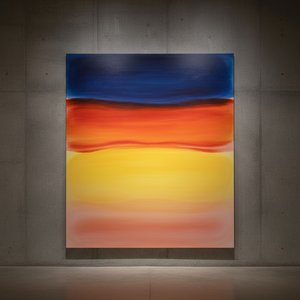
Explore the profound emotional depth of Mark Rothko's abstract expressionism. Discover the history, techniques & lasting impact of this pivotal Color Field painter. Expert insights for collectors and art enthusiasts.

Descubre cómo la iluminación transforma la percepción de la pintura abstracta contemporánea. Análisis experto, artistas clave y guías para apreciar el arte moderno con BuyPopArt.
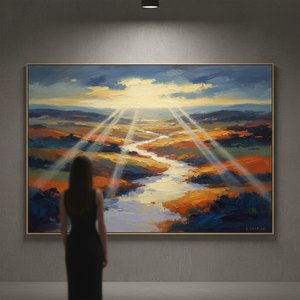
Explore the captivating landscape paintings of Stephen Chaplin, renowned for his 'Treatment in Minors' series & unique blend of Pop Art and historical realism. Discover his artistic journey & emotional depth.

Explore the captivating world of Beatrice Parsons, a pioneering British abstract expressionist. Discover her journey from garden watercolors to evocative color field paintings and learn about her place within art history.


Manténgase al día con las últimas noticias de arte, ofertas exclusivas e ideas de decoración.
Cuéntanos sobre tu proyecto y nuestros expertos en arte te ofrecerán 3 sugerencias de obras personalizadas.
Dejamos que nosotros seleccionemos 3 opciones exclusivas para ti – ¡Gratis!


 Vista previa
 Compartir
 Compartir
 Ver detalles

 Descargar
 Ver similares
 Radiografía
 Presentación de diapositivas
 Leer más







 La opción de vidrio solo está disponible en tamaños inferiores a 110 cm.


