

 Expressionism
 21.0 x 29.0 cm
Impresiones giclée o en lienzo de calidad de museo con producción rápida y opciones de acabado flexibles. ( Encargar reproducción pintada a mano Comprar descarga)
Elija entre nuestros tamaños predefinidos que respetan las proporciones originales de la obra.

Puede introducir sus propias dimensiones para adaptarse a un marco o espacio específico. Si el tamaño seleccionado no coincide con las proporciones de la imagen original, recortaremos la obra de arte o extenderemos la imagen con un borde con efecto espejo o de color sólido. Se enviará una maqueta digital para su aprobación antes de que comience la producción.
Tenga en cuenta que la vista previa en pantalla no refleja el recorte o la extensión real. Solo la maqueta mostrará con precisión la composición final.
Aunque existen tamaños personalizados, recomendamos seleccionar una dimensión de la lista predefinida para preservar las proporciones originales.
Envío a todo el mundo () en 2 semanas en lugar de las 4/5 semanas estándar. (16 agosto)


Monks
Tamaño de la reproducción
Born in Spy, Belgium, in 1907, Henri Masson's artistic journey began early, fueled by a childhood fascination with drawing and painting. His family’s relocation to Canada in 1921, settling in Ottawa, marked the beginning of his Canadian career, initially finding work as a master engraver – a profession he diligently pursued until 1945. It was during this period that a pivotal encounter occurred: a visit to the National Gallery of Canada ignited a profound appreciation for the Group of Seven and their distinctive approach to landscape painting. This experience irrevocably shifted Masson’s trajectory, leading him to embrace painting as his primary artistic focus.
Masson's early training was largely self-directed, supplemented by studies at the Ottawa Art Association with George Rowles and Franklin Brownell. He quickly distinguished himself within the local art scene, joining Les Confrères artistes Le Caveau in 1933 – a collective that provided crucial support, exhibition opportunities, and a vibrant artistic community. This association fostered his development as both an artist and a teacher, shaping his approach to art education and solidifying his commitment to sharing his knowledge.
Masson’s artistic vision centered on capturing the essence of Quebec – its landscapes, its people, and its everyday life. He wasn't interested in grand, idealized vistas; instead, he sought out the authentic beauty found in rural communities, working-class neighborhoods, and quiet moments of domesticity. His subjects ranged from bustling street scenes to serene depictions of nature, often imbued with a sense of nostalgia and warmth. He frequently employed a loose, vigorous brushstroke, utilizing a broad palette of colors – particularly vibrant blues, greens, and yellows – to create dynamic compositions that conveyed both immediacy and emotional resonance.
His technique was characterized by a deliberate layering of paint, often beginning with an ink outline to establish the composition before adding washes of watercolor. This approach allowed him to capture subtle shifts in light and atmosphere while maintaining a sense of spontaneity and energy. Masson’s work is not simply representational; it's infused with a deeply personal perspective, reflecting his love for Quebec and its people.
Throughout the 1940s and beyond, Masson’s paintings garnered increasing recognition both in Canada and internationally. He participated in numerous solo and group exhibitions, including a significant showing at the 1939 World's Fair in New York, an International Watercolor Exhibition in Brooklyn, and a Canadian Art exhibition in Rio de Janeiro. His work was also featured at UNESCO headquarters in Paris, the National Gallery of Art in Washington D.C., and the Colombo International Exhibition of Modern Art in New Delhi.
His paintings have been collected by prestigious institutions worldwide, including the National Gallery of Canada, the Art Gallery of Ontario, the Musée national des beaux-arts du Québec, and the Remai Modern in Saskatoon. In 1972, a reproduction of his painting *Skaters in Hull* was featured on a Canadian postage stamp – a testament to his enduring popularity and artistic significance.
Henri Masson’s impact extends beyond the canvases he created. In 1979, Rue Henri-Masson was named in his honor in Roussillon, Quebec, recognizing his contribution to the community and the province's artistic heritage. Furthermore, the City of Ottawa commemorated his life and work by establishing the Karsh-Masson Gallery at City Hall – a dedicated space for showcasing his paintings alongside those of renowned photographer Yousuf Karsh.
Masson’s legacy lies not only in his distinctive style but also in his dedication to documenting the everyday realities of Quebec. His paintings offer a poignant glimpse into a bygone era, capturing the spirit and character of a region that continues to resonate with artists and viewers alike. He remains an important figure in Canadian art history, celebrated for his ability to transform ordinary scenes into works of enduring beauty and emotional depth.

1907 - 1996

Commission breathtaking bespoke fantasy art with skilled oil painters. Explore techniques, artist selection & preservation tips. Invest in a unique masterpiece today!
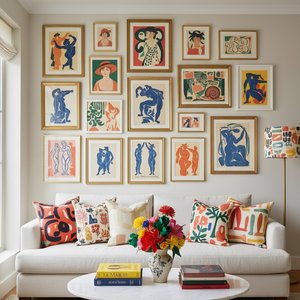
Descubre las 25 obras maestras de Henri Matisse, el rey del color y padre del fauvismo. Explora su arte moderno, lienzos vibrantes y la historia detrás de cada pintura icónica. Encuentra reproducciones de alta calidad en BuyPopArt.com.

Descubre las 10 obras maestras al óleo que transformaron la historia del arte. Explora Van Gogh, Monet, Da Vinci y más. Reproducciones de alta calidad para decorar tu hogar con elegancia. ¡Encuentra tu obra favorita en !

Descubre los 10 lienzos cubistas que revolucionaron el arte moderno. Explora la historia de Picasso, Braque y otros maestros del cubismo en . Reproducciones de alta calidad para tu hogar.

Cree cuadros personalizados al óleo con . Artistas expertos replican cualquier estilo pictórico. ¡Transforme sus fotos en obras maestras! Calidad garantizada y asesoramiento personalizado para coleccionistas exigentes.


Manténgase al día con las últimas noticias de arte, ofertas exclusivas e ideas de decoración.
Cuéntanos sobre tu proyecto y nuestros expertos en arte te ofrecerán 3 sugerencias de obras personalizadas.
Dejamos que nosotros seleccionemos 3 opciones exclusivas para ti – ¡Gratis!


 Vista previa
 Compartir
 Compartir
 Ver detalles

 Descargar
 Ver similares
 Radiografía
 Presentación de diapositivas
 Leer más




































 La opción de vidrio solo está disponible en tamaños inferiores a 110 cm.


