

 LithographyNaive Primitivism
 1966Modern
 31.0 x 26.0 cm
Adquiera una imagen digital de alta resolución y optimizada, muy superior a la vista previa en línea.
Cada archivo es preparado meticulosamente por nuestros especialistas internos mediante el uso de herramientas avanzadas y un experto retoque manual. Nos aseguramos de que cada imagen posea una claridad excepcional, una precisión cromática impecable y un detalle minucioso.
El archivo final se entrega por correo electrónico en un plazo de 72 horas, optimizado para su uso inmediato en entornos profesionales, editoriales y de impresión. Esta es la misma calidad en la que confían los estudios de diseño, las editoriales y las galerías de primer nivel.
Descarga un archivo de alta resolución para exhibición personal, impresión y proyectos creativos. ( Cambiar a impresión Cambiar a pintura hecha a mano)
Al elegir BuyPopArt.com, no solo está adquiriendo una imagen; está recibiendo una obra de arte digital mejorada profesionalmente, elaborada con precisión y respaldada por una garantía de satisfacción. Esto es todo lo que incluye su pedido, automáticamente:

Recibirá su archivo de imagen digital en alta resolución por correo electrónico en un plazo de 72 horas tras realizar su pedido, listo para su uso inmediato.

Su obra de arte se optimiza profesionalmente mediante herramientas avanzadas de IA y edición manual, garantizando el máximo detalle, claridad y precisión cromática.

¿Has borrado o perdido tu archivo por error? No te preocupes: te lo volveremos a enviar en cualquier momento, sin coste adicional.

Disfrute de su obra de arte al instante sin aduanas, aranceles ni gastos de envío; las descargas digitales siempre están libres de impuestos.

Garantizamos que su imagen digital refleje los colores originales con la mayor fidelidad posible, mediante el uso de herramientas profesionales y gestión del color.

Si no está satisfecho con su imagen digital, la revisaremos o le reembolsaremos el 100% en un plazo de 60 días, sin preguntas.

¿No está satisfecho? Obtenga un reembolso completo dentro de los 60 días posteriores a la recepción de su archivo digital, sin necesidad de explicaciones.

Compra 3 imágenes, ahorra 10% - Compra 5, ahorra 15% - Compra 10+, ahorra 20%. Ideal para proyectos creativos, galerías y agencias.
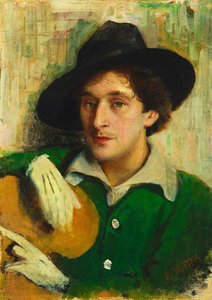
Marc Chagall’s 1966 lithograph, “Ten Commandements,” is more than just a depiction of biblical narrative; it’s a profound meditation on faith, memory, and the enduring power of childhood dreams. Executed in a style that leans heavily into naive or primitivist aesthetics – a hallmark of Chagall's later work – this piece invites viewers to step into a world where reality blends seamlessly with fantastical imagery. The image itself presents a solitary figure, a man draped in a vibrant red robe, holding two luminous white objects within his hands. His gaze is fixed upon them with an intensity that suggests both reverence and childlike wonder. This isn't a formal, academic rendering of the Ten Commandments; rather, it’s a deeply personal interpretation filtered through Chagall’s unique artistic lens.
Born Moishe Shagal in 1887 in Liozna, Belarus – a town that would forever remain etched within his artistic consciousness – Chagall's early life profoundly shaped his oeuvre. Liozna, with its distinctive blend of Russian Orthodox and Jewish cultural influences, provided the fertile ground for his imaginative world. This lithograph powerfully evokes this formative environment; the red robe, a frequent motif in his work, alludes to the traditional attire of Hasidic Jews, while the luminous objects could represent the sacred texts or perhaps simply the pure light of faith itself. The scene feels intensely intimate, as if we are witnessing a private moment of contemplation – a return to the foundational beliefs of his youth.
Created in 1966 using lithography, “Ten Commandements” demonstrates Chagall’s masterful command of this printmaking technique. Lithography relies on a chemical process that allows for subtle gradations of tone and texture, creating an effect remarkably similar to painting. The resulting image is characterized by its soft edges, dreamlike atmosphere, and vibrant color palette – a deliberate choice reflecting Chagall's desire to capture the emotional essence of his subjects rather than striving for photographic realism. The technique lends itself perfectly to conveying the ethereal quality of memory and the fantastical elements that populate his art.
The two white objects held by the figure are open to interpretation, adding another layer of complexity to this already rich artwork. They could represent the tablets containing the Ten Commandments, or perhaps they symbolize innocence, purity, and the unwavering belief that guided Chagall’s life. The man's solitary presence amplifies the sense of introspection and spiritual yearning inherent in the work. Chagall frequently employed symbolism to convey deeper meanings, inviting viewers to engage with the artwork on a personal level. This piece is not simply about religious law; it’s about the human search for meaning and truth.
1887 - 1985 , belarus


Manténgase al día con las últimas noticias de arte, ofertas exclusivas e ideas de decoración.
Cuéntanos sobre tu proyecto y nuestros expertos en arte te ofrecerán 3 sugerencias de obras personalizadas.
Dejamos que nosotros seleccionemos 3 opciones exclusivas para ti – ¡Gratis!


 Vista previa
 Compartir
 Compartir
 Ver detalles

 Descargar
 Ver similares
 Radiografía
 Presentación de diapositivas
 Leer más