Impresiones giclée o en lienzo de calidad de museo con producción rápida y opciones de acabado flexibles. ( Encargar reproducción pintada a mano Comprar descarga)





























Elija entre nuestros tamaños predefinidos que respetan las proporciones originales de la obra.

Puede introducir sus propias dimensiones para adaptarse a un marco o espacio específico. Si el tamaño seleccionado no coincide con las proporciones de la imagen original, recortaremos la obra de arte o extenderemos la imagen con un borde con efecto espejo o de color sólido. Se enviará una maqueta digital para su aprobación antes de que comience la producción.
Tenga en cuenta que la vista previa en pantalla no refleja el recorte o la extensión real. Solo la maqueta mostrará con precisión la composición final.
Aunque existen tamaños personalizados, recomendamos seleccionar una dimensión de la lista predefinida para preservar las proporciones originales.
Envío a todo el mundo () en 2 semanas en lugar de las 4/5 semanas estándar. (16 agosto)


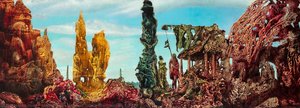
Convolvulus! Convolvulus!
Tamaño de la reproducción
Max Ernst’s “Convolvulus! Convolvulus!” isn't merely a painting; it’s an unsettling invitation into the subconscious, a crystallized moment of existential questioning rendered in vibrant surrealist hues. Created in 1936 during the height of Ernst’s artistic fervor—a period marked by collaboration with Luis Buñuel on “Un chien Andalou”—the artwork transcends simple visual representation, delving into themes of anxiety, metamorphosis, and the confrontation between humanity and nature.
The cactus itself serves as a potent symbol—representing resilience in adversity, but also prickly defensiveness and isolation. Its grotesque form embodies the anxieties surrounding societal pressures and the struggle to maintain individuality amidst conformity. Ernst’s deliberate distortion of botanical forms underscores his belief that art should challenge conventional perceptions and provoke contemplation about the human condition.
"Convolvulus! Convolvulus!" resonates with viewers on an emotional level—eliciting feelings of apprehension, fascination, and perhaps even recognition of the primal fears lurking beneath the surface of consciousness. Ernst’s pioneering use of Automatism established him as a cornerstone of Surrealist art, influencing generations of artists who sought to explore the uncharted territories of the imagination.
More than just aesthetically striking, the painting compels us to confront uncomfortable truths about ourselves and our relationship with the natural world—a challenge that continues to inspire debate and interpretation decades after its creation. It stands as a testament to Ernst’s unwavering commitment to artistic innovation and his profound understanding of the human psyche.

1891 - 1976 , Alemania

Embark on a sophisticated journey through the dreamlike world of Surrealism. Discover the profound symbolism of masters like Dalí and learn how to curate evocative, subconscious-inspired masterpieces for your private collection with expert art historical insight.


Manténgase al día con las últimas noticias de arte, ofertas exclusivas e ideas de decoración.
Cuéntanos sobre tu proyecto y nuestros expertos en arte te ofrecerán 3 sugerencias de obras personalizadas.
Dejamos que nosotros seleccionemos 3 opciones exclusivas para ti – ¡Gratis!


 Vista previa
 Compartir
 Compartir
 Ver detalles

 Descargar
 Ver similares
 Radiografía
 Presentación de diapositivas
 Leer más







 La opción de vidrio solo está disponible en tamaños inferiores a 110 cm.