Óleo sobre lienzo pintado a mano en el tamaño y marco de su elección, realizado por encargo por nuestros artistas. ( Pedir impresión Comprar descarga)
Elija entre nuestros tamaños predefinidos que respetan las proporciones originales de la obra.

Puede ingresar sus propias dimensiones para adaptarse a un marco o espacio específico. Si el tamaño seleccionado no coincide con las proporciones de la imagen original, recortaremos la obra o extenderemos la pintura con elementos adicionales pintados a mano. Se le enviará una maqueta digital para su aprobación antes de comenzar la producción.
Tenga en cuenta que la vista previa en pantalla no refleja el recorte o la extensión reales. Solo la maqueta mostrará con precisión la composición final.
Si bien existen tamaños personalizados, recomendamos seleccionar una dimensión de la lista predefinida para preservar las proporciones originales.
Envío a todo el mundo () en 3-4 semanas en lugar de las 5 semanas estándar. (16 agosto). Sin comprometer la calidad.


Cantileve
Tamaño de la reproducción
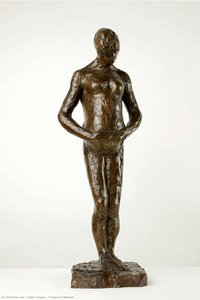
Nancy Graves’s 1983 sculpture, “Cantileve,” isn't merely a three-dimensional form; it’s an invitation to contemplate the delicate balance between stability and suspension. This piece, rendered in meticulous detail through woven materials – likely incorporating wire, fabric strips, and perhaps even yarn – immediately draws the eye upward with its central, cantilevered element. It resembles a stylized plant reaching for the light, or a coral formation emerging from the depths of an ocean, evoking both natural wonder and a subtle sense of unease. The work’s placement within the frame—a generous expanse of space above and around it—further emphasizes this feeling of poised tension, suggesting a structure perpetually on the verge of shifting.
“Cantileve” firmly resides within the realm of Post-Minimalism, a movement that emerged in the late 1960s and early 70s as an evolution from the stark geometric forms of Minimalism. Graves, like her contemporaries, rejected the purely objective approach of earlier minimalist sculpture, instead embracing a more expressive language rooted in organic forms and subtle gestures. The piece’s asymmetrical composition—a deliberate departure from the rigid symmetry often associated with Minimalist works—introduces dynamism and visual interest. The influence of artists like Brice Marden and Richard Serra is palpable, particularly in the way Graves manipulates line and space to create a complex interplay between solidity and fragility.
The color palette of “Cantileve” is remarkably restrained yet profoundly evocative. Dominating earth tones—ochres, browns, purples, and hints of blue—create a sense of groundedness and connection to the natural world. However, these muted hues are punctuated by distinct patches and strands of color within the woven structure, suggesting layers of texture and complexity. The deliberate avoidance of smooth blending creates a tactile quality, inviting viewers to imagine the rough surfaces and intricate details of the materials themselves. The varying textures—the slightly coarse weave alongside the smoother wooden base—add another layer of visual richness.
Linearity is paramount in “Cantileve.” Thin, wiry lines form the very skeleton of the sculpture, creating a sense of both fragility and intricate design. These lines intertwine and overlap, generating complex patterns that draw the eye through the piece’s structure. The prominent use of curved lines—particularly within the central stem—further enhances the organic feel, suggesting growth, movement, and a subtle dance between stability and instability. The sculpture's overall form is defined by these carefully orchestrated lines, creating a visual architecture that is both captivating and subtly unsettling.
Beyond its formal qualities, “Cantileve” carries significant symbolic weight. The cantilevered element—extending outward with seemingly little support—represents a delicate balance between stability and suspension, mirroring the precariousness of life itself. The intricate weaving suggests interconnectedness and interdependence, hinting at the complex relationships within natural systems. Ultimately, the sculpture evokes a sense of quiet contemplation – an invitation to pause, observe, and consider the beauty and fragility of the world around us. It’s a testament to Graves's ability to transform simple materials into profound expressions of artistic vision.

Nancy Graves fue una artista estadounidense multifacética reconocida por su exploración de los fenómenos naturales y diversas prácticas artísticas que abarcan la escultura, la pintura, el grabado y el cine. Su obra es celebrada por su rigor intelectual, innovación formal y cautivadora mezcla de observación científica y arte expresivo.

1939 - 1995 , Estados Unidos de América

Master the high-impact world of contemporary abstraction. Discover how bold colors, textures, and modern movements like Abstract Expressionism can transform your space with premium, high-energy art curated for the design-conscious professional.

Dive into the high-energy world of Lyrical Abstraction. Explore how bold colors, fluid motion, and emotional depth define this modern masterpiece movement. Discover iconic artists and learn to bring this vibrant, soulful energy into your contemporary space.

Discover the power of Neo-Abstract art. Explore how bold geometric forms and high-impact visual energy are redefining modern design. Learn to curate sophisticated, high-energy spaces with the latest trends in contemporary abstraction and structural color.


Manténgase al día con las últimas noticias de arte, ofertas exclusivas e ideas de decoración.
Cuéntanos sobre tu proyecto y nuestros expertos en arte te ofrecerán 3 sugerencias de obras personalizadas.
Dejamos que nosotros seleccionemos 3 opciones exclusivas para ti – ¡Gratis!


 Compartir
 Compartir
 Ver detalles

 Descargar
 Ver similares
 Presentación de diapositivas


 Leer más




































 La opción de vidrio solo está disponible en tamaños inferiores a 110 cm.


![Caricia Ígnea [fire Caress] — Julia Francesca Barretto Baldivia](/media/artworks/images/thumbnails/6c/70/6c7045bf52fe4f36bc31a9d9b88b425a.jpg)