


 Óleo sobre lienzoArte de paredPost-Impressionism
 1879Siglo XIX
 55.0 x 46.0 cm
Adquiera una imagen digital de alta resolución y optimizada, muy superior a la vista previa en línea.
Cada archivo es preparado meticulosamente por nuestros especialistas internos mediante el uso de herramientas avanzadas y un experto retoque manual. Nos aseguramos de que cada imagen posea una claridad excepcional, una precisión cromática impecable y un detalle minucioso.
El archivo final se entrega por correo electrónico en un plazo de 72 horas, optimizado para su uso inmediato en entornos profesionales, editoriales y de impresión. Esta es la misma calidad en la que confían los estudios de diseño, las editoriales y las galerías de primer nivel.
Descarga un archivo de alta resolución para exhibición personal, impresión y proyectos creativos. ( Cambiar a impresión Cambiar a pintura hecha a mano)
Al elegir BuyPopArt.com, no solo está adquiriendo una imagen; está recibiendo una obra de arte digital mejorada profesionalmente, elaborada con precisión y respaldada por una garantía de satisfacción. Esto es todo lo que incluye su pedido, automáticamente:

Recibirá su archivo de imagen digital en alta resolución por correo electrónico en un plazo de 72 horas tras realizar su pedido, listo para su uso inmediato.

Su obra de arte se optimiza profesionalmente mediante herramientas avanzadas de IA y edición manual, garantizando el máximo detalle, claridad y precisión cromática.

¿Has borrado o perdido tu archivo por error? No te preocupes: te lo volveremos a enviar en cualquier momento, sin coste adicional.

Disfrute de su obra de arte al instante sin aduanas, aranceles ni gastos de envío; las descargas digitales siempre están libres de impuestos.

Garantizamos que su imagen digital refleje los colores originales con la mayor fidelidad posible, mediante el uso de herramientas profesionales y gestión del color.

Si no está satisfecho con su imagen digital, la revisaremos o le reembolsaremos el 100% en un plazo de 60 días, sin preguntas.

¿No está satisfecho? Obtenga un reembolso completo dentro de los 60 días posteriores a la recepción de su archivo digital, sin necesidad de explicaciones.

Compra 3 imágenes, ahorra 10% - Compra 5, ahorra 15% - Compra 10+, ahorra 20%. Ideal para proyectos creativos, galerías y agencias.
Paul Cézanne (1839–1906) stands as one of the most influential figures in the transition from Impressionism to Cubism, fundamentally reshaping artistic perception and paving the way for avant-garde movements that would dominate the early 20th century. His unwavering dedication to exploring the underlying structure of objects—a radical departure from traditional representation—established him as a pioneer whose legacy continues to inspire artists today.
Cézanne’s formative years were marked by exposure to Romanticism and the Barbizon school, where he absorbed the grandeur of landscape painting and developed an acute sensitivity to tonal variations. However, it was his encounters with Impressionist luminaries like Claude Monet and Camille Pissarro that truly ignited his artistic imagination. These artists championed capturing fleeting moments of light and color—a technique Cézanne would meticulously dissect and transform into a new visual language.
The influence of Georges Seurat’s Pointillism is equally palpable in Cézanne's early works, particularly “Still Life with Apples,” where he experimented with applying dots of pigment to create textured surfaces and luminous effects. This meticulous approach foreshadowed his later explorations into geometric abstraction—a bold step away from naturalistic depiction.
Cézanne’s artistic breakthrough arrived in the late 1860s, when he began to systematically analyze the forms of objects using mathematical principles. He meticulously sketched and dissected landscapes and still lifes, striving to represent them not as they appear to the eye but as they exist beneath the surface—a concept that would become central to his revolutionary style.
His groundbreaking canvases like “Mont Sainte-Victoire” exemplify this obsession with geometric simplification. Cézanne reduced complex forms into interlocking planes of color and line, creating a sense of spatial depth and dynamism that defied conventional perspective. This technique—characterized by repetitive brushstrokes and the deliberate flattening of surfaces—became synonymous with Cézanne’s distinctive vision.
Unlike Impressionists who prioritized capturing atmospheric effects, Cézanne treated color not merely as a descriptive element but as an integral component of form. He employed bold hues—often juxtaposed in unexpected combinations—to define contours and create visual tension. As John Rewald eloquently observed, “Cézanne’s use of color was not decorative; it was structural.”
Consider “The Basket,” where Cézanne utilizes a palette dominated by ochre, crimson, and ultramarine to sculpt the shapes of fruit and foliage—a masterful demonstration of how color can convey volume and depth. This approach profoundly impacted subsequent artists like Picasso and Matisse, who embraced Cézanne’s bold chromatic choices as foundational to their own artistic explorations.
Despite initial criticism from avant-garde circles—who deemed his work “primitive” and “unfinished”—Cézanne quickly gained recognition among fellow artists and discerning collectors. Henri Matisse famously declared Cézanne “the father of us all,” acknowledging the indelible mark he had left on the trajectory of modern art.
Pablo Picasso, too, recognized Cézanne’s transformative influence, stating that “I tried to express myself in a way that was as simple and direct as Cézanne.” Cézanne's unwavering commitment to exploring fundamental artistic principles—geometric abstraction, tonal modulation, and the expressive power of color—established him as an enduring icon of artistic innovation.
For those seeking inspiration or contemplating acquiring a high-quality reproduction of Cézanne’s masterpieces, Paul Cézanne:Seated Woman offers an unparalleled opportunity to immerse oneself in the brilliance of this visionary artist.
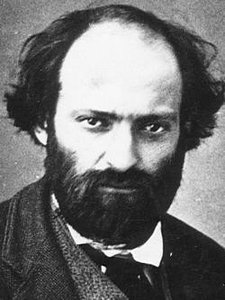
1839 - 1906 , Francia


Manténgase al día con las últimas noticias de arte, ofertas exclusivas e ideas de decoración.
Cuéntanos sobre tu proyecto y nuestros expertos en arte te ofrecerán 3 sugerencias de obras personalizadas.
Permítenos seleccionar 3 opciones solo para ti – ¡Gratis!


 Vista previa
 Compartir
 Compartir
 Ver detalles

 Descargar
 Ver similares
 Radiografía
 Presentación automática
 Leer más