

Impresiones giclée o en lienzo de calidad de museo con producción rápida y opciones de acabado flexibles. ( Cambiar a pintura hecha a mano Cambiar a imagen)





























Elija entre nuestros tamaños predefinidos que respetan las proporciones originales de la obra.

Puede introducir sus propias dimensiones para adaptarse a un marco o espacio específico. Si el tamaño seleccionado no coincide con las proporciones de la imagen original, recortaremos la obra de arte o extenderemos la imagen con un borde con efecto espejo o de color sólido. Se enviará una maqueta digital para su aprobación antes de que comience la producción.
Tenga en cuenta que la vista previa en pantalla no refleja el recorte o la extensión real. Solo la maqueta mostrará con precisión la composición final.
Aunque existen tamaños personalizados, recomendamos seleccionar una dimensión de la lista predefinida para preservar las proporciones originales.
Envío a todo el mundo () en 2 semanas en lugar de las 4/5 semanas estándar. (7 agosto)


Rhythm
Tamaño de la reproducción
Robert Delaunay’s “Rhythm,” painted in 1912, stands as a cornerstone of early modernist abstraction and embodies the fervent spirit of its time. This striking duo of panels immediately captivates with its dynamic interplay of color and geometric forms—large circles interwoven with squares and intersecting lines—creating an impression of pulsating energy.
The artwork firmly establishes itself within the burgeoning Cubist and Constructivist movements, rejecting traditional representational conventions in favor of simplified shapes and bold chromatic palettes. Delaunay’s vision wasn't simply to depict what he saw; it was to distill visual experience into its purest essence. He sought to express fundamental concepts—movement, vibration, and harmony—through a deliberately reductive aesthetic.
Executed in oil paint on canvas, “Rhythm” showcases Delaunay’s masterful brushwork. Visible strokes contribute significantly to the painting's textural surface, hinting at an intentional layering of pigment that enhances its visual impact. The artist skillfully utilizes color gradients and variations within the circles and squares to generate a sense of depth and luminosity—a technique characteristic of Orphism, Delaunay’s influential movement alongside Sonia Delaunay.
Painted during the formative years of the avant-garde, “Rhythm” reflects the broader artistic currents sweeping across Europe. Following Impressionism and Post-Impressionism, artists were increasingly experimenting with new approaches to visual perception. Delaunay’s exploration of color as a primary expressive element anticipated developments in later abstract art movements like Surrealism and Expressionism, marking an undeniable step toward liberating painting from the constraints of realism.
While devoid of recognizable imagery, “Rhythm” speaks powerfully to fundamental human experiences. The repetition of circles—often associated with unity and cyclical time—combined with angular squares—representing stability and structure—creates a visual dialogue that embodies the tension between dynamism and equilibrium. Delaunay’s deliberate use of color—primarily vibrant reds, yellows, and blues—evokes feelings of excitement, optimism, and artistic fervor. It's a piece designed to stimulate contemplation and invite viewers into its immersive chromatic world.

1885 - 1941 , Francia
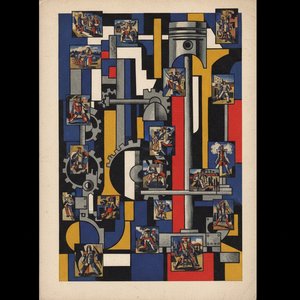
Descubre las 25 obras maestras de Fernand Léger, pionero del tubismo y la vanguardia francesa. Explora su estética industrial, composiciones geométricas y vibrantes colores. Reproducciones de arte exclusivas en BuyPopArt.com.
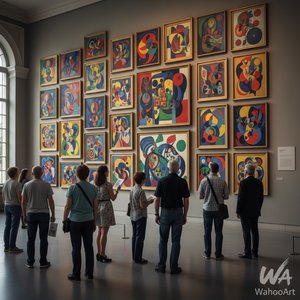
Descubre las 25 obras maestras de Wassily Kandinsky, pionero del arte abstracto. Explora su expresionismo, composiciones únicas y la historia detrás de cada cuadro. Reproducciones de alta calidad para decorar tu hogar con arte moderno en BuyPopArt.com.

Descubre las 25 obras maestras de Georges Braque, pionero del cubismo. Explora su innovadora técnica, colores y el legado del arte moderno francés. Reproducciones de alta calidad en BuyPopArt.com. ¡Encuentra tu inspiración!

Descubre las 10 obras maestras de la abstracción geométrica que revolucionaron el arte moderno. Explora a Mondrian, Malevich y Kandinsky en BuyPopArt.com. Reproducciones de alta calidad para tu hogar.
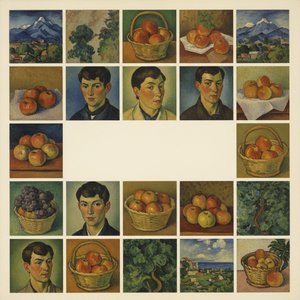
Descubre las 25 obras maestras de Paul Cézanne que revolucionaron el arte moderno. Explora su técnica, inspiración y significado en paisajes, bodegones y retratos. Reproducciones de alta calidad para decorar tu hogar con arte inolvidable. ¡Explora la colección completa en BuyPopArt.com!


Manténgase al día con las últimas noticias de arte, ofertas exclusivas e ideas de decoración.
Cuéntanos sobre tu proyecto y nuestros expertos en arte te ofrecerán 3 sugerencias de obras personalizadas.
Dejamos que nosotros seleccionemos 3 opciones exclusivas para ti – ¡Gratis!


 Vista previa
 Compartir
 Compartir
 Ver detalles

 Descargar
 Ver similares
 Radiografía
 Presentación de diapositivas

 Leer más







 La opción de vidrio solo está disponible en tamaños inferiores a 110 cm.


