


Impresión giclée o en lienzo de calidad de museo con producción rápida y opciones de acabado flexibles. ( Switch to hand made Painting Switch to Image)





























Elija entre nuestros tamaños predefinidos que respetan las proporciones originales de la obra.

Puede introducir sus propias dimensiones para adaptarse a un marco o espacio específico. Si el tamaño seleccionado no coincide con las proporciones de la imagen original, recortaremos la obra de arte o extenderemos la imagen con un borde con efecto espejo o de color sólido. Se enviará una maqueta digital para su aprobación antes de que comience la producción.
Tenga en cuenta que la vista previa en pantalla no refleja el recorte o la extensión real. Solo la maqueta mostrará con precisión la composición final.
Aunque existen tamaños personalizados, recomendamos seleccionar una dimensión de la lista predefinida para preservar las proporciones originales.
Entrega mundial () en 2 semanas en lugar de las 4/5 semanas estándar. (29 julio)


St Peter Reading
Tamaño de la reproducción
Giovanni Serodine’s “St. Peter Reading” is not merely a portrait; it's an arresting tableau of contemplation, faith, and the quiet drama of mortality. Painted in 1628 during the height of the artist’s career, this work immediately draws the viewer into a profoundly intimate scene. The subject, an elderly man with a deeply furrowed brow and a long, flowing beard, is utterly absorbed in his book – not a grand theological text, but a humble volume, suggesting a personal study rather than public discourse. His posture, slightly stooped as if weighed down by years of reflection, speaks volumes about the burdens of wisdom and the passage of time. The lighting, masterfully rendered with Serodine’s signature tenebrism, is crucial to the painting's impact. A single, dramatic light source illuminates Peter’s face and hands, casting deep shadows that envelop the surrounding space, creating a sense of mystery and drawing our attention solely to the figure at the heart of the composition.
Serodine’s choice of setting is equally significant. The room itself is sparsely furnished – a simple wooden table bearing several books and, most strikingly, a human skull. This deliberate inclusion immediately introduces an element of stark realism and serves as a potent reminder of the transience of life and the inevitability of death. It's not a morbid display, however; rather, it’s a carefully orchestrated juxtaposition that elevates the scene beyond mere portraiture. The skull, positioned near the center of the painting, acts as a visual anchor, grounding Peter’s intellectual pursuits within the larger context of human existence.
“St. Peter Reading” is firmly rooted in the artistic currents of the early 17th century, particularly the influence of Caravaggio and his followers – a movement known as Carravaggism. Serodine expertly employs this style’s hallmarks: dramatic contrasts of light and shadow (chiaroscuro), loose brushstrokes that convey a sense of immediacy and energy, and a focus on realistic detail, especially in the depiction of hands and faces. Notice how the artist meticulously renders the texture of Peter's robe, the wrinkles etched into his skin, and the delicate veins visible beneath his fingertips. These details are not merely decorative; they contribute to the painting’s overall sense of realism and immediacy.
Serodine’s technique is characterized by a remarkable ability to capture psychological depth. Peter's expression – a mixture of concentration, melancholy, and perhaps even a hint of resignation – is remarkably nuanced. The artist doesn’t simply depict a man reading; he conveys the *experience* of reading, the absorption and introspection that it inspires. The brushwork itself seems restless, mirroring the intensity of Peter’s thoughts. It's a testament to Serodine’s skill that he manages to imbue this seemingly simple scene with such profound emotional resonance.
Painted in 1628, “St. Peter Reading” reflects the intellectual and spiritual climate of the time – a period marked by both religious fervor and burgeoning scientific inquiry. St. Peter, as one of Jesus’s closest disciples and the first Pope, held immense symbolic significance within Christian iconography. His act of reading, in this context, can be interpreted as an embodiment of faith, knowledge, and divine guidance. The inclusion of the skull serves as a constant reminder of mortality and the importance of preparing for judgment – a common theme in religious art of the era.
Further research reveals that Serodine was working within a vibrant artistic community in Rome, surrounded by other talented painters and scholars. His work is often compared to that of Giovanni Baglione, another prominent figure in the Roman Baroque scene, both sharing a fascination with Caravaggism and a commitment to capturing psychological realism. The painting’s provenance – currently held at the Rancate collection in Italy – adds to its historical significance, offering a glimpse into the tastes and preferences of wealthy patrons during the 17th century.
“St. Peter Reading” remains a powerfully evocative work of art, capable of captivating viewers centuries after its creation. Its themes – faith, knowledge, mortality, and the human condition – are as relevant today as they were in 1628. Reproductions of this painting offer an opportunity to bring this masterpiece into your home or office, allowing you to contemplate its profound beauty and symbolism on a daily basis. Consider how the dramatic lighting and the stark contrast between light and shadow can transform any space, adding depth and intrigue. This image is not just a depiction of a man reading; it’s an invitation to reflect on our own lives, our beliefs, and our place in the universe.

1594 - 1630 , Suiza

Descubre las 25 obras maestras de El Greco, el genio del Renacimiento español. Explora su arte religioso, manierismo y la historia detrás de cuadros icónicos como 'El Entierro del Conde de Orgaz'. Encuentra reproducciones de alta calidad en BuyPopArt.com.
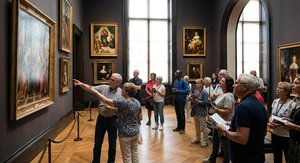
Descubre los 25 tesoros de la Alte Pinakothek en Munich. Explora obras maestras de Dürer, Rembrandt y Rubens. Historia del arte renacentista y barroco para inspirar tu hogar. Reproducciones de alta calidad en BuyPopArt.com.

Descubre 25 obras maestras de la National Gallery, Londres. Explora la historia y el significado de Van Gogh, Monet, Leonardo da Vinci y más. Encuentra reproducciones de arte exclusivas para decorar tu hogar con estilo en BuyPopArt.com.

Descubre las 10 obras maestras del Barroco que marcaron una época. Caravaggio, Bernini y Velázquez cobran vida en . Reproducciones de arte de calidad museo para decorar tu hogar con elegancia. ¡Explora la colección online!

Descubre las 10 obras maestras del Barroco que revolucionaron el arte. Caravaggio, Rembrandt y Velázquez te esperan en BuyPopArt. Reproducciones de alta calidad para decorar tu hogar con la grandeza de este estilo. ¡Explora la colección online!


Manténgase al día con las últimas noticias de arte, ofertas exclusivas e ideas de decoración.
Cuéntanos sobre tu proyecto y nuestros expertos en arte te ofrecerán 3 sugerencias de obras personalizadas.
Permítenos seleccionar 3 opciones solo para ti – ¡Gratis!


 Preview
 Enviar
 Compartir
 Detalles

 Descargar
 Similares
 Radiografía
 Presentación de diapositivas


 Ver más







 La opción de vidrio solo está disponible en tamaños inferiores a 110 cm.


