

Óleo sobre lienzo pintado a mano en el tamaño y marco de su elección, realizado por encargo por nuestros artistas. ( Cambiar a impresión Cambiar a imagen)





























Elija entre nuestros tamaños predefinidos que respetan las proporciones originales de la obra.

Puede ingresar sus propias dimensiones para adaptarse a un marco o espacio específico. Si el tamaño seleccionado no coincide con las proporciones de la imagen original, recortaremos la obra o extenderemos la pintura con elementos adicionales pintados a mano. Se le enviará una maqueta digital para su aprobación antes de comenzar la producción.
Tenga en cuenta que la vista previa en pantalla no refleja el recorte o la extensión reales. Solo la maqueta mostrará con precisión la composición final.
Si bien existen tamaños personalizados, recomendamos seleccionar una dimensión de la lista predefinida para preservar las proporciones originales.
Envío a todo el mundo () en 3-4 semanas en lugar de las 5 semanas estándar. (9 agosto). Sin comprometer la calidad.


Vestido de noche
Tamaño de la reproducción
The shimmering blue silk velvet gown displayed at the Kunstgewerbemuseum in Berlin stands as an emblem of a pivotal moment in fashion history – the genesis of haute couture, spearheaded by none other than Charles Frederick Worth. Born in Bourne, Lincolnshire, England, in 1825, Worth’s trajectory from modest beginnings to becoming the undisputed maestro of Parisian elegance exemplifies ambition coupled with unparalleled artistic vision.
More than just a dressmaker, Worth fundamentally reshaped perceptions of beauty and craftsmanship. He established his atelier in Paris in 1845, initially collaborating with Otto Bobergh, transforming it into Worth & Bobergh by 1858 – a testament to his entrepreneurial spirit and astute understanding of evolving tastes. His success quickly garnered royal patronage and cemented his reputation as the first fashion designer to achieve celebrity status.
The dress itself is a marvel of textile artistry. Crafted from luxurious dark-blue silk velvet woven with intricate floral bouquets in autumnal hues—a deliberate nod to the prevailing aesthetic sensibilities of the era—it embodies Worth’s unwavering commitment to utilizing the finest materials and pushing the boundaries of technique.
Consider the meticulous application of cinnamon lace framing a long satin ribbon, meticulously laid into bows – each element contributing to a harmonious visual composition. The voluminous second bustle, or “Cul de Paris,” achieved through strategic padding and shaping, exemplifies Worth’s mastery of form and silhouette.
"Evening dress," as depicted in Sarah Bernhardt’s iconic performance in Sardou’s 1883 “Fédora,” served as inspiration for Worth himself. This gown, showcased at the Kunstgewerbemuseum, embodies the spirit of Belle Époque Paris – a period characterized by opulent grandeur and artistic ferment.
Wealthy Americans, European aristocrats, and celebrated stage artists like Bernhardt flocked to Worth’s atelier seeking bespoke creations that reflected their social standing and aspirations. His designs captured the zeitgeist of the time, mirroring the desires for beauty, sophistication, and theatrical drama.
The gown's design speaks volumes about its symbolic significance. The high neckline signifies modesty and refinement, while the fitted bodice emphasizes femininity and grace. The horizontal puff of the bustle represents abundance and vitality – a visual counterpoint to the verticality of the satin ribbons and lace border.
Ultimately, “Evening dress” transcends mere garment; it embodies Worth’s artistic vision—a celebration of craftsmanship, beauty, and the transformative power of fashion. It remains an enduring testament to his pioneering role in establishing haute couture as a distinct art form.

1825 - 1895 , Reino Unido

Explore the fascinating history of fashion as a symbol of power & status in art! Discover masterpieces from Gainsborough to Tissot and learn how clothing shaped societal narratives. Find museum-quality reproductions at BuyPopArt.
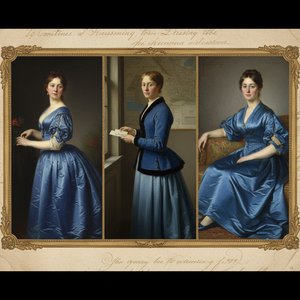
Explore the rich history of the blue dress in Western art! Discover its symbolism, from Renaissance masterpieces to modern interpretations by artists like Martin & Schiele. Uncover cultural meanings and artistic techniques.

Explore the life & art of Sir James Jebusa Shannon, a leading Victorian portrait painter. Discover his elegant style, technical mastery, and lasting influence on British art. Shop high-quality reproductions at BuyPopArt.

Discover the captivating world of Charles Fraser (1782-1860), a leading American artist renowned for his serene landscapes and detailed portraits of Southern life. Explore his legacy & find museum-quality reproductions at BuyPopArt.

Explore the rich symbolism of the red dress in art history! From ancient power displays to iconic portraits like Cézanne’s 'Madame Cezanne', discover the cultural and artistic significance behind this captivating color. Expert analysis & insights.


Manténgase al día con las últimas noticias de arte, ofertas exclusivas e ideas de decoración.
Cuéntanos sobre tu proyecto y nuestros expertos en arte te ofrecerán 3 sugerencias de obras personalizadas.
Dejamos que nosotros seleccionemos 3 opciones exclusivas para ti – ¡Gratis!


 Vista previa
 Compartir
 Compartir
 Ver detalles

 Descargar
 Ver similares
 Radiografía
 Presentación de diapositivas

 Leer más







 La opción de vidrio solo está disponible en tamaños inferiores a 110 cm.


