Meie kunstnike poolt tellimusel valmistatud käsitsi maalitud õli-kainaste teos teie soovitud suuruses ja raamis. ( Osta print Osta pilt)





























Vali meie eelmääratud suurused, mis vastavad teose algupärastele proportsioonidele.

Sa võite sisestada oma mõõtmed konkreetse raami või ruumi sobivuse tagamiseks. Kui teie valitud suurus ei vasta originaalpildi proportsioonidele, siis kärvime kunstiteost või laiendame maali täiendavate käsitsi maalitud elementidega. Enne tootmise algust saadetakse teile heakskiitmiseks digitaalne eelvaade.
Palun pidage meeles, et ekraanil kuvatav eelvaade ei kajasta tegelikku kärpimist või laiendamist. Ainult eelvaade näitab täpselt lõplikku kompositsiooni.
Kuigi on saadaval kohandatud suurused, soovitame originaalproportsioonide säilimiseks valida mõõdud eelmääratletud nimekirjast.
Maailmline tarne 3–4 nädala jooksul tavalise 5 nädala asemel. (15 august). Kvaliteedis kompromisse ei tehta.


The viaduct
Reproduktsiooni suurus
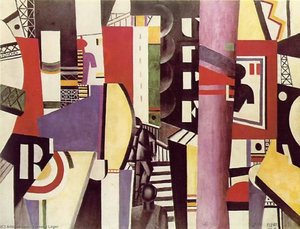
Fernand Léger's The Viaduct isn’t simply a depiction of an industrial scene; it is a bold declaration of faith in the machine age, rendered with his signature “Tubism” – a uniquely powerful evolution of Cubist principles. This painting transforms steel, brick, and the dynamism of transportation into a compelling visual symphony of form and color.
The composition is anchored by a robust, predominantly yellow building dramatically intersected by a viaduct – an elevated railway bridge. A speeding train on the right injects immediate energy and movement. Léger masterfully employs cylindrical forms, breaking down architectural elements and even human figures into simplified geometric shapes. These aren’t merely representations; they are *constructions*, emphasizing the underlying structural logic of the modern world.
Two subtly integrated human figures appear within this mechanical landscape – one positioned near the left edge and another closer to the center. They almost function as components within the larger machine, rather than independent observers, hinting at humanity’s evolving relationship with technology. A clock prominently placed in the top-left corner isn't a mere detail; it symbolizes Léger’s fascination with time, efficiency, and the rhythmic pulse of modern life.
Léger achieves his striking effect through flat planes of color – primarily yellows, reds, blues, and grays – and strong contrasts. He deliberately rejects traditional modeling techniques in favor of a more graphic, almost poster-like approach, enhancing the painting’s visual impact and immediacy.
Born in 1881, Léger lived through a period of rapid industrialization. Unlike many artists who mourned the loss of tradition, he wholeheartedly embraced it. He perceived beauty and heroism within machinery, believing it represented a new aesthetic possibility. Developing his distinctive style around 1910, he moved beyond analytical Cubism towards a more figurative and accessible form – “Tubism” – which focused on the inherent structural qualities of objects.
The Viaduct perfectly exemplifies this artistic evolution. It’s not just *about* industry; it's an attempt to capture its very essence, its underlying structure, and its profound impact on human experience. Léger’s work anticipated the Pop Art movement decades later with its embrace of everyday objects and mass-produced imagery.
The painting evokes a sense of dynamism and optimism, yet also carries an undercurrent of detachment. The anonymized figures suggest the individual’s place within the vast industrial system. It's a powerful statement about modernity – its energy, scale, and potential for both progress *and* alienation.
The Viaduct is more than just a painting; it’s a visual manifesto celebrating the beauty and complexity of the modern world – a testament to Fernand Léger’s visionary artistry. It invites viewers to contemplate not only what we build, but also how those creations shape our lives.
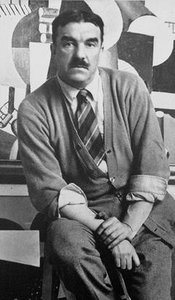
1881 - 1955 , Prantsusmaa

Master the high-impact world of contemporary abstraction. Discover how bold colors, textures, and modern movements like Abstract Expressionism can transform your space with premium, high-energy art curated for the design-conscious professional.

Dive into the high-energy world of Lyrical Abstraction. Explore how bold colors, fluid motion, and emotional depth define this modern masterpiece movement. Discover iconic artists and learn to bring this vibrant, soulful energy into your contemporary space.

Discover the power of Neo-Abstract art. Explore how bold geometric forms and high-impact visual energy are redefining modern design. Learn to curate sophisticated, high-energy spaces with the latest trends in contemporary abstraction and structural color.

Master the art of high-impact decor with our guide to Cubist expression and modern edge. Discover how fragmented geometry and bold abstraction can transform your space into a trendsetting sanctuary. Elevate your interior design with fearless, contemporary visual energy.


Püsige kursis viimaste kunstiuudistega, eksklusiivsete pakkumistega ja sisustamisideetega.
Kirjeldage meile oma projekti ja meie kunstieksperdid pakuvad teile 3 isikupärast kunstiettepanekut.
Laske meil koostada just teile mõeldud 3 valikut – tasuta!


 Eelvaade
 Saada
Saada Jaga
Jaga
 Teave teose kohta

 Laadi alla
 Sarnased teosed
 Röntgenuuring
 Slaidietendus

 Loe lähemalt







 Klaasivalik on saadaval ainult suuruses kuni 110 cm