

 AkrüülkainalSeinakaunistusedAtmospheric Impressionism
 128.0 x 103.0 cm
 The Royal Institution
Meie kunstnike poolt tellimusel valmistatud käsitsi maalitud õli-kainaste teos teie soovitud suuruses ja raamis. ( Lülita trükile Vaata pilti)





























Vali meie eelmääratud suurused, mis vastavad teose algupärastele proportsioonidele.

Sa võite sisestada oma mõõtmed konkreetse raami või ruumi sobivuse tagamiseks. Kui teie valitud suurus ei vasta originaalpildi proportsioonidele, siis kärvime kunstiteost või laiendame maali täiendavate käsitsi maalitud elementidega. Enne tootmise algust saadetakse teile heakskiitmiseks digitaalne eelvaade.
Palun pidage meeles, et ekraanil kuvatav eelvaade ei kajasta tegelikku kärpimist või laiendamist. Ainult eelvaade näitab täpselt lõplikku kompositsiooni.
Kuigi on saadaval kohandatud suurused, soovitame originaalproportsioonide säilimiseks valida mõõdud eelmääratletud nimekirjast.
Maailmline tarne 3–4 nädala jooksul tavalise 5 nädala asemel. (11 august). Kvaliteedis kompromisse ei tehta.


John Fuller
Reproduktsiooni suurus
Henry Singleton's schilderij “John Fuller” is een prachtige illustratie van klassieke portrettkunst uit het begin van de 19e eeuw. Het werk, uitgevoerd op doek met olie, biedt een fascinerende kijk op zowel technische vaardigheid als artistieke gevoeligheid – kwaliteiten die Singleton’s oeuvre kenmerken.
Het beeld wordt gekenmerkt door een eenvoudige maar effectieve compositie: Een man zit comfortabel in een stoel met zijn benen gekruist, een teken van zelfvertrouwen en rustigheid. Zijn houding is zorgvuldig gecentraliseerd, wat bijdraagt aan het gevoel van balans en harmonie dat het schilderij oproept.
Het boek dat de man vasthoudt, symboliseert kennis en intellectuele inspanning – kwaliteiten die belangrijk waren voor de elite van zijn tijd. De hand op zijn knie kan worden geïnterpreteerd als een teken van zelfreflectie en innerlijke kracht.
De keuze van kleuren is subtiel maar doordacht. Een warme tint gebruikt om het licht weer te geven, creëert een gevoel van intimiteit en persoonlijke aandacht. De algemene tonaliteit van het schilderij draagt bij aan de emotionele impact ervan – het beeld roept een gevoel van sereniteit en contemplatie op.
Henry Singleton was een bekroonde kunstenaar die zijn hele leven gewijd heeft aan het verkennen van verschillende kunstvormen. Zijn werk wordt vaak beschouwd als een voorbeeld van klassieke stijl en technische meesterschap, maar bovenal staat Singleton’s kunst voor zijn vermogen om emotie en schoonheid vast te leggen.
Het schilderij “John Fuller” is niet alleen een prachtige kunstwerk op zichzelf staand, maar ook een belangrijk onderdeel van de kunstgeschiedenis. Het biedt een waardevolle kans om kennis te maken met het werk van een uitzonderlijke kunstenaar en zijn tijdperiode beter te begrijpen.
Born into the vibrant artistic tapestry of London in 1766, Henry Singleton was destined for a life defined by the brush and the palette. His early years were shaped by a profound familial connection to the arts; following the untimely loss of his father when he was just an infant, Singleton was raised under the watchful eye of his uncle, William Singleton. This mentorship provided more than just familial stability; it offered a direct lineage to the prestigious traditions of English miniature painting, having been trained under the esteemed Ozias Humphry. Growing up in an environment where art was the primary language—surrounded by uncles and sisters who were all recognized exhibitors at the Royal Academy—Singleton’s development was an organic progression of inherited skill and burgeoning individual talent.
As a young man, Singleton demonstrated a precocious command over both scale and subject. His formal education at the Royal Academy Schools began in his late teens, and by 1784, he had already secured the silver medal, signaling his arrival as a formidable talent. The pinnacle of his early academic recognition came in 1788, when his ambitious painting depicting John Dryden’s Alexander’s Feast earned him the prestigious gold medal. This achievement highlighted a period in his career where he sought to transcend the delicate confines of miniature work to tackle grand, sweeping historical and scriptural compositions. His ability to weave complex narratives from the Bible, Shakespeare, and contemporary history allowed him to command attention on the large-scale canvases demanded by the era's most significant institutions.
While his early ambitions leaned toward the monumental, Singleton’s professional journey was marked by a remarkable versatility that ensured his longevity in the competitive London art scene. He became a fixture of the Royal Academy, exhibiting approximately 300 works between 1784 and 1839. There is a poignant irony in his storied career: despite being commissioned by the Royal Academy in 1793 to paint a massive group portrait of forty academicians, he never attained the formal status of a member or an associate himself. Nevertheless, his presence was so constant and his skill so respected that he eventually became the Royal Academy's oldest living exhibitor, a testament to a lifetime of unwavering dedication to his craft.
His repertoire was as diverse as it was technically proficient, spanning several distinct modes of painting:
Beyond the Royal Academy, Singleton’s influence extended to the British Institution and the Society of British Artists, ensuring his work reached a broad spectrum of collectors and connoisseurs. His life came to a close in London in 1839, leaving behind a body of work that serves as a vital window into the aesthetic values of the late 18th and early 19th centuries. Through his portraits and historical scenes, Singleton captured not just the faces of his contemporaries, but the very spirit of an era defined by classical grandeur and the intimate beauty of the miniature.

1766 - 1839 , United States of America

Transform your cherished travel photos into timeless oil paintings with expert artists at BuyPopArt.com. Museum-quality reproductions & custom portraits – preserve your memories beautifully.

Commission breathtaking bespoke fantasy art with skilled oil painters. Explore techniques, artist selection & preservation tips. Invest in a unique masterpiece today!

Explore the captivating portraits of Sir John Watson Gordon, a leading Scottish master. Discover his evolution from neoclassical style to atmospheric Tonalism and influence on 19th-century British art. Learn about his iconic sitters & legacy.
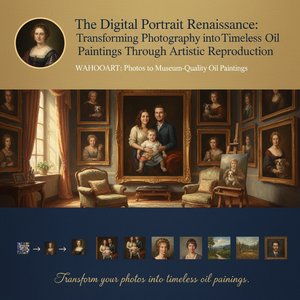
Transform your cherished photos into timeless oil paintings with BuyPopArt's expert artists. Museum-quality reproductions & custom portraits, crafted to last a lifetime. Discover the art of personal legacy.

Discover how AI transforms your photos into stunning, hand-painted Impressionist masterpieces. Explore the democratization of art with personalized oil paintings & expert guidance. Museum-quality reproductions at BuyPopArt.


Püsige kursis viimaste kunstiuudistega, eksklusiivsete pakkumistega ja sisustamisideetega.
Kirjeldage meile oma projekti ja meie kunstieksperdid pakuvad teile 3 isikupärast kunstiettepanekut.
Laske meil koostada just teile mõeldud 3 valikut – tasuta!


 Eelvaade
 Saada
Saada Jaga
Jaga
 Teave teose kohta

 Laadi alla
 Sarnased teosed
 Röntgenuuring
 Slaidietendus
 Loe lähemalt







 Klaasivalik on saadaval ainult suuruses kuni 110 cm


