EelvaadeEelvaade AR-eelvaadeAR-eelvaade Lülita trükile Lülita trükileLülita käsitsi maalatud版本le Lülita käsitsi maalatud版本le SaadaSaada
Teave teose kohtaTeave teose kohta Lisa lemmikutesse Lisa lemmikutesse Laadi allaLaadi alla Sarnased teosedSarnased teosed RöntgenuuringRöntgenuuring SlaidietendusSlaidietendus

Le marche a Ostende

Explore James Ensor's 'Le marche a Ostende'! This unsettling Belgian street scene, brimming with masked figures and social commentary, captures the essence of a bustling coastal town. A masterpiece of Expressionism.

James Ensor oli Belgia maalikunstnik ja graafik, kes tunnetaan erityisesti häikäisevästä groteskista kuvastuksestaan sekä karnevaalimaskeista että luurangosta. Hän oli ekspressionismi ja surrealismi liikkeen varhainen pioneeri ning jätkus kunstilinnakena maailmale suurteoseksi.

Ostke kõrglahutusel ja täiustatud digitaalne pilt, mis on oluliselt parem kui veebilehel näidatud eelvaade.

Iga fail on meie spetsialistide poolt hoolikalt ette valmistatud, kasutades kaasaegseid tööriistu ja professionaalset käsitsi retušeerimist. Tagame, et igal pildil on erakordne selgus, täpne värvitäpsus ja peen detail.

Lõplik fail saadetakse e-posti teel 72 tunni jooksul, olles optimeeritud koheseks kasutamiseks professionaalsetes, toimetuslikes ja trüki keskkondades. See on sama kvaliteet, mida usaldavad tipptasemel disainistuudiod, kirjastused ja galeriid.

Digitaalne kunstiteos

Laadi alla kõrge resolutsiooniga fail isiklikuks vaatamiseks, trükkimiseks ja loomingulisteks projektideks. (Lülita trükile Lülita trükileLülita käsitsi maalatud版本le Lülita käsitsi maalatud版本le)

Lõppsumma

$9.99

Sisse kuulub iga digitaalse pildi tellimusega

Eksperdi digitaalne kohaletoimetamine, garanteeritud

Valides BuyPopArt.com, ei saa sa lihtsalt pilti – saad professionaalselt parandatud digitaalse teose, mida on valmistatud täpsusega ja mis on toetatud rahuldamatusgarantiiga. Siin on kõik, mis sinu tellimusega automaatselt kaasneb:

shipping_icon
Kiire digitaalne saatmine

Teie kõrge resolutsiooniga digitaalne pildifail saadetakse teile e-posti 72 tunni jooksul pärast tellimist – kohe kasutamiseks valmis.

canvas_icon
Tehisintellektiga täiustatud digitaalne fail

Teie teos on professionaalselt optimeeritud arenenud tehisintellekti tööriistade ja käsitsi redigeerimise abil, tagades maksimaalse detailitaseme, selguse ja värvitäpsuse.

insurance_icon
Tasuta eluaegne uuesti saatmine

Kas kustutasid faili kogukalu unustamisel või kustutamisel? Puudub mure – saad selle uuesti igal ajal ilma lisatasuta.

tax_icon
Puuduvad importimaksed – alati

Nautige oma teoseid koheselt ilma tolli-, maksude või tarnimaskuludeta – digiletchargused on alati maksuvabadud.

color_icon
Värvitäpsuse garantii

Me tagame, et teie digitaalne pilt kajastaks originaali värve professionaalsete tööriistade ja värvihalduse abil võimalikult täpselt.

return_icon
60-päevane rahulolu garantii

Kui te ei ole oma digipildiga rahul, parandame seda või tagastame 100% summast 60 päeva jooksul – küsimusi ei esita.

guarantee_icon
100% raha tagastamise garantii

Ei ole rahul? Saate täielise tagastaja 60 päeva jooksul pärast digitaalse faili kättesaamist – küsimata.

discount_icon
Suurema tellimuse soodustused

Osta 3 pilti, säästa 10% - Osta 5, säästa 15% - Osta 10+, säästa 20%. Sobib suurepäraselt loomingulisteks projektideks, galeriideks ja agentuurideks.

Teave teose kohta

  • Artist: James Ensor
  • Influences:
    • Carnival
    • masks
  • Notable elements: Masks, figures, street scene
  • Artistic style: Surrealist, Symbolist
  • Movement: Expressionism

Kunstiviktoriin

Iga küsimuse kohta on ainult üks õige vastus.

Küsimus 1:
What is the primary subject depicted in James Ensor’s ‘Le marche a Ostende’?
Küsimus 2:
Based on the image description, what is one notable characteristic of the people depicted in ‘Le marche a Ostende’?
Küsimus 3:
James Ensor is known for his use of which artistic style, often associated with Expressionism?

Kollektsiooni kirjeldus

A World Masked: James Ensor’s “Le Marche a Ostende”

James Ensor's "Le Marche a Ostende" – "The Market at Ostend" – isn’t merely a depiction of a Belgian seaside town; it’s a meticulously constructed psychological landscape, a vibrant tableau brimming with unsettling detail and profound social commentary. Painted in 1883, this oil on canvas offers a glimpse into the heart of Ostend, Ensor's birthplace and lifelong home, but filtered through an intensely personal and often darkly humorous lens. The scene unfolds along a bustling street, populated by figures caught in moments of quiet contemplation, hurried movement, and veiled observation – all rendered with a distinctive palette and a masterful command of form that firmly establishes Ensor as a pioneer of Expressionism. The painting’s power lies not just in its visual richness but in the palpable sense of unease it evokes, hinting at hidden anxieties and the complexities of human interaction beneath the surface of everyday life.

The Artist's Context: Ostend and the Carnival Spirit

Ensor’s artistic development was inextricably linked to his upbringing in Ostend, a town renowned for its annual carnival – a riot of masks, costumes, and theatrical spectacle. His parents operated a souvenir shop overflowing with these very objects, providing him with an unparalleled visual vocabulary and a lifelong fascination with disguise and the performative aspects of identity. This constant exposure to the paraphernalia of carnival profoundly shaped his artistic vision, informing his choice of subject matter – particularly masks – and influencing his distinctive style. The painting itself can be seen as a distillation of this carnival atmosphere, capturing not just the physical setting but also its underlying spirit of illusion and hidden meanings. The figures in "Le Marche a Ostende" are themselves wearing metaphorical masks, concealing their true emotions and intentions behind carefully constructed facades.

A Symphony of Color and Form: Ensor’s Technique

Ensor's technique is immediately recognizable – bold, expressive brushstrokes layered upon one another to create a textured surface that seems to vibrate with energy. He employs a deliberately flattened perspective, pushing figures forward into the foreground while simultaneously creating a sense of depth through carefully considered color relationships and subtle variations in tone. The palette is rich and saturated, dominated by deep blues, greens, and reds, punctuated by flashes of brighter hues – yellows, oranges, and pinks – that draw the eye to key elements within the composition. Notice how he uses impasto—thickly applied paint—to emphasize certain areas, particularly the faces of the figures, lending them a heightened sense of presence and emotional intensity. The use of contrasting colors and textures creates a dynamic visual experience, mirroring the chaotic energy of the bustling market scene.

Symbolism and Social Commentary: Unmasking Ostend

Beyond its immediate visual appeal, "Le Marche a Ostende" is laden with symbolic meaning. The two principal figures – one gazing down at an unseen object, the other walking away – represent a fundamental disconnect between individuals, a sense of isolation within a crowd. The bench occupied by the seated couple suggests a fleeting moment of connection amidst the anonymity of the market. The presence of skeletons subtly hints at mortality and the ephemeral nature of human existence. More broadly, the painting can be interpreted as a critique of Ostend’s burgeoning bourgeois society – a society obsessed with appearances and preoccupied with superficial displays of wealth and status. Ensor's use of masks, both literal and figurative, serves to expose the hidden anxieties and contradictions that lie beneath the veneer of respectability. The painting is not simply a record of a street scene; it’s an invitation to delve deeper into the complexities of human nature and the social dynamics of a rapidly changing world.

Bringing “Le Marche a Ostende” Home: A BuyPopArt Reproduction

BuyPopArt offers meticulously crafted, hand-painted reproductions of James Ensor's "Le Marche a Ostende," allowing you to experience this iconic artwork in stunning detail and vibrant color. Our skilled artists replicate Ensor’s distinctive brushwork and nuanced palette with the utmost precision, ensuring that your reproduction captures the painting’s original emotional impact. We offer various framing options to complement your personal style and décor, from classic wooden frames to contemporary metal designs. Invest in a BuyPopArt reproduction of "Le Marche a Ostende" – not just an image, but a tangible connection to one of the most important figures in modern art. Explore our selection today and bring Ensor’s unsettling yet captivating vision into your home.

Kunstniku biograafia

James Ensor: A Pioneer of Modernism

James Sidney Edouard, Baron Ensor (Ostend, 13 April 1860 – 19 November 1949) was a Flemish-Belgian painter and printmaker, an important influence on expressionism and surrealism who lived in Ostend for almost his entire life. He was associated with the artistic group Les XX.

Early Life and Artistic Training

James Ensor’s father, James Frederic Ensor, born in Brussels to English parents, was a cultivated man who studied engineering in England and Germany. Ensor's mother, Maria Catharina Haegheman, was Belgian. Ensor himself lacked interest in academic study and left school at the age of fifteen to begin his artistic training with two local painters. From 1876, he attended drawing lessons at the College of the Blessed Virgin in Ostend.

The Impressionist Influence and Initial Works

Ensor’s early paintings reflected a more traditional approach, depicting scenes of everyday life rendered in somber tones. Works like *Russian Music* (1881) and *The Drunkards* (1883) reveal a nascent talent grappling with realism, but even within these early pieces, hints of the unsettling imagery to come are present. A pivotal shift occurred as Ensor’s palette brightened and his subject matter grew increasingly bizarre. He began to populate his canvases with carnivals, skeletons, puppets, and allegorical figures—a world steeped in fantasy and often bordering on the grotesque. This wasn't merely a stylistic change; it was a deliberate exploration of the darker aspects of human existence, a rejection of societal norms, and an embrace of the irrational.

Les XX and Artistic Innovation

In 1883 Ensor, along with a few older students of the Brussels‘ academy, would take leave of the artists‘ association *L'Essor*. They established the artists‘ association* Les Vingt*. This will play an important role in the dissemination of various international *avant-garde* movements. Ensor’s father’s shop in Ostend was a main purveyor of carnival paraphernalia, and this fascination would permeate his artwork.

Major Paintings and Recurring Themes

Throughout his career, Ensor produced a series of works that continue to shock and fascinate audiences today. *The Scandalized Masks* (1883) stands as an early testament to his fascination with the power of disguise and its ability to reveal hidden emotions. Perhaps his most controversial work, *Christ’s Entry into Brussels* (1888-1889), remains a powerful satire of religious hypocrisy and societal indifference—a painting initially met with harsh criticism but now celebrated as a masterpiece. The unsettling image of Christ entering a city teeming with grotesque masked figures is a potent commentary on the disconnect between spiritual ideals and human behavior.

Legacy and Influence

James Ensor was recognized as a pivotal figure in the transition from 19th-century Symbolism to early 20th-century Expressionism and Surrealism—a true pioneer of modern art. His fearless exploration of the subconscious, his embrace of grotesque imagery, and his rejection of academic conventions paved the way for future generations of artists who dared to challenge artistic norms. He is remembered as a visionary artist whose uncompromising vision continues to inspire contemplation and debate.
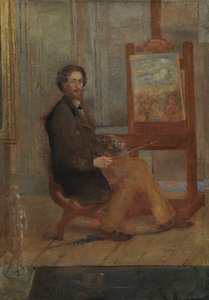
James Ensor

James Ensor

1860 - 1949 , Belgium

Lühikesed faktid

  • Artistic Movement Or Style: Expressionism, Surrealism
  • Artists Who Influenced This Artist:
    • Bruegel the Elder
    • Francisco Goya
    • Whistler
  • Date Of Birth: April 13, 1860
  • Date Of Death: November 19, 1949
  • Full Name: James Sidney Edouard Ensor
  • Nationality: Belgian
  • Notable Artworks:
    • The Scandalized Masks
    • Skeletons Fighting...
    • Christ's Entry into Brussels
  • Place Of Birth: Ostend, Belgium