Acrylic On CanvasWallArtSymbolist Expressionism
 1891
1891 16.0 x 22.0 cm
Muuseumikvaliteediga giclée- või kangasprint kiire tootmisega ja paindlikud viimistlusvõimalused. ( Osta käsitsi maalitud maal Osta pilt)





























Vali meie eelmääratud suurused, mis vastavad teose algupärastele proportsioonidele.

Saate sisestada oma mõõdud, et need sobiks konkreetse raami või ruumi sisse. Kui valitud suurus ei vasta originaalteose proportsioonidele, lõigame teose ära või laiendame pilti peegeldatud või ühtlase servaga. Enne tootmisprotsessi algust saadetakse Teie kinnitamiseks digitaalne näidis.
Palun märka, et ekraanil kuvatav eelvaade ei kajasta tegelikku lõigamist või laiendamist. Ainult näidis kujutab täpselt lõplikku kompositsiooni.
Kuigi erimõõdu on saadaval, soovitame originaaproportsioonide säilitamiseks valida mõõt ette määratud nimekirjast.
Ülemaailmne tarne () 2 nädala jooksul, tavalise 4/5 nädala asemel. (19 august)


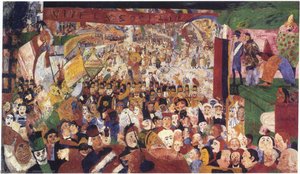
The Grotesque Singers
Reproduktsiooni suurus
James Ensor's 1891 tempera on canvas, *The Grotesque Singers*, isn’t merely a painting; it’s an unsettling plunge into the heart of human absurdity. This small yet powerfully evocative work, measuring just 16 x 22 cm, resides within the Wednesbury Museum and Art Gallery in the United Kingdom, offering a rare glimpse into the mind of a truly singular artist. Ensor, born in Ostend, Belgium, to an English father and Belgian mother, possessed a unique perspective shaped by his upbringing amidst the vibrant chaos of a seaside resort town – a place saturated with masks, curiosities, and the theatricality of carnival. This early exposure profoundly influenced his artistic trajectory, leading him away from conventional academic training and toward a fiercely independent exploration of the irrational and the subconscious.
The painting immediately commands attention through its stark monochrome palette—a deliberate choice that amplifies the drama and intensifies the sense of unease. Two figures dominate the composition, rendered with an almost caricatured exaggeration of facial features: one boasts a grotesquely large nose, while the other possesses a disturbingly diminutive mouth. They are engaged in what appears to be a fervent song or conversation, their expressions contorted in a manner that suggests both madness and profound intensity. This deliberate distortion isn’t simply stylistic; it's a potent critique of societal norms, a visual dismantling of superficiality and hypocrisy – a hallmark of Ensor’s artistic philosophy. The inclusion of a book, positioned prominently within the scene, adds another layer of complexity. It can be interpreted as a symbol of knowledge or wisdom, yet its presence feels strangely incongruous with the singers' chaotic performance, hinting at a disconnect between intellectual pursuits and genuine human experience.
Ensor’s artistic style in *The Grotesque Singers* is deeply rooted in Symbolism and Expressionism, movements that sought to convey emotions and ideas beyond the purely representational. He masterfully employs a technique characterized by bold brushstrokes, flattened perspective, and an almost theatrical use of color (despite the monochrome scheme). The figures are not rendered with meticulous detail; instead, they are simplified into expressive forms, their features exaggerated to amplify their emotional impact. This approach aligns perfectly with Ensor’s broader exploration of the subconscious – he wasn't interested in faithfully depicting reality but rather in translating its underlying anxieties and psychological complexities onto canvas.
The painting’s composition is deliberately unsettling. The figures are crammed into a shallow space, creating a claustrophobic atmosphere that mirrors their internal turmoil. Ensor’s use of line is equally significant; jagged, angular lines contribute to the overall sense of agitation and instability. Notice how he uses overlapping forms and fragmented shapes to disrupt any sense of harmony or balance – mirroring the fractured nature of human relationships and the breakdown of social order.
*The Grotesque Singers* was created during a period of significant social and intellectual upheaval in Europe. The late 19th century witnessed rapid industrialization, urbanization, and a growing sense of alienation – themes that resonated deeply with Ensor’s artistic vision. His work can be seen as a response to these anxieties, offering a darkly humorous yet profoundly unsettling commentary on the human condition. Influenced by artists like Gustave Moreau and Edvard Munch, Ensor pushed beyond mere imitation, forging his own distinctive voice—one characterized by a willingness to confront uncomfortable truths and challenge conventional notions of beauty and representation.
BuyPopArt offers meticulously crafted hand-painted reproductions of *The Grotesque Singers*, allowing art lovers to experience Ensor’s visionary work in exquisite detail. These reproductions capture not only the painting's striking visual elements but also its underlying emotional intensity, ensuring that you can bring this captivating piece into your home or office. Beyond its aesthetic appeal, *The Grotesque Singers* remains a significant work of art history—a testament to Ensor’s innovative spirit and his willingness to explore the darker corners of human experience. It's a painting that continues to provoke thought and inspire debate, solidifying Ensor’s place as one of the most important artists of the Symbolist movement.
James Sidney Edouard, Baron Ensor (Ostend, 13 April 1860 – 19 November 1949) was a Flemish-Belgian painter and printmaker, an important influence on expressionism and surrealism who lived in Ostend for almost his entire life. He was associated with the artistic group Les XX.
James Ensor’s father, James Frederic Ensor, born in Brussels to English parents, was a cultivated man who studied engineering in England and Germany. Ensor's mother, Maria Catharina Haegheman, was Belgian. Ensor himself lacked interest in academic study and left school at the age of fifteen to begin his artistic training with two local painters. From 1876, he attended drawing lessons at the College of the Blessed Virgin in Ostend.
Ensor’s early paintings reflected a more traditional approach, depicting scenes of everyday life rendered in somber tones. Works like *Russian Music* (1881) and *The Drunkards* (1883) reveal a nascent talent grappling with realism, but even within these early pieces, hints of the unsettling imagery to come are present. A pivotal shift occurred as Ensor’s palette brightened and his subject matter grew increasingly bizarre. He began to populate his canvases with carnivals, skeletons, puppets, and allegorical figures—a world steeped in fantasy and often bordering on the grotesque. This wasn't merely a stylistic change; it was a deliberate exploration of the darker aspects of human existence, a rejection of societal norms, and an embrace of the irrational.
In 1883 Ensor, along with a few older students of the Brussels‘ academy, would take leave of the artists‘ association *L'Essor*. They established the artists‘ association* Les Vingt*. This will play an important role in the dissemination of various international *avant-garde* movements. Ensor’s father’s shop in Ostend was a main purveyor of carnival paraphernalia, and this fascination would permeate his artwork.
Throughout his career, Ensor produced a series of works that continue to shock and fascinate audiences today. *The Scandalized Masks* (1883) stands as an early testament to his fascination with the power of disguise and its ability to reveal hidden emotions. Perhaps his most controversial work, *Christ’s Entry into Brussels* (1888-1889), remains a powerful satire of religious hypocrisy and societal indifference—a painting initially met with harsh criticism but now celebrated as a masterpiece. The unsettling image of Christ entering a city teeming with grotesque masked figures is a potent commentary on the disconnect between spiritual ideals and human behavior.
James Ensor was recognized as a pivotal figure in the transition from 19th-century Symbolism to early 20th-century Expressionism and Surrealism—a true pioneer of modern art. His fearless exploration of the subconscious, his embrace of grotesque imagery, and his rejection of academic conventions paved the way for future generations of artists who dared to challenge artistic norms. He is remembered as a visionary artist whose uncompromising vision continues to inspire contemplation and debate.
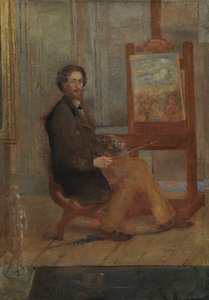
1860 - 1949 , Belgium
Explore 25 iconic John Singer Sargent paintings – from dazzling portraits to Impressionist landscapes. Discover the stories behind Madame X, El Jaleo & more! Find museum-quality art reproductions and elevate your home decor with BuyPopArt.com.

Explore the unsettling yet captivating world of James Ensor, a pioneer of Expressionism. Discover his satirical masterpieces, symbolic imagery & lasting influence on modern art. High-quality reproductions available at BuyPopArt.
Avastage James Abbott McNeill Whistler'i 25 võrratut meistriteost! Sukelduge esteetilisse kunstimaailma, õppige tema maalitehnikatest ja leidke täiuslik seina kaunistus BuyPopArt.com-ist. Kunstikollektsioonid & reprodutsioonid.

Explore 25 iconic Sir Alfred Munnings paintings! Discover the beauty of British Impressionism, equine art & rural England. Find museum-quality reproductions and elevate your home decor with BuyPopArt. Explore the full collection online.

Explore the transformative era of Early Modernism. From Cézanne's Post-Impressionism to the radical Russian Avant-Garde and Cubism, discover how masters broke tradition to redefine art history through our expert-led guide for collectors and enthusiasts.


Püsige kursis viimaste kunstiuudistega, eksklusiivsete pakkumistega ja sisustamisideetega.
Kirjeldage meile oma projekti ja meie kunstieksperdid pakuvad teile 3 isikupärast kunstiettepanekut.
Laske meil koostada just teile mõeldud 3 valikut – tasuta!


 Eelvaade
 Saada
Saada Jaga
Jaga
 Teave teose kohta

 Laadi alla
 Sarnased teosed
 Röntgenuuring
 Slaidietendus
 Loe lähemalt







 Klaasivalik on saadaval ainult suuruses kuni 110 cm