Ostke kõrglahutusel ja täiustatud digitaalne pilt, mis on oluliselt parem kui veebilehel näidatud eelvaade.
Iga fail on meie spetsialistide poolt hoolikalt ette valmistatud, kasutades kaasaegseid tööriistu ja professionaalset käsitsi retušeerimist. Tagame, et igal pildil on erakordne selgus, täpne värvitäpsus ja peen detail.
Lõplik fail saadetakse e-posti teel 72 tunni jooksul, olles optimeeritud koheseks kasutamiseks professionaalsetes, toimetuslikes ja trüki keskkondades. See on sama kvaliteet, mida usaldavad tipptasemel disainistuudiod, kirjastused ja galeriid.
Laadi alla kõrge resolutsiooniga fail isiklikuks vaatamiseks, trükkimiseks ja loomingulisteks projektideks. ( Osta print Osta käsitsi maalitud maal)
Valides BuyPopArt.com, ei saa sa lihtsalt pilti – saad professionaalselt parandatud digitaalse teose, mida on valmistatud täpsusega ja mis on toetatud rahuldamatusgarantiiga. Siin on kõik, mis sinu tellimusega automaatselt kaasneb:

Teie kõrge resolutsiooniga digitaalne pildifail saadetakse teile e-posti 72 tunni jooksul pärast tellimist – kohe kasutamiseks valmis.

Teie teos on professionaalselt optimeeritud arenenud tehisintellekti tööriistade ja käsitsi redigeerimise abil, tagades maksimaalse detailitaseme, selguse ja värvitäpsuse.

Kas kustutasid faili kogukalu unustamisel või kustutamisel? Puudub mure – saad selle uuesti igal ajal ilma lisatasuta.

Nautige oma teoseid koheselt ilma tolli-, maksude või tarnimaskuludeta – digiletchargused on alati maksuvabadud.

Me tagame, et teie digitaalne pilt kajastaks originaali värve professionaalsete tööriistade ja värvihalduse abil võimalikult täpselt.

Kui te ei ole oma digipildiga rahul, parandame seda või tagastame 100% summast 60 päeva jooksul – küsimusi ei esita.

Ei ole rahul? Saate täielise tagastaja 60 päeva jooksul pärast digitaalse faili kättesaamist – küsimata.

Osta 3 pilti, säästa 10% - Osta 5, säästa 15% - Osta 10+, säästa 20%. Sobib suurepäraselt loomingulisteks projektideks, galeriideks ja agentuurideks.
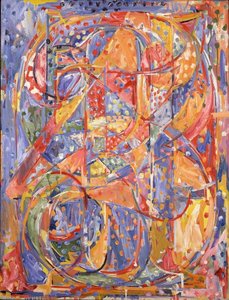
Jasper Johns' Ale Cans (1964) isn’t a grand statement; it’s not a revolutionary explosion of color or form. Instead, it resides in the deceptively simple depiction of two Ballantine Ale cans stacked atop one another. Yet within this seemingly mundane subject lies a profound exploration of perception, representation, and the very nature of art itself. Johns, a pivotal figure bridging Abstract Expressionism and Pop Art, wasn’t interested in simply replicating reality; he was fascinated by how we *see* it, and how that visual experience can be translated into a lasting image.

To fully appreciate Ale Cans, it’s crucial to understand its context within Johns' artistic development. He was deeply influenced by Marcel Duchamp’s concept of the “readymade”—ordinary, mass-produced objects elevated to the status of art simply through the artist’s selection and declaration. Johns didn’t transform the cans into something entirely new; he meticulously rendered them, almost obsessively, as if attempting to capture their essence. This echoes Duchamp's approach – taking the familiar and presenting it in a way that forces us to reconsider its meaning. The work is a direct response to the idea of elevating the commonplace, challenging traditional notions of artistic merit.
The lithograph itself, produced by Universal Limited Art Editions (ULAE), speaks volumes about this process. ULAE was renowned for its high-quality printing and its collaborative approach with artists like Johns, who worked closely with printers to achieve the desired effects. The careful layering of ink, the subtle variations in tone, and the deliberate inclusion of black scribbled lines all contribute to a sense of meticulousness and control – a stark contrast to the seemingly effortless nature of everyday objects.
One of the most striking aspects of Ale Cans is its unsettling juxtaposition of realism and abstraction. The cans appear three-dimensional, rendered with careful attention to detail – the labels, the metallic sheen, even the subtle shadows cast by the table. However, this illusion is immediately undermined by the stark black background, which is clearly flat. This creates a tension between the perceived reality of the objects and the inherent flatness of the printed medium. Johns deliberately exploits this contradiction, forcing the viewer to confront the limitations of representation and the artificiality of the image.
Deborah Wye, in her analysis for *Artists and Prints*, notes that “An interval of several months separated the execution of the first six stones and the seventh, the delicate border in black. The importance of this broken line should not be underestimated, for it at once separates and unites the image and the flatness of the paper.” This deliberate disruption highlights Johns’s conscious engagement with the printing process – he wasn't simply copying an object; he was actively shaping its representation within the constraints of the medium.
Beyond its formal qualities, Ale Cans carries a subtle symbolic weight. The cans themselves are instantly recognizable icons of American consumer culture – a ubiquitous symbol of leisure and refreshment. Johns’s repeated use of this image throughout his career reflects his broader interest in exploring American iconography and the ways in which everyday objects shape our understanding of national identity. The work can be seen as a meditation on the relationship between art, commerce, and the visual landscape of postwar America.
Reproductions of Ale Cans offer a unique opportunity to appreciate Johns’s masterful technique and his profound insights into the nature of representation. A hand-painted reproduction captures not only the image itself but also the artist's deliberate choices, allowing viewers to engage with the work on a deeper level.

1930 - , Ameerika Ühendriigid


Püsige kursis viimaste kunstiuudistega, eksklusiivsete pakkumistega ja sisustamisideetega.
Kirjeldage meile oma projekti ja meie kunstieksperdid pakuvad teile 3 isikupärast kunstiettepanekut.
Laske meil koostada just teile mõeldud 3 valikut – tasuta!


 Eelvaade
 Saada
Saada Jaga
Jaga
 Teave teose kohta

 Laadi alla
 Sarnased teosed
 Röntgenuuring
 Slaidietendus

 Loe lähemalt