


 LithographOtherExpressionist Surrealism
 1956Modern
 51.0 x 33.0 cm
Ostke kõrglahutusel ja täiustatud digitaalne pilt, mis on oluliselt parem kui veebilehel näidatud eelvaade.
Iga fail on meie spetsialistide poolt hoolikalt ette valmistatud, kasutades kaasaegseid tööriistu ja professionaalset käsitsi retušeerimist. Tagame, et igal pildil on erakordne selgus, täpne värvitäpsus ja peen detail.
Lõplik fail saadetakse e-posti teel 72 tunni jooksul, olles optimeeritud koheseks kasutamiseks professionaalsetes, toimetuslikes ja trüki keskkondades. See on sama kvaliteet, mida usaldavad tipptasemel disainistuudiod, kirjastused ja galeriid.
Laadi alla kõrge resolutsiooniga fail isiklikuks vaatamiseks, trükkimiseks ja loomingulisteks projektideks. ( Lülita trükile Lülita käsitsi maalatud版本le)
Valides BuyPopArt.com, ei saa sa lihtsalt pilti – saad professionaalselt parandatud digitaalse teose, mida on valmistatud täpsusega ja mis on toetatud rahuldamatusgarantiiga. Siin on kõik, mis sinu tellimusega automaatselt kaasneb:

Teie kõrge resolutsiooniga digitaalne pildifail saadetakse teile e-posti 72 tunni jooksul pärast tellimist – kohe kasutamiseks valmis.

Teie teos on professionaalselt optimeeritud arenenud tehisintellekti tööriistade ja käsitsi redigeerimise abil, tagades maksimaalse detailitaseme, selguse ja värvitäpsuse.

Kas kustutasid faili kogukalu unustamisel või kustutamisel? Puudub mure – saad selle uuesti igal ajal ilma lisatasuta.

Nautige oma teoseid koheselt ilma tolli-, maksude või tarnimaskuludeta – digiletchargused on alati maksuvabadud.

Me tagame, et teie digitaalne pilt kajastaks originaali värve professionaalsete tööriistade ja värvihalduse abil võimalikult täpselt.

Kui te ei ole oma digipildiga rahul, parandame seda või tagastame 100% summast 60 päeva jooksul – küsimusi ei esita.

Ei ole rahul? Saate täielise tagastaja 60 päeva jooksul pärast digitaalse faili kättesaamist – küsimata.

Osta 3 pilti, säästa 10% - Osta 5, säästa 15% - Osta 10+, säästa 20%. Sobib suurepäraselt loomingulisteks projektideks, galeriideks ja agentuurideks.
Marc Chagall’s “David and Bathsheba” (1956) isn't merely a depiction of a biblical narrative; it’s an immersion into the artist’s intensely personal, almost hallucinatory world. Created during a period of profound reflection for Chagall, this lithograph transcends simple storytelling, becoming a poignant exploration of desire, betrayal, and the weighty consequences of human action. The work immediately captivates with its stark monochrome palette – black ink against pristine white paper – lending it an immediate sense of timelessness and gravitas. It’s a visual poem rendered in charcoal-like lines, echoing the raw emotion at its core.
The composition itself is deliberately unsettling. Bathsheba, positioned slightly off-center yet dominating the vertical space, isn't presented with idealized beauty; instead, she appears vulnerable and contemplative, her form subtly distorted – a hallmark of Chagall’s style. The architectural element behind her, fragmented and almost dissolving into abstraction, creates an atmosphere of instability and suggests the crumbling foundations of David’s moral compass. Above all, the bird—a recurring motif in Chagall's work—looms large, its presence ambiguous; is it a symbol of divine observation, a harbinger of impending doom, or perhaps simply a reflection of the artist’s own restless imagination? The palm tree, a potent emblem of hope and resilience, offers a fragile counterpoint to the prevailing sense of melancholy.
Chagall's masterful use of line is central to the artwork’s power. He abandons realistic representation in favor of expressive gestures – loose, swirling lines that convey movement, emotion, and a profound sense of spontaneity. Hatching and cross-hatching are employed not just for tonal variation but also to build texture, suggesting the roughness of skin, the solidity of stone, and the ethereal quality of the dreamscape. The lines themselves seem to vibrate with an inner energy, mirroring the turmoil within the scene. The simplification of shapes – figures reduced to symbolic forms rather than anatomical accuracy – further emphasizes this emotional intent.
Lithography, Chagall’s chosen medium, perfectly suited his vision. This printmaking technique allows for incredible detail and a remarkable range of tonal values achieved through subtle variations in ink pressure. The resulting image possesses a captivating depth and luminosity, despite its monochromatic palette. The absence of a defined light source adds to the work's enigmatic quality; instead, Chagall relies on contrasts between light and shadow to sculpt form and create a sense of dramatic tension.
“David and Bathsheba” is deeply rooted in Chagall’s personal mythology. The biblical story itself—a tale of lust, betrayal, and divine retribution—resonates with themes prevalent in Jewish folklore concerning the dangers of unchecked desire and the consequences of transgression. The bird, frequently interpreted as a symbol of the soul or divine presence, reinforces this spiritual dimension. Furthermore, the artwork can be viewed as an exploration of Chagall’s own internal struggles – his grappling with faith, memory, and the complexities of human relationships. The melancholic mood is palpable, suggesting a profound sense of regret and the enduring weight of past actions.
This lithograph offers more than just a visual representation of a biblical scene; it's an invitation to contemplate the timeless themes of desire, morality, and the search for redemption. A reproduction captures this evocative power, allowing viewers to immerse themselves in Chagall’s dreamlike world and experience the emotional depth of his masterpiece.
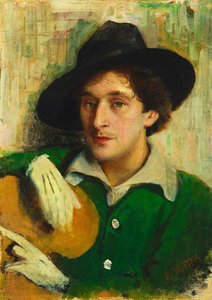
1887 - 1985 , Valgevene


Püsige kursis viimaste kunstiuudistega, eksklusiivsete pakkumistega ja sisustamisideetega.
Kirjeldage meile oma projekti ja meie kunstieksperdid pakuvad teile 3 isikupärast kunstiettepanekut.
Laske meil koostada just teile mõeldud 3 valikut – tasuta!


 Saada
Saada Jaga
Jaga
 Teave teose kohta

 Laadi alla
 Sarnased teosed
 Slaidietendus
 Loe lähemalt