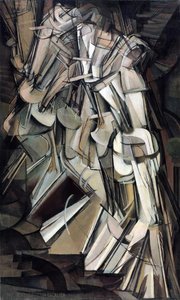
Muuseumikvaliteediga giclée- või kangasprint kiire tootmisega ja paindlikud viimistlusvõimalused. ( Osta käsitsi maalitud maal Osta pilt)





























Vali meie eelmääratud suurused, mis vastavad teose algupärastele proportsioonidele.

Saate sisestada oma mõõdud, et need sobiks konkreetse raami või ruumi sisse. Kui valitud suurus ei vasta originaalteose proportsioonidele, lõigame teose ära või laiendame pilti peegeldatud või ühtlase servaga. Enne tootmisprotsessi algust saadetakse Teie kinnitamiseks digitaalne näidis.
Palun märka, et ekraanil kuvatav eelvaade ei kajasta tegelikku lõigamist või laiendamist. Ainult näidis kujutab täpselt lõplikku kompositsiooni.
Kuigi erimõõdu on saadaval, soovitame originaaproportsioonide säilitamiseks valida mõõt ette määratud nimekirjast.
Ülemaailmne tarne () 2 nädala jooksul, tavalise 4/5 nädala asemel. (12 august)


Chessboard (Echiquier)
Reproduktsiooni suurus
Marcel Duchamp, a name synonymous with artistic revolution, consistently challenged the very definition of art throughout his prolific career. While celebrated for audacious “readymades” like *Fountain*, a porcelain urinal presented as sculpture, his explorations extended far beyond shock value. ‘Chessboard (Echiquier)’ from around 1937 offers a quieter, yet equally profound glimpse into Duchamp’s intellectual and artistic preoccupations. This isn't merely a depiction of a game; it is an embodiment of the artist’s lifelong fascination with strategy, intellect, and the dematerialization of art itself.
Duchamp’s relationship with chess was far from casual. He didn't simply play the game; he immersed himself in it, even contemplating a professional career as a chess master after largely abandoning painting in the early 1920s. This wasn’t a flight *from* art, but rather a redirection of artistic energy into a realm demanding logic, foresight, and abstract thought – qualities Duchamp increasingly valued over purely aesthetic concerns. ‘Chessboard (Echiquier)’ therefore becomes symbolic of this shift. The worn wood, the missing pieces, suggest not a game in progress, but a contemplation *of* the game, a frozen moment representing endless possibilities and strategic calculations. It’s a visual metaphor for the artist's own creative process: a deliberate arrangement of elements, a calculated disruption of expectations.
The simplicity of ‘Chessboard (Echiquier)’ is deceptive. Duchamp wasn’t interested in virtuoso painting or sculptural skill; his focus lay elsewhere. The work consists of sixty-four wooden squares nailed and glued onto plywood, a deliberately unrefined construction that emphasizes the object's conceptual nature over its aesthetic qualities. This deliberate lack of traditional artistic flourish aligns with Duchamp’s Dadaist principles – a rejection of bourgeois values and conventional artistic standards. By presenting a commonplace object—a chessboard—in an almost rudimentary form, he forces the viewer to question what constitutes art. Is it skill? Beauty? Or simply the artist's intention?
Duchamp’s impact on 20th and 21st-century art is immeasurable. He paved the way for Conceptual Art, Minimalism, and countless other movements that prioritize ideas over execution. ‘Chessboard (Echiquier)’ encapsulates this legacy perfectly. It's a work that doesn't demand to be *looked at* in the traditional sense; it demands to be *thought about*. Its enduring appeal lies not in its visual splendor, but in its ability to provoke questions and challenge assumptions. For collectors and interior designers alike, a reproduction of this piece offers more than just an aesthetic addition—it’s an invitation to engage with a pivotal moment in art history and a testament to the power of intellectual curiosity.

1887 - 1968 , Prantsusmaa

Master the high-impact world of contemporary abstraction. Discover how bold colors, textures, and modern movements like Abstract Expressionism can transform your space with premium, high-energy art curated for the design-conscious professional.

Dive into the high-energy world of Lyrical Abstraction. Explore how bold colors, fluid motion, and emotional depth define this modern masterpiece movement. Discover iconic artists and learn to bring this vibrant, soulful energy into your contemporary space.

Discover the power of Neo-Abstract art. Explore how bold geometric forms and high-impact visual energy are redefining modern design. Learn to curate sophisticated, high-energy spaces with the latest trends in contemporary abstraction and structural color.


Püsige kursis viimaste kunstiuudistega, eksklusiivsete pakkumistega ja sisustamisideetega.
Kirjeldage meile oma projekti ja meie kunstieksperdid pakuvad teile 3 isikupärast kunstiettepanekut.
Laske meil koostada just teile mõeldud 3 valikut – tasuta!


 Eelvaade
 Saada
Saada Jaga
Jaga
 Teave teose kohta

 Laadi alla
 Sarnased teosed
 Röntgenuuring
 Slaidietendus
 Loe lähemalt







 Klaasivalik on saadaval ainult suuruses kuni 110 cm