Õlimaal kangaruumilSeinakunstCubism
 1916Modernism
 53.0 x 64.0 cm
Muuseumikvaliteediga giclée- või kangasprint kiire tootmisega ja paindlikud viimistlusvõimalused. ( Osta käsitsi maalitud maal Osta pilt)





























Vali meie eelmääratud suurused, mis vastavad teose algupärastele proportsioonidele.

Saate sisestada oma mõõdud, et need sobiks konkreetse raami või ruumi sisse. Kui valitud suurus ei vasta originaalteose proportsioonidele, lõigame teose ära või laiendame pilti peegeldatud või ühtlase servaga. Enne tootmisprotsessi algust saadetakse Teie kinnitamiseks digitaalne näidis.
Palun märka, et ekraanil kuvatav eelvaade ei kajasta tegelikku lõigamist või laiendamist. Ainult näidis kujutab täpselt lõplikku kompositsiooni.
Kuigi erimõõdu on saadaval, soovitame originaaproportsioonide säilitamiseks valida mõõt ette määratud nimekirjast.
Ülemaailmne tarne () 2 nädala jooksul, tavalise 4/5 nädala asemel. (18 august)


The guitar
Reproduktsiooni suurus
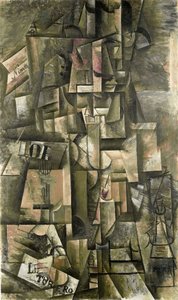
Pablo Picasso’s "The Guitar," painted in 1916, isn't merely a depiction of an instrument; it’s a profound statement about perception and the very nature of representation. This pivotal work from his Synthetic Cubist period embodies a radical shift away from the meticulous dissection of Analytic Cubism, embracing instead a dynamic exploration of form, space, and color. It’s a painting that demands attention, inviting viewers to lose themselves in its geometric complexity and emotional resonance.
Around 1912, Picasso spearheaded the movement known as Synthetic Cubism. Unlike its predecessor, which focused on breaking down objects into their constituent parts – analyzing them like a scientist – Synthetic Cubism sought to *reconstruct* images from simplified shapes and fragments. This is vividly realized in "The Guitar." The artist doesn’t attempt to create a realistic representation of the instrument; instead, he deconstructs it, rebuilding it with bold, overlapping planes of red, white, and black. A key element of this style was *papier collé* – the incorporation of actual materials like newspaper or fabric into the artwork, adding another layer of texture and visual interest. This technique elevates the guitar from a static object to a vibrant, almost architectural composition.
The painting’s composition is strikingly unconventional. Picasso presents three distinct views of the guitar simultaneously – the strings vibrating with potential energy, the solid body radiating strength, and the elegant neck reaching towards the viewer – all interwoven within a rigorously geometric framework. The oil on canvas allows for a rich, controlled palette, dominated by these powerful colors, while visible brushstrokes contribute to the painting’s tactile quality, emphasizing Picasso's hand in its creation. Notice the small circle near the center; it acts as a disruptive focal point, further intensifying the sense of dynamism and challenging traditional notions of balance. The layering of shapes creates an illusion of depth, pulling the viewer into this intricate spatial puzzle.
"The Guitar" resonates with deeper symbolic meaning. Beyond its obvious association with music – a universal language of emotion – it represents creativity, passion, and perhaps even the struggle for artistic expression. The fragmented representation itself speaks to a broader theme: the deconstruction of established norms and the subjective nature of perception. Picasso wasn’t simply painting a guitar; he was exploring how we see and understand the world around us. The painting evokes a sense of intellectual curiosity and invites contemplation, reminding us that art can be both visually stimulating and profoundly thought-provoking.
"The Guitar" stands as a cornerstone of modern art, influencing generations of artists who followed in Picasso’s footsteps. It exemplifies the boldness and innovation that defined Synthetic Cubism and paved the way for abstract expressionism and countless other artistic movements. Its enduring appeal lies not only in its technical mastery but also in its ability to capture a fundamental truth about human perception – that reality is often more complex, fragmented, and beautiful than we initially realize.

1881 - 1973 , Hispaania

Master the complexities of Cubism with our expert guide. Explore the revolutionary techniques of Picasso, from Analytical to Synthetic Cubism, and learn how to curate these powerful, fragmented perspectives for your private collection.

Explore the profound evolution of Synthetic Cubism. From Picasso’s innovative collages to Braque’s geometric mastery, discover how this movement redefined modern art through texture and form. A definitive guide for discerning collectors and art history enthusiasts.


Püsige kursis viimaste kunstiuudistega, eksklusiivsete pakkumistega ja sisustamisideetega.
Kirjeldage meile oma projekti ja meie kunstieksperdid pakuvad teile 3 isikupärast kunstiettepanekut.
Laske meil koostada just teile mõeldud 3 valikut – tasuta!


 Eelvaade
 Saada
Saada Jaga
Jaga
 Teave teose kohta

 Laadi alla
 Sarnased teosed
 Röntgenuuring
 Slaidietendus
 Loe lähemalt







 Klaasivalik on saadaval ainult suuruses kuni 110 cm