

Meie kunstnike poolt tellimusel valmistatud käsitsi maalitud õli-kainaste teos teie soovitud suuruses ja raamis. ( Osta print Osta pilt)





























Vali meie eelmääratud suurused, mis vastavad teose algupärastele proportsioonidele.

Sa võite sisestada oma mõõtmed konkreetse raami või ruumi sobivuse tagamiseks. Kui teie valitud suurus ei vasta originaalpildi proportsioonidele, siis kärvime kunstiteost või laiendame maali täiendavate käsitsi maalitud elementidega. Enne tootmise algust saadetakse teile heakskiitmiseks digitaalne eelvaade.
Palun pidage meeles, et ekraanil kuvatav eelvaade ei kajasta tegelikku kärpimist või laiendamist. Ainult eelvaade näitab täpselt lõplikku kompositsiooni.
Kuigi on saadaval kohandatud suurused, soovitame originaalproportsioonide säilimiseks valida mõõdud eelmääratletud nimekirjast.
Maailmline tarne 3–4 nädala jooksul tavalise 5 nädala asemel. (21 august). Kvaliteedis kompromisse ei tehta.


Art
Reproduktsiooni suurus
In the pantheon of twentieth-century masterpieces, few works possess the immediate, arresting power of Roy Lichtenstein’s 1962 creation, “Art.” At first glance, the piece presents a deceptively simple composition: the word itself, rendered in a commanding red, set against a luminous yellow backdrop. Yet, to view it merely as typography is to miss the profound intellectual rebellion contained within its borders. This work stands as a quintessential emblem of the Pop Art movement, a period when artists began to aggressively dismantle the boundaries between "high culture" and the everyday visual language of mass media. By elevating a single word into a monumental subject, Lichtenstein forces the viewer to confront the very definition of creativity, turning the gaze back upon the medium itself.
The emotional impact of the piece lies in its unapologetic tension. There is a rhythmic energy born from the stark juxtaposition of primary colors—the heat of the red clashing against the sunny, expansive yellow. This color palette does not merely decorate; it vibrates with a mechanical intensity that mirrors the burgeoning consumer culture of the mid-1960s. For the collector or interior designer, this piece offers more than just visual interest; it provides a focal point of dynamic stability. It is a work that commands a room, offering a sense of modern confidence and a playful yet sophisticated nod to the industrial age.
What truly distinguishes Lichtenstein’s hand from the spontaneous, gestural brushwork of his Abstract Expressionist predecessors is his meticulous devotion to the aesthetic of the printing press. In “Art,” we see the masterful application of halftone dots—a technique famously borrowed from the world of comic strips and commercial advertisements. Rather than seeking the soft, blended transitions found in classical oil painting, Lichtenstein utilized a grid of tiny, precise dots to create the illusion of depth and shading. This method effectively strips away the "hand of the artist," replacing subjective emotion with a cool, calculated precision.
This technique creates a fascinating paradox: the image feels simultaneously flat and multidimensional. The eye perceives a photographic quality, yet the brain recognizes the artificiality of the dot pattern. For those seeking to incorporate this reproduction into a curated space, this texture provides an incredible layer of visual complexity. Under different lighting conditions, the interplay of these mechanical patterns can transform the mood of a room, offering a crisp, clean aesthetic that complements both minimalist modernism and eclectic contemporary interiors.
To understand “Art” is to understand the cultural upheaval of its era. Emerging from the shadow of post-war anxiety, Lichtenstein’s work responded to a world increasingly saturated by advertisements, magazines, and cinema. By adopting the visual vocabulary of mass production, he challenged the perceived elitism of the fine art world. He sought to find beauty in the accessible, the reproducible, and the mundane. In doing this, he transformed the "low" art of comic books into a sophisticated critique of how we consume images and stories in an industrial society.
Owning a reproduction of such a seminal work is an invitation to participate in this ongoing dialogue between history and modernity. It serves as a reminder of a time when artists dared to look at the most common elements of daily life and find something profound. Whether placed in a professional gallery setting or as a bold accent in a private residence, Lichtenstein’s “Art” remains a timeless testament to the power of simplicity, the brilliance of color, and the enduring impact of the Pop Art revolution.


1923 - 1997 , USA
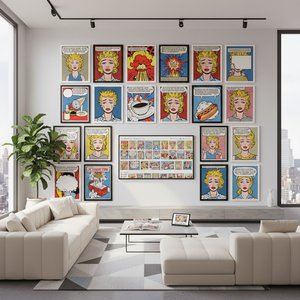
Avastage Roy Lichtensteini 25 parimat teost! Sukelduge popkunsti maailma, õppige maalidest ja tehnikatest. Kvaliteetsed reproduktsioonid ja interjööridisaini ideed BuyPopArt.com-is. Vaadake kollektsiooni!

Explore the industrial secrets of 1960s Pop Art. Discover how Ben-Day dots and silk screening transformed mass media into masterpieces by Roy Lichtenstein. An in-depth look at the intersection of mechanical printing and fine art history for students and collectors.
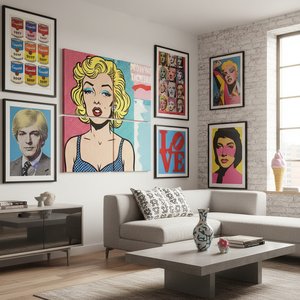
Avastage 10 popkunstistiili ikoonilist teost Andy Warholist Roy Lichtensteini. Lugege kunstiteoste lugusid, tehnikat ja ajaloogu. Leidke oma seina jaoks täiuslik maali BuyPopArt.com-is! Vaadake kollektsiooni.

Explore the world of giclée prints with BuyPopArt. Learn about archival quality, aesthetic nuances & investment potential. Expert guidance for discerning art collectors seeking museum-quality reproductions and lasting value.

Explore the psychological depth of Roy Lichtenstein's color theory. An expert analysis for art students and collectors on Ben-Day dots, primary palettes, and the intersection of Pop Art with mass media history.


Püsige kursis viimaste kunstiuudistega, eksklusiivsete pakkumistega ja sisustamisideetega.
Kirjeldage meile oma projekti ja meie kunstieksperdid pakuvad teile 3 isikupärast kunstiettepanekut.
Laske meil koostada just teile mõeldud 3 valikut – tasuta!


 Eelvaade
 Saada
Saada Jaga
Jaga
 Teave teose kohta

 Laadi alla
 Sarnased teosed
 Röntgenuuring
 Slaidietendus

 Loe lähemalt







 Klaasivalik on saadaval ainult suuruses kuni 110 cm


