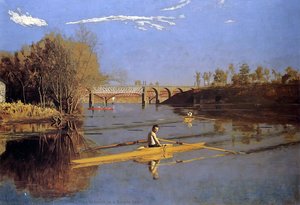
Muuseumikvaliteediga giclée- või kangasprint kiire tootmisega ja paindlikud viimistlusvõimalused. ( Osta käsitsi maalitud maal Osta pilt)





























Vali meie eelmääratud suurused, mis vastavad teose algupärastele proportsioonidele.

Saate sisestada oma mõõdud, et need sobiks konkreetse raami või ruumi sisse. Kui valitud suurus ei vasta originaalteose proportsioonidele, lõigame teose ära või laiendame pilti peegeldatud või ühtlase servaga. Enne tootmisprotsessi algust saadetakse Teie kinnitamiseks digitaalne näidis.
Palun märka, et ekraanil kuvatav eelvaade ei kajasta tegelikku lõigamist või laiendamist. Ainult näidis kujutab täpselt lõplikku kompositsiooni.
Kuigi erimõõdu on saadaval, soovitame originaaproportsioonide säilitamiseks valida mõõt ette määratud nimekirjast.
Ülemaailmne tarne () 2 nädala jooksul, tavalise 4/5 nädala asemel. (12 august)


Salutat
Reproduktsiooni suurus
Thomas Cowperthwait Eakins (1844-1916), born in Philadelphia, stands as a cornerstone of American art history. Unlike many artists of his era preoccupied with grand narratives or romantic ideals, Eakins relentlessly pursued the depiction of everyday life—the world of doctors, rowers, and hunters—with an unwavering commitment to anatomical precision and psychological insight.
His formative years instilled in him a profound appreciation for observation and scientific inquiry. This dedication would propel him to become one of the most influential realist painters of the late nineteenth century, challenging conventions and establishing a new standard for artistic representation. Eakins’s Philadelphia was not a city of picturesque vistas; it was a crucible of intellectual ferment—a place where he honed his skills and developed his distinctive vision.
Eakins’ artistic approach stemmed from a deep understanding of human anatomy. He meticulously studied musculature, striving to capture the subtle nuances of posture and movement—a practice that would inform his paintings with remarkable accuracy. This scientific rigor extended beyond mere anatomical representation; it served as a springboard for exploring psychological states.
Furthermore, Eakins favored a monochromatic palette—primarily shades of gray—to heighten emotional resonance. By eliminating color, he focused the viewer’s gaze on form and texture, emphasizing the expressive qualities of light and shadow. This technique underscores his belief that visual art could convey profound truths about human experience.
"Salutat" isn't simply a portrait; it’s an invitation to delve into the complexities of human consciousness. Eakins skillfully captures the vulnerability inherent in solitude—the man’s averted gaze conveying a sense of introspection and confronting unspoken anxieties.
The painting’s deliberate simplicity amplifies its impact, prompting viewers to consider questions of identity and perception. Like Elizabeth at the Piano and Portrait of Professor Henry A. Rowland – also available on BuyPopArt.com – “Salutat” exemplifies Eakins's unwavering dedication to portraying the human condition with unflinching honesty.

1844 - 1916 , Ameerika Ühendriigid

Explore the profound depth of American Realism. From the gritty Ashcan School to poignant social landscapes, discover how masters captured the raw soul of a nation through evocative oil paintings and timeless art history.


Püsige kursis viimaste kunstiuudistega, eksklusiivsete pakkumistega ja sisustamisideetega.
Kirjeldage meile oma projekti ja meie kunstieksperdid pakuvad teile 3 isikupärast kunstiettepanekut.
Laske meil koostada just teile mõeldud 3 valikut – tasuta!


 Eelvaade
 Saada
Saada Jaga
Jaga
 Teave teose kohta

 Laadi alla
 Sarnased teosed
 Röntgenuuring
 Slaidietendus


 Loe lähemalt







 Klaasivalik on saadaval ainult suuruses kuni 110 cm