PreviewPreview Tilaa painos Tilaa painosTilaa maalaus Tilaa maalaus JaaJaa
Tarkemmat tiedotTarkemmat tiedot Lisää suosikkeihin Lisää suosikkeihin LataaLataa SamanlaisiaSamanlaisia RöntgenkuvaRöntgenkuva DiaesitysDiaesitys

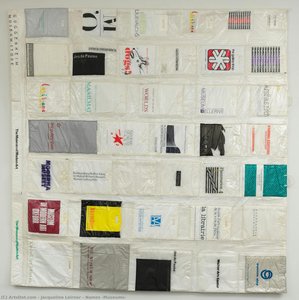
Untitled

Blinky Palermo (1943-1977) was a German abstract painter known for his minimalist monochromatic canvases, 'fabric paintings,' and innovative use of materials like aluminum & steel. Inspired by Malevich, Newman, and Kelly, his work explores form, colo

Osta korkearesoluutioinen, parannettu digitaalikuva, joka on laadultaan huomattavasti parempi kuin verkkosivuston esikatselu.

Jokainen tiedosto valmistellaan huolellisesti omien asiantuntijoidemme toimesta käyttäen edistyneitä työkaluja ja ammattitaitoista manuaalista retusointia. Varmistamme, että jokaisessa kuvassa on poikkeuksellinen selkeys, tarkka värintoisto ja hienovaraiset yksityiskohdat.

Lopputiedosto toimitetaan sähköpostitse 72 tunnin kuluessa, ja se on optimoitu välittömään käyttöön ammattimaisissa, toimituksellisissa ja painoympäristöissä. Laatu on sama, johon huipputason suunnittelustudiot, kustantajat ja galleriat luottavat.

Digitaalinen kuva

Lataa korkearesoluutioinen tiedosto henkilökohtaiseen näyttelyyn, tulostamiseen ja luoviin projekteihin.

Kokonaishinta

$9.99

Sisältyy jokaiseen digitaalisen kuvan tilaukseen

Asiantunteva digitaalinen toimitus, taattuun laatuun

Kun valitset BuyPopArt.com-palvelun, et saa vain kuvaa – saat ammattimaisesti parannetun digitaalisen taideteoksen, joka on luotu tarkkuudella ja jonka takaa tulee tyytyväisyystakuu. Tässä on kaikki, mitä tilauksesi sisältää, automaattisesti:

shipping_icon
Nopea digitaalinen toimitus

Korkearesoluutioinen digitaalinen kuvatiedostosi lähetetään sähköpostiisi 72 tunnin kuluessa tilauksesta – valmiina käytettäväksi välittömästi.

canvas_icon
Tekoälyllä parannettu digitaalinen tiedosto

Taiteilijasi teos on optimoitu ammattimaisesti edistyneiden tekoälytyökalujen ja manuaalisen muokkauksen avulla, mikä takaa maksimaalisen yksityiskohtaisuuden, selkeyden ja väritarkkuuden.

insurance_icon
Ilmainen elinikäinen uudelleenlähetyspalvelu

Oletko vahingossa poistanut tai kadottanut tiedostosi? Ei hätää – lähetämme sen sinulle uudelleen milloin tahansa täysin maksutta.

tax_icon
Ei tuontimaksuja – koskaan

Nauti taiteestasi välittömästi ilman tulleja, veroja tai toimitusmaksuja – digitaaliset lataukset ovat aina verovapaita.

color_icon
Värintoiston tarkkuustakuu

Varmistamme, että digitaalinen kuvasi vastaa alkuperäisiä värejä mahdollisimman tarkasti käyttämällä ammattilaistason työkaluja ja värinhallintaa.

return_icon
60 päivän tyytyväisyystakuu

Jos et ole tyytyväinen digitaaliseen kuvaasi, muokkaamme sitä tai palautamme 100% takaisin 60 päivän kuluessa – ilman kysymyksiä.

guarantee_icon
100% Rahat takaisin -takuu

Etkö ole tyytyväinen? Saat täyden hyvityksen 60 päivän kuluessa digitaalisen tiedostosi vastaanottamisesta – ilman kyselyitä.

discount_icon
Suurtilaaja-alennukset

Osta 3 kuvaa, säästä 10% - Osta 5, säästä 15% - Osta 10+, säästä 20%. Erinomainen valinta luoviin projekteihin, gallerioille ja toimistoille.


Taiteilijan elämäkerta

blinky palermo was a german abstract painter.
palermo was born peter schwarze in leipzig, germany, in 1943, and adopted as an infant, with his twin brother, michael, by foster parents named heisterkamp. he adopted his outlandish name in 1964, during his studies with bruno goller and joseph beuys at the kunstakademie düsseldorf between 1962 and 1967. the name refers to frank "blinky" palermo, an american mafioso and boxing promoter who managed sonny liston.
in 1969, palermo moved to mönchengladbach and set up a studio he would share with imi knoebel and ulrich rückriem. after a stay in new york in the early 1970s, he moved into gerhard richter's former düsseldorf studio.[citation needed]
blinky palermo died in 1977, aged 33, during a trip to the maldives, of causes that often are referred to as "mysterious" but widely acknowledged as related to palermo's drug use. his brother michael heisterkamp is the sole heir and owner of the copyright of palermo.
palermo was best known for his spare monochromatic canvases and "fabric paintings" made from simple lengths of colored material cut, stitched and stretched over a frame. he painted on aluminum, steel, wood, paper and formica, often making lines out of tape instead of paint.
under beuys, he became increasingly interested in the organized spatial relationship between form and colour, a polarity which is manifest throughout the rest of his oeuvre. in the mid 1960s, palermo moved away from conventional rectangular canvases and increasingly opted for surfaces such as the circle, triangle, cruciform, totem pole and even the interior walls of buildings. for example, untitled (totem) (1964) "...is simply a vertical strip of wood, 7 feet by about 2 inches. it is painted orange and punctuated, like a primitive ladder, with five short, horizontal pieces of canvas-wrapped wood, each painted white with a portion of a blue triangle". between 1964 and 1966, palermo produced a small series of paintings on canvas in which he experimented with constructivist principles of order.
between late 1966 and 1972 he produced a series of circa 65 stoffbilder (fabric paintings), consisting of colored materials of different widths sewn together along horizontal or vertical seams and attached to stretchers. he took the colour and material quality ready-made from department-store fabrics and had them stitched together by others.
in 1970, he and gerhard richter jointly submitted designs for the sports facilities for the 1972 olympic games in munich. for the front of the arena, they proposed an array of glass windows in 27 colors; each color would appear 50 times, with the distribution determined randomly.
beginning in 1968, palermo realized more than 20 murals and wall drawings at various sites in europe, including edinburgh and brussels, and recorded them in preparatory sketches and photographic documentation. the original work, however, having been affiliated with their place of installation, no longer exist. his times of the day i-iv consists of square, aluminum panels painted in colors arranged from bright to dark, a metaphor for the change sunlight through the day. he often outlined the shapes of some of the walls in a given room or filled them in with a different color, leaving only a border of the original white. a series of “metallbilder” (metal pictures) followed in 1972, a series of acrylic paintings on steel or aluminium. they follow a consistent formula: groupings of, usually, four panels, fairly widely separated, with each panel bearing a single main acrylic color area bracketed by bands of one other color at the top and the bottom.
after visiting new york with gerhard richter in 1970, he moved his practice to new york city in december 1973. once back in düsseldorf he produced to the people of new york city (1976), a 15-part work comprising 39 aluminum panels painted in variations of cadmium red, cadmium yellow, and black — the colors of the west and east german flags (and now the german one) - ever changing in pattern. it was shown at the heiner friedrich gallery, new york, in 1977, and at the dia art foundation in 1987.
palermo's first solo show was held in 1966 at galerie friedrich+dahlem in munich.[citation needed] he further participated in more than 70 exhibitions, including at documenta in 1972 and 1977,[citation needed] and at the 13th bienal de são paulo in 1975. in 1976, his work himmelsrichtungen was shown at the venice biennale.[citation needed]
in 1987, dia inaugurated its exhibition space in chelsea with major shows of works by palermo, beuys, and knoebel. palermo has also had posthumous retrospectives at the kunstmuseum winterthur (1984); kunstmuseum bonn (1993); museu d’art contemporani de barcelona, in co-production with the serpentine gallery, london (2002–2003); and the kunsthalle düsseldorf (2007). in 2010, the dia art foundation and the center for curatorial studies and art in contemporary culture at bard college presented a joint retrospective, the first in the united states, of works by palermo. the show was financed mostly with a $250,000 grant from gucci and also travelled to the los angeles county museum of art and the hirshhorn museum and sculpture garden in washington. in 2013, the david zwirner gallery organized an exhibition of palermo's works on paper from 1976-1977

more...
blinky palermo

blinky palermo

1943 - 1977