WatercolorWallArtContemporary Realism
 1924Modern
 34.0 x 49.0 cm
Museolaatuisia giclée- tai kankaitaulun tulosteita nopealla tuotannolla ja joustavilla viimeistelyvaihtoehdoilla. ( Osta käsintehty maalaus Osta kuva)





























Valitse valmiista mitoistamme sellaiset, jotka vastaavat teoksen alkuperäisiä mittasuhteita.

Voit syöttää omat mitat sopiaksesi tiettyyn kehykseen tai tilaan. Jos valittu koko ei vastaa alkuperäisen kuvan mittasuhteita, rajaamme teosta tai laajennamme kuvaa peilatulla tai yhtenäisellä reunalla. Digitaalinen mallikuva lähetetään hyväksyttäväksi ennen tuotannon aloittamista.
Huomaathan, että näytöllä näkyvä esikatselu ei vastaa lopullista rajausta tai laajennusta. Vain mallikuva näyttää lopullisen sommittelun tarkasti.
Vaikka räätälöityjä kokoja on saatavilla, suosittelemme valitsemaan mitat valmiista listasta alkuperäisten mittasuhteiden säilyttämiseksi.
Toimitus maailmanlaajuisesti () kahdessa viikossa tavallisen 4–5 viikon sijaan. (20 elokuu)


Haskell
Replikaatin koko
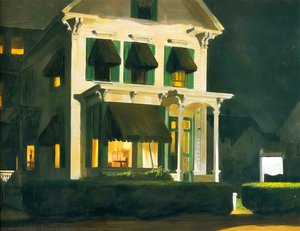
In the vast tapestry of American modernism, few works capture the delicate tension between presence and absence as effectively as Edward Hopper’s 1924 watercolor, Haskell. This evocative piece transcends a mere architectural study, offering instead a profound meditation on solitude and the quiet observation of the landscape. At first glance, the viewer is presented with a deceptively simple scene: a modest white house perched gracefully atop a gentle hillside, bathed in the soft, diffused light of a clear day. Yet, beneath this tranquil surface lies a palpable sense of introspection. Hopper utilizes the watercolor medium to masterfully manipulate tonal variations, allowing the creamy whites of the house's siding to contrast with the muted, earthy greens of the surrounding foliage. The composition is anchored by strong horizontal lines that mirror the expansive vista, creating a feeling of openness that paradoxically emphasizes the isolation of the dwelling.
The technical brilliance of Haskell lies in Hopper’s ability to use light as a narrative force. Through careful brushstrokes and precise geometric delineations, he imbue the architecture with a textural richness that feels both grounded and ethereal. The way shadows stretch across the expansive windows suggests a passing of time, inviting the viewer to linger within the stillness. This mastery of light and shadow is a hallmark of Hopper’s style, a technique that would later define his most iconic oil paintings. By integrating subtle architectural details with the organic flow of the landscape, he creates a visual equilibrium that is both unsettling and deeply captivating, prompting a contemplation of what lies hidden behind those silent windows.
To understand Haskell, one must look toward the cultural landscape of post-World War I America. Painted during an era of rapid industrialization and burgeoning urbanization, the work aligns with the spirit of American Regionalism—a movement dedicated to portraying the authentic, unvarnished essence of everyday life. As cities grew more crowded and complex, a new sense of alienation began to permeate the collective psyche. Hopper captures this burgeoning modern loneliness not through grand tragedy, but through the quietude of a single hilltop home. The inclusion of two small figures near the base of the composition serves as a vital human element; they are observers within the frame, much like the viewer, yet their presence subtly disrupts the stillness, reminding us of the human connection to the vast, often indifferent, landscape.
For the discerning collector or interior designer, Haskell offers more than just aesthetic beauty; it provides a window into a pivotal moment in art history. The painting’s ability to evoke both peace and a subtle, underlying anxiety makes it a versatile masterpiece for modern spaces. It possesses a timeless quality that complements sophisticated, minimalist interiors, where its soft palette and structural clarity can serve as a focal point of contemplation. Whether viewed as a relic of early 20th-century realism or as a contemporary symbol of mindfulness and retreat, this watercolor remains an enduring testament to Hopper’s ability to find the extraordinary within the ordinary.

1931 - 1967 , Yhdysvallat

Tutustu Edward Hopperin 25 vaikuttavinta mestariteosta! Uppoudu amerikkalaisen realismin maailmaan, valon ja varjon leikkiin sekä taiteilijan ainutlaatuiseen tunnelmaan. Löydä inspiraatiota kotiisi BuyPopArt.com:sta – laadukkaat taidevedokset ja julisteet.

Tutustu 10 legendaariseen vesivärimaalaukseen, jotka muuttivat taiteen historiaa! Inspiroiva tarina Turnerista Monetiin. Löydä upeita akvarelleja ja sisustusideoita BuyPopArtilla. Tutki kokoelma verkossa!

Explore the captivating world of watercolor painting! Discover its rich history, essential techniques, influential artists & collecting tips. A comprehensive guide for art enthusiasts from BuyPopArt.

Explore the captivating world of watercolor painting! Discover its rich history, essential techniques, influential artists & collecting tips from art experts. A comprehensive guide for enthusiasts.

Tutustu amerikkalaisen realismin 10 mestariteokseen! Andrew Wyethistä Edward Hopperiin – taidetta, tarinoita ja inspiraatiota kotiisi. Laadukkaat taideprintit BuyPopArt.comissa. Tutustu kokoelmaan verkossa!


Pysy ajan tasalla uusimmista taideuutisista, eksklusiivisista tarjouksista ja sisustusideoista.
Kerro meille projektistasi, niin taideasiantuntijamme tarjoavat sinulle kolme henkilökohtaista taidesuositusta.
Anna meidän kuratoida 3 vaihtoehtoa juuri sinulle – Ilmaiseksi!


 Esikatselu
 Jaa
Jaa Jaa
Jaa
 Tarkemmat tiedot

 Lataa
Lataa
 Samanlaisia
 Röntgenkuva
 Diaesitys
 Näytä lisää







 Lasivaihtoehto on saatavilla vain alle 110 cm kokoisina teoksina