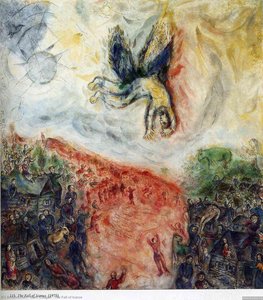
Museolaatuisia giclée- tai kankaitaulun tulosteita nopealla tuotannolla ja joustavilla viimeistelyvaihtoehdoilla. ( Vaihda käsinmaalattuun versioon Vaihda kuvaksi)





























Valitse valmiista mitoistamme sellaiset, jotka vastaavat teoksen alkuperäisiä mittasuhteita.

Voit syöttää omat mitat sopiaksesi tiettyyn kehykseen tai tilaan. Jos valittu koko ei vastaa alkuperäisen kuvan mittasuhteita, rajaamme teosta tai laajennamme kuvaa peilatulla tai yhtenäisellä reunalla. Digitaalinen mallikuva lähetetään hyväksyttäväksi ennen tuotannon aloittamista.
Huomaathan, että näytöllä näkyvä esikatselu ei vastaa lopullista rajausta tai laajennusta. Vain mallikuva näyttää lopullisen sommittelun tarkasti.
Vaikka räätälöityjä kokoja on saatavilla, suosittelemme valitsemaan mitat valmiista listasta alkuperäisten mittasuhteiden säilyttämiseksi.
Toimitus maailmanlaajuisesti () kahdessa viikossa tavallisen 4–5 viikon sijaan. (11 elokuu)


David
Replikaatin koko
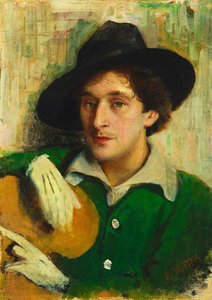
Marc Chagall’s “David,” painted in 1914, is not merely a depiction of a man with a guitar; it’s an immersion into the artist’s deeply personal world, a realm where reality dissolves into dream and memory. Born Moishe Shagal in 1887 in Liozna, Belarus – a town that would forever haunt his artistic imagination – Chagall established himself as one of the most distinctive voices of the early 20th century. This particular work exemplifies his signature style: a vibrant, almost hallucinatory blend of Cubist influences with deeply rooted Jewish folklore and a profound yearning for home. The painting immediately draws the eye to the central figure, a man seemingly lost in contemplation, cradling a guitar as if it were a precious relic. The bird perched upon the instrument adds another layer of symbolic richness, representing freedom, spirituality, and perhaps even the artist’s own restless spirit.
Beyond its formal qualities, “David” is laden with potent symbolism. The guitar itself represents music, a universal language of emotion and memory, but also perhaps a longing for connection to the past. The bird, frequently appearing in Chagall’s work, symbolizes freedom, spiritual aspiration, and the ability to transcend earthly limitations. The posture of the figure – gazing downwards, lost in thought – suggests introspection and a desire to recapture vanished moments. It's a scene that evokes a sense of melancholy beauty, reminiscent of biblical narratives and folk tales.
Painted in 1914, just as Europe was teetering on the brink of war, “David” reflects a world grappling with uncertainty. Chagall's art offered an escape from the anxieties of the era, transporting viewers to a realm of heightened emotion and imaginative possibility. This reproduction captures not only the visual impact of the original but also the profound emotional resonance that continues to captivate audiences today. It’s a testament to Chagall’s ability to transform personal memory into universal symbols, inviting us to contemplate our own place in time and the enduring power of dreams.
1887 - 1985 , Belarus

Säilytä matkamuistosi ikuisesti upealla öljyvärimaalauksella! Tilaa henkilökohtainen, ammattitaitoisen taiteilijan toteuttama teos valokuvastasi. Laadukkaat materiaalit ja 100% tyytyväisyystakuu.

Tutustu 10 legendaariseen öljyvärimaalaukseen, jotka muuttivat taiteen historiaa! Leonardo da Vinci, Van Gogh ja Monet – mestariteokset tarinoineen. Löydä inspiraatiota sisustukseesi ja korkealaatuiset taidekopiot BuyPopArt.comista.

Tutustu kubismin mestariteoksiin! Picasso, Braque ja muut taiteilijat muuttivat taidemaailmaa. Inspiroi sisustusta modernilla abstraktilla taiteella – löydä upeita julisteita ja tauluja BuyPopArt.com:sta.

Tutustu kubismin ja ekspressionismin 10 ikonista mestariteosta! Picasso, Braque & Kandinsky – taiteen historiaa BuyPopArt.comissa. Löydä korkealaatuiset taideprintit ja inspiroi sisustusta ajattomilla teoksilla. Tutki kokoelma verkossa!
Tutustu Katsushika Hokusain 25 mestariteokseen! Ukiyo-e taidetta, Fuji-vuori ja ikoninen Suuri aalto Kanagawassa. Löydä japanilaisen estetiikan kauneus ja inspiroi sisustusta museolaatuisilla taideprintteillä BuyPopArt.comissa.


Pysy ajan tasalla uusimmista taideuutisista, eksklusiivisista tarjouksista ja sisustusideoista.
Kerro meille projektistasi, niin taideasiantuntijamme tarjoavat sinulle kolme henkilökohtaista taidesuositusta.
Anna meidän kuratoida 3 vaihtoehtoa juuri sinulle – Ilmaiseksi!


 Esikatselu
 Jaa
Jaa Jaa
Jaa
 Tarkemmat tiedot

 Lataa
Lataa
 Samanlaisia
 Röntgenkuva
 Diaesitys

 Näytä lisää







 Lasivaihtoehto on saatavilla vain alle 110 cm kokoisina teoksina