

Huile sur toile peinte à la main, avec cadre et dimensions personnalisés, réalisée sur commande par nos artistes. ( Commander l'impression Télécharger l'image haute résolution)





























Choisissez parmi nos formats prédéfinis qui respectent les proportions originales de l’œuvre.

Vous pouvez saisir vos propres dimensions pour l'adapter à un cadre ou à un espace spécifique. Si la taille sélectionnée ne correspond pas aux proportions de l'image d'origine, nous recadrerons l'œuvre ou prolongerons la peinture avec des éléments peints à la main supplémentaires. Une maquette numérique vous sera envoyée pour approbation avant le début de la production.
Veuillez noter que l'aperçu à l'écran ne reflète pas le recadrage ou l'extension réels. Seule la maquette montrera fidèlement la composition finale.
Bien que des tailles personnalisées soient disponibles, nous vous recommandons de sélectionner une dimension dans la liste prédéfinie afin de préserver les proportions d'origine.
Livraison dans le monde entier () en 3 à 4 semaines au lieu des 5 semaines habituelles. (18 août). Aucun compromis sur la qualité.


Saint Andrew
Format de la reproduction
François Duquesnoy’s sculpture of Saint Andrew stands as an emblem of the High Renaissance's transition into the Baroque era, embodying both intellectual rigor and dramatic emotion. Created in 1629 for St. Peter’s Basilica, it represents more than just a depiction of a biblical figure; it embodies the aspirations of papal Rome during its zenith – a desire to express faith with unparalleled magnificence.
Born in Nettuno in 1597, François Duquesnoy emerged from the Flemish artistic tradition, inheriting a penchant for idealized forms and meticulous detail. However, unlike many of his contemporaries who embraced Bernini’s theatrical exuberance, Duquesnoy skillfully blended classical influences with Baroque dynamism. His approach was notably favored by Alessandro Algardi, demonstrating an understanding of sculptural principles rooted in antiquity.
The statue itself is crafted from marble—a material chosen for its permanence and ability to convey solidity and dignity. Duquesnoy’s technique involved painstaking carving, utilizing chisels and hammers with unwavering precision. The sculptor meticulously studied antique sculpture, famously climbing over the equestrian Marcus Aurelius to grasp the intricacies of Roman construction methods – a testament to his dedication to mastering the art form.
Despite its imposing size (approximately 4.68 meters), Duquesnoy’s St Andrew avoids overt melodrama. The pose—Andrew leaning over the crux decussata, holding aloft the cross—is deliberately restrained, conveying a profound sense of sorrow and acceptance. This quiet contemplation contrasts sharply with the flamboyant gestures characteristic of Bernini's works, highlighting Duquesnoy’s preference for subtlety and spiritual depth.
Installed alongside Bernini’s Saint Longinus in the basilica’s crossing, St Andrew occupies a prominent position within St. Peter’s architectural grandeur. The four colossal statues beneath the dome are considered masterpieces of Baroque sculpture, symbolizing the Church’s faith and majesty. Duquesnoy's statue serves as a poignant reminder of the humanist ideals that underpinned the Renaissance—a celebration of human form rendered with unparalleled skill and sensitivity.

1597 - 1643 , Italie
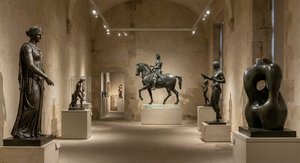
Plongez dans l'univers fascinant des 10 sculptures en bronze les plus emblématiques de l'histoire de l'art. Rodin, Degas et autres maîtres révélés ! Découvrez leur histoire, leurs techniques et trouvez l'œuvre parfaite pour sublimer votre intérieur sur BuyPopArt.com.

Explore the life & revolutionary art of Gian Lorenzo Bernini, the master sculptor of the Baroque era. Discover his iconic works like David and Ecstasy of Saint Teresa – a journey into Roman artistic genius.

Explore the rich history of sculpture from ancient masterpieces to contemporary innovations. Discover key techniques, influential artists & investment potential for discerning art collectors.
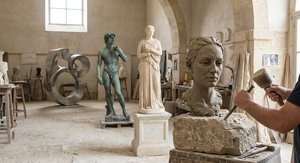
Explore the rich history of sculpture with BuyPopArt. Discover key techniques, influential artists & investment potential for discerning collectors. Expert insights into valuing and collecting timeless masterpieces.

Explore the dramatic world of Baroque art! Discover its history, defining characteristics, & lasting influence on painting & sculpture. Expert insights into Caravaggio, Zurbarán, and Bernini – plus high-quality reproductions at BuyPopArt.


Restez informé(e) des dernières actualités artistiques, des offres exclusives et des idées de décoration.
Parlez-nous de votre projet et nos experts en art vous proposeront 3 suggestions d'œuvres personnalisées.
Laissez-nous sélectionner 3 œuvres rien que pour vous – Gratuit !


 Aperçu en situation
 Envoyer
 Partager
 Détails de l'œuvre

 Télécharger
 Articles similaires
 Radiographie
 Diaporama


 Lire la suite







 L'option verre n'est disponible que pour les dimensions inférieures à 110 cm.


