Cornelis Norbertus Gijsbrechts: Master of Illusion|Artist Biography
Cornelis Norbertus Gijsbrechts (1640 – after 1675) remains an enigmatic figure in seventeenth-century art history, shrouded in obscurity despite producing a remarkable body of work characterized by its masterful trompe l'œil technique. Precise biographical details are scarce; his birthplace is uncertain, and information regarding his later life is fragmentary—a frustrating paradox for scholars attempting to reconstruct his artistic journey. Nevertheless, Gijsbrechts’ legacy endures as one of the foremost practitioners of this innovative genre, cementing his place among the luminaries of the Dutch Golden Age and beyond.
Early Life and Artistic Training
Information about Gijsbrechts' formative years is sparse. Born sometime around 1640 in Antwerp—likely influenced by his father, Franciscus Gysbrechts, a celebrated trompe l’œil painter—he received an artistic education that honed his skills in illusionistic painting. While specifics regarding his training remain elusive, it’s plausible he studied under prominent Flemish masters of the era, absorbing techniques and stylistic sensibilities prevalent at the time. His early output demonstrates a dedication to mastering perspective and creating convincing visual representations of three-dimensional space—a cornerstone of trompe l'œil artistry. The meticulous observation of natural light and shadow was paramount to his artistic endeavors, mirroring the Baroque preoccupation with dramatic effects and conveying profound emotional resonance.
The Trompe L'Oeil Technique: A Revolutionary Vision
Gijsbrechts’ artistic breakthrough arrived with his embrace of trompe l'œil, an ambitious genre that sought to deceive the eye by presenting painted surfaces as if they were real objects. Unlike traditional painting which strives for accurate depiction, trompe l'œil deliberately exploits optical illusions—depth perception, shading, and visual cues—to generate a startling sensation of presence. This technique demanded exceptional draughtsmanship, meticulous attention to detail, and an understanding of how light interacts with surfaces. Gijsbrechts skillfully employed these principles to conjure breathtaking vistas within canvases, blurring the boundaries between illusion and reality. He achieved this remarkable feat by painstakingly recreating architectural elements, drapery folds, and even textures—creating a visual experience that captivated viewers and challenged their perceptions of what was “real.” The trompe l'œil technique wasn’t merely about visual trickery; it represented a philosophical statement concerning the nature of perception itself.
Notable Works and Artistic Style
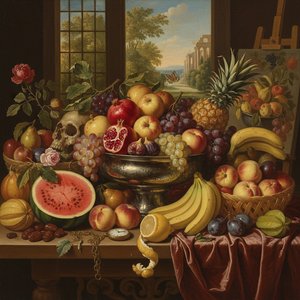
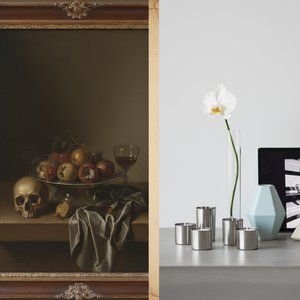
Gijsbrechts’ oeuvre comprises approximately 70 paintings—a significant proportion of which are found in Denmark's National Gallery ( SMK), where they represent a cornerstone of Baroque art. Among his most celebrated creations is “Reverse Side of a Painting,” a stunning example of trompe l'œil that depicts a partially rolled-up canvas, complete with brushes and palette—a self-referential gesture reflecting the artist’s preoccupation with the very process of artistic creation. This ambitious undertaking exemplifies Gijsbrechts’ mastery of illusionistic painting and underscores his commitment to exploring complex themes related to artmaking and representation. His still lifes, particularly those incorporating vanitas motifs—symbols representing mortality and the transience of earthly existence—are equally noteworthy. These paintings are characterized by their sombre palettes, meticulous rendering of textures, and a profound contemplation of human fragility. Recurring themes include skulls, hourglasses, decaying fruit, and musical instruments—all serving as reminders of life’s inevitable decline. The artist's compositions often convey a sense of melancholy and introspection, mirroring the Baroque tradition's fascination with psychological depth and emotional intensity.
Service to Danish Royalty and Artistic Legacy
Gijsbrechts gained considerable renown during his tenure as court artist to Frederik III and Christian V of Denmark (1668–70 & 1670–72). During this period, he produced several monumental paintings for Rosenborg Castle—a testament to the royal patronage that fueled artistic innovation. The commissioning of these works demonstrates the importance of aristocratic support in fostering artistic excellence during the Baroque era. His work exemplifies the Baroque aesthetic’s grandeur and emotional intensity, reflecting the anxieties and aspirations of the Danish monarchy amidst turbulent political circumstances. He stands as a singular figure in Baroque art history, forever remembered as the artist who dared to trick the eye and provoke profound reflection on the human condition—a legacy celebrated for its audacious illusionism and its enduring exploration of philosophical themes concerning death and remembrance.