Nikolai Kopeikin: A Surrealist Voice of Modern Russia
Nikolai Kopeikin, born in Saint Petersburg in 1966, is a Russian artist whose distinctive style—dubbed “multirealism”—has garnered international acclaim. He’s not merely depicting scenes; he's crafting narratives that challenge perceptions and playfully satirize the complexities of contemporary life, blending elements of surrealism, pop art, and folklore into canvases brimming with unsettling beauty and ironic humor. Kopeikin’s approach distinguishes him from many of his contemporaries, establishing a singular artistic vision rooted in both meticulous observation and imaginative distortion—a perspective that continues to inspire artists globally.
Early Life & Artistic Beginnings: Despite eschewing formal academic training—claiming a birthdate of February 6th, 1936—Kopeikin’s passion for drawing surfaced early in his childhood. Spending hours sketching captivated him, foreshadowing the meticulous detail that would characterize his later works. His diplomas from BGPI and MGIMO reflect interests beyond painting, demonstrating a breadth of intellectual curiosity alongside artistic talent. This formative period instilled within him a profound appreciation for visual storytelling and fueled his lifelong dedication to capturing the essence of human experience through art.
Musical Collaborations & Creative Associations: Kopeikin’s artistic pursuits extended beyond visual art; he found fulfillment as a musician with the band NOM (“Informal Youth Association”), collaborating for over fifteen years. This partnership fostered experimentation and pushed him to explore new sonic landscapes, mirroring his stylistic explorations in painting—a deliberate juxtaposition of sound and image that underscores his belief in interdisciplinary creativity. Furthermore, he founded KOLHUI ("Wizard artists"), a creative collective dedicated to fostering artistic innovation and challenging conventional boundaries; an endeavor that solidified his commitment to collaborative artistic endeavors and promoting unconventional perspectives within the art world.
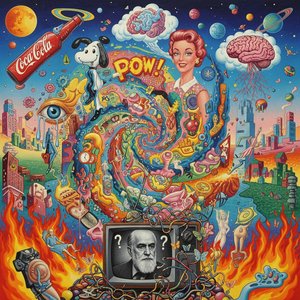
Style & Technique: Kopeikin’s “multirealism” is instantly recognizable—a deliberate fusion of Soviet agitational posters' bold visual language with absurdist folklore and the expressive techniques of children’s book illustrations. He meticulously recreates familiar subjects – often Saint Petersburg landmarks – but imbues them with fantastical elements and jarring juxtapositions, creating a disconcerting yet captivating effect. This technique isn’t simply about accuracy; it’s about amplifying emotional impact through carefully considered visual cues—a masterful blend of observation and illusion that distinguishes his oeuvre from many others. He achieves this remarkable feat by layering textures, colors, and symbols to convey profound narratives beneath the surface appearance.
Notable Works & Exhibitions: Kopeikin's oeuvre includes iconic pieces like “Incident at an Elephant Corral,” which captures the chaotic beauty of urban life with a surreal twist—a testament to his ability to distill complex ideas into striking visual representations. His paintings have been showcased in numerous galleries across Russia and Europe—including Erarta Museum of Contemporary Art in Saint Petersburg—demonstrating his widespread recognition within the artistic community and cementing his place as one of Russia’s foremost contemporary artists. Collaborations with filmmakers like Belarusian Byel and Paseka further broadened his creative horizons, showcasing his versatility and commitment to exploring diverse mediums.
Legacy & Influence: Kopeikin's work transcends mere aesthetic pleasure; it serves as a commentary on societal anxieties and cultural traditions—a deliberate provocation designed to stimulate contemplation and encourage viewers to question accepted norms. He’s recognized for injecting humor into serious subjects, prompting audiences to embrace unexpected perspectives and fostering dialogue about the human condition. His influence extends beyond his own paintings, inspiring artists who appreciate the power of blending disparate influences—a singular voice resonating within the vibrant tapestry of contemporary Russian art history—and securing his enduring contribution to artistic discourse.