Giclée tisak muzejske kvalitete ili otisak na platnu uz brzu proizvodnju i fleksibilne opcije završne obrade. ( Kupi ručno naslikanu sliku Kupi digitalnu sliku)





























Odaberite jednu od naših unaprijed definiranih veličina koje odgovaraju izvornim proporcijama umjetničkog djela.

Možete unijeti vlastite dimenzije kako biste umjetničko djelo prilagodili specifičnom okviru ili prostoru. Ako odabrana veličina ne odgovara proporcijama izvornog rada, izrezat ćemo dio slike ili je proširiti pomoću ogledalnog efekta ili jednobojne rubne površine. Digitalni prikaz (mockup) bit će vam poslan na odobrenje prije početka proizvodnje.
Imajte na umu da pregled na zaslonu ne odražava stvarno izrezivanje ili proširivanje. Samo će mockup točno prikazati konačnu kompoziciju.
Iako su dostupne prilagođene veličine, preporučujemo odabir dimenzije iz unaprijed definirane liste kako biste očuvali izvorne proporcije.
Dostava širom svijeta () u roku od 2 tjedna umjesto standardnih 4/5 tjedana. (13 Kolovoz)


untitled (9355)
Veličina reprodukcije
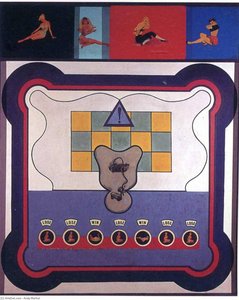
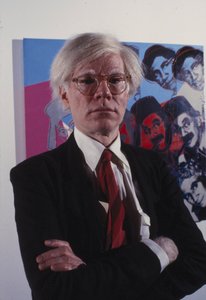
The image before us – an untitled work by the master of Pop Art, Andy Warhol – offers a fascinating glimpse into the artist's preoccupation with celebrity, public persona, and the subtle dynamics of human interaction. Depicting a man speaking into a microphone alongside a woman adorned with a hat, set against the backdrop of a book-lined wall, the painting feels less like a formal portrait and more like a candid snapshot of a fleeting moment. It’s a scene brimming with implied narrative; we are invited to speculate on the context – is it a lecture, an interview, or perhaps even a performance? This ambiguity is central to Warhol's artistic strategy.
Warhol, born Andrew Warhola Jr. in 1928 Pittsburgh, rose to prominence by blurring the lines between high art and popular culture. His early life, marked by illness and a subsequent immersion in drawing during periods of confinement, laid the foundation for his later artistic explorations. After establishing himself as a successful commercial illustrator in New York, Warhol understood the power of repetition, branding, and visual communication – elements he would brilliantly incorporate into his fine art. While the specific technique employed in this particular work remains unspecified without further detail on its creation (whether it’s a painting, print or mixed media), it undoubtedly reflects Warhol's signature style. He frequently utilized silkscreen printing, allowing for the mechanical reproduction of images and the exploration of variations in color and form. The flatness of the composition, the potential use of bold colors, and the slightly detached quality of the figures all point towards his established aesthetic.
The seemingly mundane details within the painting – the bookcase overflowing with volumes, the woman’s hat, even the handbag casually placed in the corner – are not accidental. Warhol elevated everyday objects and scenes to the realm of art, challenging traditional notions of subject matter. The books suggest intellect, knowledge, or perhaps a carefully constructed facade of erudition. The microphone symbolizes communication, performance, and the power of voice. And the woman, observing the speaker, embodies the audience – passive recipients of information or active participants in a dialogue? Warhol’s work often invites such questions, refusing to offer easy answers. He was fascinated by the “superstars” he cultivated at his studio, The Factory, individuals who embodied the burgeoning celebrity culture of the 1960s and 70s. This painting, while not explicitly depicting a famous figure, shares that same fascination with public image and the constructed nature of identity.
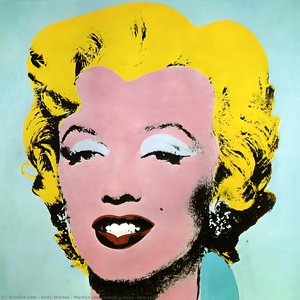
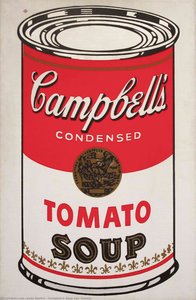
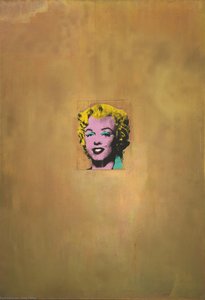
Despite its seemingly detached aesthetic, Warhol’s work possesses a profound emotional resonance. There's a sense of loneliness or alienation lurking beneath the surface of this scene, a feeling amplified by the anonymity of the figures. The painting doesn’t offer intimacy; it presents observation. It reflects a world increasingly mediated by images and mass communication, where genuine connection can feel elusive. Warhol’s legacy extends far beyond his iconic depictions of Marilyn Monroe and Campbell's Soup Cans. He fundamentally altered our understanding of art, challenging its boundaries and forcing us to confront the relationship between art, commerce, and celebrity. A reproduction of this “Untitled” work would serve as a compelling statement piece, sparking conversation and inviting contemplation on the complexities of modern life.
1928 - 1987 , Sjedinjene Američke Države

Discover how Aggressive Pop Art is shattering minimalism to redefine urban design. Explore the high-impact trends of Neo-Pop, street style aesthetics, and bold graphic movements shaping modern interiors and contemporary culture.

Go behind the scenes of Pop Art's visual revolution. Discover the industrial secrets of Warhol’s silk screens and Lichtenstein’s iconic Ben-Day dots. Explore how mass production tech transformed everyday imagery into high-impact, legendary fine art masterpieces.

Ditch the clichés. Celebrate a legendary retirement with bold Pop Art masterpieces. From Warhol-inspired oils to custom street art commissions, discover high-impact, hand-painted works designed to make a statement. Elevate their next chapter with unmistakable style and color.

Discover how the Pop Art revolution and street art vibes are redefining modern interiors. Explore trend forecasts on bold colors, iconic imagery, and high-impact graphic styles to transform your space with unapologetic, culturally-driven aesthetic energy.

Explore the high-octane fusion of classical icons and modern street art. Discover how bold pop aesthetics and urban textures are redefining contemporary interiors through our expert trend forecast for collectors and design enthusiasts.


Budite u tijeku s najnovijim umjetničkim vijestima, ekskluzivnim ponudama i idejama za dekoraciju.
Recite nam nešto o svom projektu, a naši će stručnjaci za umjetnost pripremiti 3 personalizirana prijedloga umjetnina.
Dopustite nam da odaberemo 3 opcije samo za Vas – Besplatno!


 Pregledaj u stvarnoj veličini
 Pošalji
 Podijeli
 Detalji o umjetničkom djelu

 Preuzmi
 Slični predmeti
 Rentgenska snimka
 Automatska prezentacija
 Prikaži više







 Opcija stakla dostupna je samo za dimenzije manje od 110 cm