

 Impressionism
 1946
1946 84.0 x 64.0 cm
 The National Archives
Giclée tisak muzejske kvalitete ili otisak na platnu uz brzu proizvodnju i fleksibilne opcije završne obrade. ( Kupi ručno naslikanu sliku Kupi digitalnu sliku)
Odaberite jednu od naših unaprijed definiranih veličina koje odgovaraju izvornim proporcijama umjetničkog djela.

Možete unijeti vlastite dimenzije kako biste umjetničko djelo prilagodili specifičnom okviru ili prostoru. Ako odabrana veličina ne odgovara proporcijama izvornog rada, izrezat ćemo dio slike ili je proširiti pomoću ogledalnog efekta ili jednobojne rubne površine. Digitalni prikaz (mockup) bit će vam poslan na odobrenje prije početka proizvodnje.
Imajte na umu da pregled na zaslonu ne odražava stvarno izrezivanje ili proširivanje. Samo će mockup točno prikazati konačnu kompoziciju.
Iako su dostupne prilagođene veličine, preporučujemo odabir dimenzije iz unaprijed definirane liste kako biste očuvali izvorne proporcije.
Dostava širom svijeta () u roku od 2 tjedna umjesto standardnih 4/5 tjedana. (16 Kolovoz)


Tower Bridge
Veličina reprodukcije
Eve Kirk (1900-1969) wasn't a name that immediately leaps to mind when discussing the titans of British watercolor, yet her quietly powerful depictions of London—its architecture, its people, and its ever-shifting atmosphere—offer a unique and compelling perspective on a pivotal era. Born in the heart of London, Kirk’s artistic journey was shaped by a deep connection to her city, a fascination with its layered history, and an evolving approach to capturing its vibrant energy. Her career spanned several decades, marked by both independent exploration and significant commissions, ultimately establishing her as a respected figure within the British watercolor scene.
Kirk’s early artistic training began at the Slade School of Fine Art in 1919-22, an institution renowned for its rigorous academic standards and emphasis on observation. This foundational period instilled in her a strong understanding of drawing and composition—skills she would later skillfully employ to render the complexities of urban landscapes. Following her studies, she embarked on a period of extensive travel throughout Europe, particularly France and Italy, immersing herself in diverse artistic traditions and absorbing new techniques. These experiences broadened her visual vocabulary and informed her evolving style, moving beyond purely academic representation towards a more expressive and personal approach.
Returning to London in the 1930s, Kirk began to focus intensely on capturing the city’s essence. Her early works—such as ‘Tower Bridge’ (1946)—demonstrate a remarkable ability to distill complex scenes into evocative watercolors. This piece, depicting the iconic bridge alongside fantastical dirigibles, isn't merely a topographical rendering; it’s infused with a sense of romanticism and imaginative storytelling. Kirk wasn’t simply documenting London; she was reimagining it, imbuing it with her own unique vision. Her use of color—bold washes of blues, reds, and yellows—and loose brushwork create a dynamic and almost dreamlike quality.
The Second World War profoundly impacted Kirk's work. The devastation wrought by the Blitz provided a stark backdrop for many of her paintings, notably ‘St Paul’s Cathedral’ (1946). This powerful image captures the scarred beauty of the cathedral amidst the rubble and smoke—a testament to London’s resilience. The textured impasto technique, with thick layers of paint applied directly to the canvas, conveys a sense of urgency and emotional intensity. It's not just a depiction of destruction; it’s an exploration of hope and endurance in the face of adversity.
Despite the challenges of wartime, Kirk continued to produce significant work, including ‘Demolition near St Paul’s’ (1945), a poignant study of urban decay and reconstruction. This painting showcases her ability to capture the subtle nuances of light and shadow, as well as her keen eye for detail. Beyond her landscape paintings, Kirk also undertook notable decorative commissions, notably decorating the Roman Catholic Church of God The Holy Ghost in Newtown, Wales, during the mid-1940s. This work demonstrates a shift towards more formalized design principles while retaining her distinctive watercolor style.
In the mid-1950s, Kirk relocated to Italy, marking a significant change in her artistic focus. She largely abandoned painting during this period, dedicating herself to other pursuits. Eve Kirk passed away in Siena in 1969, leaving behind a body of work that offers a remarkably intimate and perceptive portrait of London—a city she loved deeply and rendered with unparalleled sensitivity. Her paintings are not simply representations of buildings and streets; they’re windows into the soul of a city, capturing its beauty, its resilience, and its enduring spirit. Today, her works can be found in public collections across the UK, ensuring that her unique vision continues to resonate with viewers.

1900 - 1969
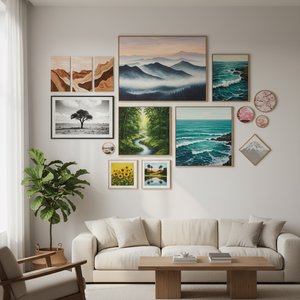
Journey through 10 breathtaking landscape paintings by Monet, Van Gogh & more! Explore iconic artworks, artistic techniques & find inspiration for your home decor. Museum-quality reproductions at BuyPopArt.com. Discover all masterpieces on BuyPopArt.com
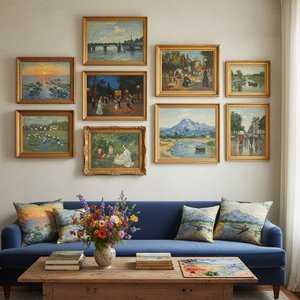
Journey into the heart of Impressionism! Explore 10 masterpieces by Monet, Renoir & Degas that revolutionized landscape art. Discover their stories, techniques & find museum-quality reproductions to elevate your home decor on BuyPopArt.com.

Otkrijte 10 remek-djela impresionizma koja su definirala krajolik! Uronite u svijet Moneta, Renoira i Pissarra. Inspirirajte se umjetnošću i pronađite savršenu reprodukciju za svoj interijer na BuyPopArt.com.
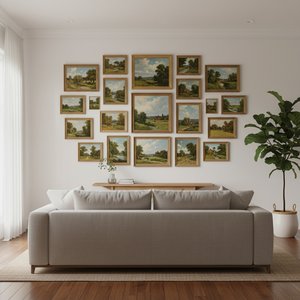
Uronite u svijet John Constabla! Otkrijte 25 remek-djela engleskog romantizma i pejzaža. Ekskluzivne reprodukcije slika, zidna dekoracija & inspiracija za dizajn interijera na BuyPopArt.com. Istražite cijelu kolekciju online!
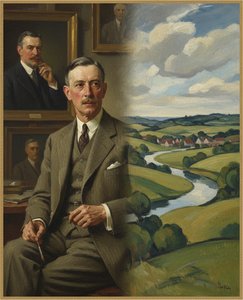
Explore the life & work of Reginald Grenville Eves, a leading British portraitist who transitioned to captivating landscape painting. Discover his legacy and prominent works at BuyPopArt.


Budite u tijeku s najnovijim umjetničkim vijestima, ekskluzivnim ponudama i idejama za dekoraciju.
Recite nam nešto o svom projektu, a naši će stručnjaci za umjetnost pripremiti 3 personalizirana prijedloga umjetnina.
Dopustite nam da odaberemo 3 opcije samo za Vas – Besplatno!


 Pregledaj u stvarnoj veličini
 Pošalji
 Podijeli
 Detalji o umjetničkom djelu

 Preuzmi
 Slični predmeti
 Rentgenska snimka
 Automatska prezentacija
 Prikaži više




































 Opcija stakla dostupna je samo za dimenzije manje od 110 cm


