Giclée tisak muzejske kvalitete ili otisak na platnu uz brzu proizvodnju i fleksibilne opcije završne obrade. ( Prebacite se na ručno oslikano djelo Prebacite na sliku)





























Odaberite jednu od naših unaprijed definiranih veličina koje odgovaraju izvornim proporcijama umjetničkog djela.

Možete unijeti vlastite dimenzije kako biste umjetničko djelo prilagodili specifičnom okviru ili prostoru. Ako odabrana veličina ne odgovara proporcijama izvornog rada, izrezat ćemo dio slike ili je proširiti pomoću ogledalnog efekta ili jednobojne rubne površine. Digitalni prikaz (mockup) bit će vam poslan na odobrenje prije početka proizvodnje.
Imajte na umu da pregled na zaslonu ne odražava stvarno izrezivanje ili proširivanje. Samo će mockup točno prikazati konačnu kompoziciju.
Iako su dostupne prilagođene veličine, preporučujemo odabir dimenzije iz unaprijed definirane liste kako biste očuvali izvorne proporcije.
Dostava širom svijeta () u roku od 2 tjedna umjesto standardnih 4/5 tjedana. (9 Kolovoz)


Chinoiseries
Veličina reprodukcije
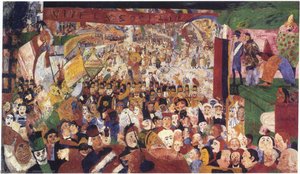
James Ensor's "Chinoiseries," painted in 1880, isn’t merely a depiction of an interior scene; it’s a carefully constructed psychological landscape. This captivating work, residing within the Royal Museums of Fine Arts of Belgium in Brussels, offers a glimpse into the artist’s uniquely unsettling and intensely personal vision. Ensor, born in Ostend to an English father and Belgian mother, possessed a sensibility deeply shaped by his upbringing amidst the vibrant chaos of a seaside resort town – a place saturated with masks, curiosities, and a potent sense of theatricality. This early exposure profoundly influenced his artistic trajectory, leading him away from conventional academic training and toward a fiercely independent style that would forever challenge the established norms of art.
“Chinoiseries” is a masterclass in Expressionist technique, subtly blended with elements of Orientalism. Ensor’s brushstrokes are not delicate or refined; they are bold, assertive, and often deliberately rough, conveying an underlying sense of unease and emotional intensity. The color palette—dominated by deep blues and greens—creates a claustrophobic atmosphere, intensifying the feeling of being trapped within the confines of the room. Notice how he utilizes contrasting colors – the vibrant reds and yellows of the decorative objects against the somber background – to draw the eye and heighten the drama. The composition itself is deliberately unbalanced, with the figures positioned in ways that disrupt any sense of harmony or stability. This deliberate distortion reflects Ensor’s interest in exploring the darker aspects of human experience.
The title itself, “Chinoiseries,” immediately signals Ensor’s fascination with the exotic – specifically, Chinese-inspired motifs. The table laden with porcelain vases, bowls, and cups isn't simply decorative; it represents a deliberate attempt to introduce an element of the ‘other’ into a European setting. This reflects a broader trend in 19th-century art, where artists sought to explore and interpret foreign cultures through visual representation. However, Ensor doesn’t offer a romanticized view of the Orient. Instead, he presents these objects within a context that is unsettling and ambiguous. The two figures present – one standing, the other seated – are deliberately undefined, their faces obscured or averted, suggesting a lack of genuine connection. The cat, perched on the floor, adds another layer of intrigue, embodying mystery and perhaps even a touch of foreboding.
“Chinoiseries” is often compared to the work of Clyfford Still, a pioneer of Abstract Expressionism, due to their shared emphasis on emotional intensity and non-representational forms. However, Ensor's approach is far more rooted in psychological observation than pure abstraction. His paintings are not simply about depicting objects; they’re about conveying feelings – anxiety, isolation, and the unsettling nature of human relationships. The painting’s creation coincided with a period of significant social and artistic change, mirroring the growing anxieties of modern life. It's a testament to Ensor’s ability to capture the complexities of the human condition through a uniquely personal and often disturbing lens. Reproductions of “Chinoiseries” offer a remarkable opportunity to experience this powerful work firsthand, bringing its enigmatic atmosphere into any space.
Explore more captivating works by James Ensor and discover high-quality reproductions at BuyPopArt.com. For deeper insights into the artist’s life and oeuvre, visit his Wikipedia profile: https://en.wikipedia.org/wiki/James_Ensor.
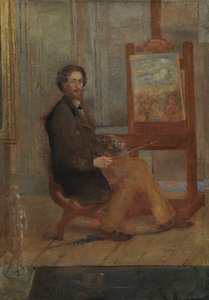
James Sidney Edouard Ensor, Baron Ensor (Ostend, 13 April 1860 – 19 November 1949) was a Belgian painter and printmaker who stands as one of the most influential figures in the development of Expressionism and Surrealism. Born into an English father and Belgian mother—a duality that profoundly shaped his artistic worldview—Ensor defied convention from the outset, rejecting academic formalism for a bold exploration of psychological depth and grotesque imagery.
His formative years were marked by exposure to the vibrant atmosphere of Ostend’s seaside resort town, where his parents operated a souvenir shop brimming with curiosities—a veritable cabinet of wonders that ignited his imagination. From 1876 until 1880 he studied at the Académie Royale des Beaux-Arts in Brussels, alongside fellow students like Fernand Khnopff and Theo Van Rysselberghe, where Jean Portales instilled in him a commitment to artistic innovation.
Ensor’s early paintings reflected a more traditional approach, depicting scenes of everyday life rendered in somber tones. However, he swiftly abandoned these conventions as he embraced the expressive qualities of light, line, and color—a decisive move toward Expressionism. Influenced by Rembrandt, Goya, and Japanese woodcuts, Ensor developed a distinctive iconography characterized by unsettling juxtapositions and symbolic references to death and decay.
His most celebrated works – including *Christ’s Entry into Brussels* (1888-1889), *The Scandalized Masks* (1883) and *Skeletons Fighting over a Hanged Man* (1891) – exemplify his unwavering commitment to confronting uncomfortable truths and exploring the darkest recesses of human psychology. These paintings are not merely aesthetically striking; they serve as powerful critiques of societal norms, religious hypocrisy, and the absurdity of existence.
James Ensor’s artistic legacy extends far beyond his own lifetime. He is recognized as a pivotal catalyst in the transition from Symbolism to Expressionism and Surrealism—a true pioneer who challenged artistic conventions and paved the way for future generations of artists. His fearless exploration of the subconscious, combined with his masterful use of grotesque imagery and symbolic language, continues to inspire artists today.
1860 - 1949 , België

Dive into the visceral world of Surrealist Expressionism. Explore how dream logic meets raw emotion through a visual journey of iconic techniques, post-war history, and bold aesthetics to transform your modern space with high-impact, unforgettable art.


Budite u tijeku s najnovijim umjetničkim vijestima, ekskluzivnim ponudama i idejama za dekoraciju.
Recite nam nešto o svom projektu, a naši će stručnjaci za umjetnost pripremiti 3 personalizirana prijedloga umjetnina.
Dopustite nam da odaberemo 3 opcije samo za Vas – Besplatno!


 Pregledaj u stvarnoj veličini
 Pošalji
 Podijeli
 Detalji o umjetničkom djelu

 Preuzmi
 Slični predmeti
 Rentgenska snimka
 Automatska prezentacija
 Prikaži više







 Opcija stakla dostupna je samo za dimenzije manje od 110 cm