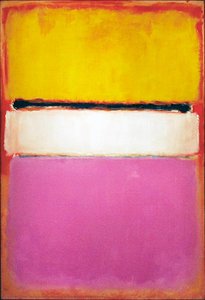
Acrylic On CanvasWallArtMark Rothko
 1948Modern
 108.0 x 111.0 cm
Giclée tisak muzejske kvalitete ili otisak na platnu uz brzu proizvodnju i fleksibilne opcije završne obrade. ( Kupi ručno naslikanu sliku Kupi digitalnu sliku)





























Odaberite jednu od naših unaprijed definiranih veličina koje odgovaraju izvornim proporcijama umjetničkog djela.

Možete unijeti vlastite dimenzije kako biste umjetničko djelo prilagodili specifičnom okviru ili prostoru. Ako odabrana veličina ne odgovara proporcijama izvornog rada, izrezat ćemo dio slike ili je proširiti pomoću ogledalnog efekta ili jednobojne rubne površine. Digitalni prikaz (mockup) bit će vam poslan na odobrenje prije početka proizvodnje.
Imajte na umu da pregled na zaslonu ne odražava stvarno izrezivanje ili proširivanje. Samo će mockup točno prikazati konačnu kompoziciju.
Iako su dostupne prilagođene veličine, preporučujemo odabir dimenzije iz unaprijed definirane liste kako biste očuvali izvorne proporcije.
Dostava širom svijeta () u roku od 2 tjedna umjesto standardnih 4/5 tjedana. (12 Kolovoz)


Untitled
Veličina reprodukcije
Mark Rothko's Untitled from 1948 is not merely a painting; it is an invitation—a silent beckoning into the realm of pure emotional resonance. Measuring 108 x 111 cm, this work exists at a pivotal moment in the artist’s trajectory, marking a decisive shift away from figurative representation and towards the immersive color field paintings that would define his legacy. Born Marcus Yakovlevich Rothkowitz in Latvia in 1903, Rothko carried with him a sense of displacement and searching, experiences deeply interwoven into the very fabric of his artistic vision. His family’s emigration to America in 1913, coupled with his father's intellectual leanings and exposure to Marxist thought, instilled within him a profound sensitivity to the human condition—a sensibility that would ultimately find its most potent expression not through depiction, but through abstraction.
By 1948, Rothko had begun to dismantle the traditional elements of painting. He was moving beyond the mythological and Surrealist explorations of the early 1940s—works born from the anxieties of wartime—and towards an increasingly reductive vocabulary. Untitled exemplifies this transition beautifully. Rather than presenting a defined subject, Rothko offers us layered planes of color – predominantly pinks, oranges, reds, and subtle purples – that seem to float and breathe upon the canvas. These aren’t simply colors *applied* but rather emanations of feeling, carefully modulated in tone and intensity. The technique itself is crucial: thin washes of oil paint are delicately applied, allowing underlying layers to peek through, creating a luminous depth that draws the viewer into the painting's core. The composition isn’t rigidly structured; instead, forms emerge organically, suggesting boundaries without fully defining them. This deliberate ambiguity invites contemplation and allows for a deeply personal interpretation.
To attempt to assign concrete symbolism to Rothko's work is often misleading. He resisted prescriptive interpretations, believing that the emotional impact should be direct and unmediated. However, understanding his biography offers valuable context. The hazy, atmospheric quality of Untitled can be seen as reflecting a sense of longing or memory—perhaps echoing the displacement he felt as an immigrant, or the broader anxieties of a post-war world. The warmth of the pinks and oranges isn’t simply aesthetic; it evokes feelings of comfort and vulnerability, while the darker purples hint at underlying melancholy. The painting's scale is also significant. It’s large enough to envelop the viewer, creating an immersive experience that transcends mere observation. Standing before Untitled is not about *looking* at a picture; it’s about *being* within a space of feeling.
Mark Rothko's contribution to the development of Abstract Expressionism, and specifically Color Field painting, is immeasurable. He, along with artists like Barnett Newman and Clyfford Still, sought to strip away all representational elements, focusing instead on the expressive power of color and form. His work profoundly influenced generations of artists and continues to resonate deeply with audiences today. The Rothko Chapel in Houston stands as a testament to his enduring vision—a sacred space designed to facilitate contemplation and spiritual experience through the immersive power of his paintings. Untitled (1948) serves as an early, compelling example of this ambition, offering a glimpse into the artist’s evolving language and foreshadowing the profound emotional landscapes he would create in the years to come.
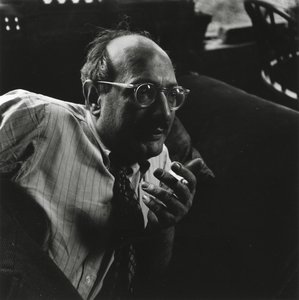
1903 - 1970 , Latvija
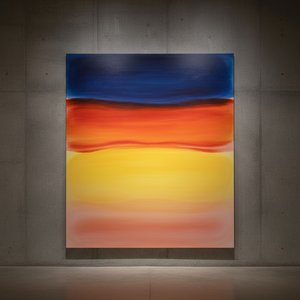
Explore the profound emotional depth of Mark Rothko's abstract expressionism. Discover the history, techniques & lasting impact of this pivotal Color Field painter. Expert insights for collectors and art enthusiasts.

Explore the captivating world of Color Field painting! Discover its origins, key artists like Rothko & Newman, philosophical depth, and lasting influence on modern art. Expert insights for collectors.

Explore the vibrant world of Gene Davis and the Washington Color School. Discover his iconic stripe paintings, innovative techniques, and lasting impact on American abstract art. A deep dive for collectors & enthusiasts.

Explore the profound world of Color Field painting with BuyPopArt. Discover key artists like Rothko & Newman, its philosophical roots, and lasting impact on modern art. Expert insights for collectors.

Explore the captivating world of Paul Jenkins, a pioneer of abstract expressionism & color field painting. Discover his unique ‘Phenomena’ series and investment potential for art collectors. Expert insights at BuyPopArt.


Budite u tijeku s najnovijim umjetničkim vijestima, ekskluzivnim ponudama i idejama za dekoraciju.
Recite nam nešto o svom projektu, a naši će stručnjaci za umjetnost pripremiti 3 personalizirana prijedloga umjetnina.
Dopustite nam da odaberemo 3 opcije samo za Vas – Besplatno!


 Pregledaj u stvarnoj veličini
 Pošalji
 Podijeli
 Detalji o umjetničkom djelu

 Preuzmi
 Slični predmeti
 Rentgenska snimka
 Automatska prezentacija
 Prikaži više







 Opcija stakla dostupna je samo za dimenzije manje od 110 cm