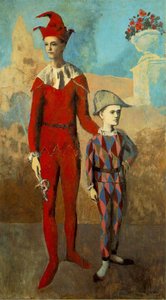
Giclée tisak muzejske kvalitete ili otisak na platnu uz brzu proizvodnju i fleksibilne opcije završne obrade. ( Prebacite se na ručno oslikano djelo Prebacite na sliku)





























Odaberite jednu od naših unaprijed definiranih veličina koje odgovaraju izvornim proporcijama umjetničkog djela.

Možete unijeti vlastite dimenzije kako biste umjetničko djelo prilagodili specifičnom okviru ili prostoru. Ako odabrana veličina ne odgovara proporcijama izvornog rada, izrezat ćemo dio slike ili je proširiti pomoću ogledalnog efekta ili jednobojne rubne površine. Digitalni prikaz (mockup) bit će vam poslan na odobrenje prije početka proizvodnje.
Imajte na umu da pregled na zaslonu ne odražava stvarno izrezivanje ili proširivanje. Samo će mockup točno prikazati konačnu kompoziciju.
Iako su dostupne prilagođene veličine, preporučujemo odabir dimenzije iz unaprijed definirane liste kako biste očuvali izvorne proporcije.
Dostava širom svijeta () u roku od 2 tjedna umjesto standardnih 4/5 tjedana. (11 Kolovoz)


Academic study
Veličina reprodukcije
Pablo Picasso's “Academic Study,” created around 1895, offers a fascinating glimpse into the nascent stages of one of art history’s most revolutionary figures. Far from a grand statement or a fully realized masterpiece, this graphite pencil sketch—a remarkably intimate work considering its humble medium—represents a pivotal moment in Picasso’s artistic development. It's not merely a portrait; it’s an exploration of observation, a hesitant step away from the naturalistic training he initially received and a foreshadowing of the stylistic shifts that would define his career.
The subject is an elderly man, rendered with a careful, almost clinical precision. He sits on a simple stool, posed for the artist – a common practice during this period, reflecting Picasso’s early studies at the School of Fine Arts in Barcelona. The man's face is etched with lines of age and experience, his gaze directed downwards, suggesting contemplation or perhaps weariness. Noticeably absent are any dramatic flourishes; Picasso eschews romanticism or emotional excess, instead focusing on a direct, unadorned representation of his sitter. This deliberate restraint speaks volumes about the influence of his academic training – a period where meticulous drawing and accurate depiction were paramount.
“Academic Study” is firmly rooted in Realism, a style that was still prevalent at the end of the 19th century. Picasso's father, José Ruiz y Blasco, instilled in him a deep respect for traditional artistic techniques and the importance of mastering anatomical accuracy. The sketch’s linear quality—the precise rendering of wrinkles, the careful placement of features—demonstrates this early influence. However, even within the confines of Realism, Picasso begins to subtly deviate from convention. The man's posture is slightly awkward, his face not entirely symmetrical, hinting at a nascent desire to move beyond mere imitation.
The composition itself is deceptively simple. The two chairs in the background—one central, one positioned to the right—provide context without overwhelming the primary subject. A brick lies near the bottom right corner, an unexpected detail that adds a touch of earthy realism and perhaps even a subtle suggestion of melancholy. These seemingly minor elements contribute to the sketch’s overall sense of quiet observation.
While “Academic Study” appears to be a straightforward representation of an elderly man, it's crucial to recognize its significance as a stepping stone towards Picasso’s later innovations. The meticulous attention to detail, the careful rendering of form, and the deliberate restraint—all hallmarks of his early training—begin to yield to a growing experimentation with perspective and spatial relationships. The sketch anticipates the fragmented forms and multiple viewpoints that would characterize Cubism, marking a subtle but significant departure from traditional representation.
It’s important to note that Picasso was actively engaging with contemporary art movements during this period, including the works of Gustave Courbet and Jean-Léon Gérôme, both prominent Realist painters. These artists served as models for his early technique, but Picasso quickly sought to transcend mere imitation, pushing the boundaries of realism in a way that would ultimately revolutionize modern art.
Despite its apparent simplicity, “Academic Study” possesses a remarkable emotional resonance. The man’s contemplative gaze invites us to contemplate his life and experiences. Picasso doesn't offer easy answers or dramatic gestures; instead, he presents a portrait of quiet dignity and perhaps a touch of sadness. This restraint—the deliberate avoidance of sentimentality—is precisely what makes the sketch so compelling.
Reproductions of “Academic Study” provide an accessible way to appreciate Picasso’s early artistic journey and to understand the roots of his groundbreaking innovations. BuyPopArt offers high-quality, hand-painted reproductions that faithfully capture the nuances of this remarkable work, allowing you to bring a piece of art history into your own home or office.
1881 - 1973 , Španjolska

Istražite 25 remek-djela Pabla Picassa – od 'Guernice' do ranih kubističkih radova. Otkrijte priče, tehnike i inspiraciju iza ovih ikoničnih umjetnina. Kupite vrhunske reprodukcije slika na BuyPopArt.com!

Explore 10 defining Academic Realism masterpieces by Bouguereau, Gérôme & Cabanel. Discover the stories behind these iconic paintings and bring timeless art into your home with museum-quality reproductions from BuyPopArt.com. Explore the full collection online!

Explore the profound artistic significance of sketches throughout history. From Renaissance masters to modern innovators like Van Gogh & Guston, discover how these foundational works reveal technique, emotion, and vision. Learn more at BuyPopArt.

Explore the captivating world of Academic Realism! Discover key artists, techniques & its lasting impact on art history. Expert insights & high-quality reproductions at BuyPopArt.

Explore the profound elegance of Academic Realism. Discover how meticulous observation, anatomical precision, and the pursuit of ideal beauty created a timeless legacy of technical mastery and emotional depth in the world's most revered art academies.


Budite u tijeku s najnovijim umjetničkim vijestima, ekskluzivnim ponudama i idejama za dekoraciju.
Recite nam nešto o svom projektu, a naši će stručnjaci za umjetnost pripremiti 3 personalizirana prijedloga umjetnina.
Dopustite nam da odaberemo 3 opcije samo za Vas – Besplatno!


 Pregledaj u stvarnoj veličini
 Pošalji
 Podijeli
 Detalji o umjetničkom djelu

 Preuzmi
 Slični predmeti
 Rentgenska snimka
 Automatska prezentacija
 Prikaži više







 Opcija stakla dostupna je samo za dimenzije manje od 110 cm