Nyomat vásárlása Nyomat vásárlásaKép letöltése Kép letöltése MegosztásMegosztás
RészletekRészletek Kedvencekhez ad Kedvencekhez ad LetöltésLetöltés Hasonló alkotásokHasonló alkotások X-ray felvételX-ray felvétel DiavetítésDiavetítés

Smiles\n\nUrsula Smiles 2

Alex Katz's 'Smiles' captures captivating women with serene expressions against stark backgrounds. Explore the artist’s minimalist style and iconic portraiture, reflecting themes of representation and perception.

"Hungarian Meta Description": "Alex Katz amerikai festő, a pop art és figuratív művészet meghatározó alakja. Bemutatja ikonikus portréit, egyszerű stílusát és innovatív technikáit – különösen a 'cutout' eljárást. A 20. század egyik legjelentősebb festője."

Kézzel készített olajfestmény reprodukció

Kézzel festett olajvastú vászon, az Ön által választott méretben és keretben, művészeink készítik meglévőre.


P118B $10
P118H $10
P118W $10
P438Z $10
P508JH $12
P508YH $12
P805H $10
P805Z $10
P919BZ $10
P919G $10
P919XJ $10
P959ZH $10
P968JZ $12
W106C $8
W218G $10
W218JH $8
W218Y $10
W307PJ $10
W316G $10
W316PJ $8
W316Y $10
W398PJ $8
W4111J $10
W500HY $15
W500JH $15
W692G $12
W849H $8
W940BG $15
W953PJ $8

Standard
custom
CM
INCH

Válasszon előre meghatározott méreteink közül, amelyek megfelelnek a műalkotás eredeti arányainak.

szélesség
magasság

Ön megadhat saját méreteket egy adott kerethez vagy térhez igazításhoz. Ha a kiválasztott méret nem egyezik az eredeti kép arányával, akkor a műalkotást levágjuk, vagy további kézzel festett elemekkel meghosszabbítjuk a festményt. A gyártás megkezdése előtt küldünk Önnek egy digitális előnézetet jóváhagyásra.
Kérjük, vegye figyelembe, hogy a képernyőn megjelenő előnézet nem tükrözi a tényleges vágást vagy kiterjesztést. Csak az előnézet fog pontosan mutatni a végső kompozíciót.
Bár egyedi méretek állnak rendelkezésre, javasoljuk, hogy válasszon egy méretet az előre meghatározott listából az eredeti arányok megőrzése érdekében.

Példák arra, mit lehet módosítani: az arc kicserélése az ügyfél fotójára; háziállat hozzáadása (pl. macska helyett kutya); rejtett üzenet elhelyezése a háttérben; a háttér tájának vagy elemeinek megváltoztatása.
A rendelést követően a BuyPopArt.com csapata e-mailt küld az ügyfélnek az instrukciókért, és biztosít egy előnézeti képet (mockup).

Világszerte elérhető szállítás () 3-4 hét alatt a szokásos 5 hét helyett. (16 július). A minőség nem kérdőjelezhető.

why_choose_icon
Ingyenes globális expressz szállítás
why_choose_icon
Prémium minőségű len vászon
why_choose_icon
Teljes szállítási biztosítás
why_choose_icon
Vámvisszatérítési Garancia
why_choose_icon
Tökéletes színpontosság garancia
why_choose_icon
60 napos visszaküldési lehetőség (csak gyártási hibák esetén)
why_choose_icon
100%-os pénzvisszatérítési garancia
why_choose_icon
Kedvezmény több termény esetén

Összesen

-

reproduction

Smiles\n\nUrsula Smiles 2

Reprodukciós technika

A reprodukció mérete

-

Összesített ár

-

Rövid tények

  • Influences: Kitagawa Utamaro
  • Notable elements: Flat style, bold colors
  • Artistic style: Figurative, minimalist
  • Dimensions: 243.8 x 182.9 cm
  • Subject or theme: Portraits, smiles
  • Artist: Alex Katz
  • Year: 1994

Művészeti kvíz

Minden kérdésre csak egy helyes válasz létezik.

Kérdés 1:
What is the primary subject depicted in Alex Katz’s ‘Smiles’?
Kérdés 2:
According to the description, what is Alex Katz’s stated difference between Pop Art and his own work?
Kérdés 3:
The description mentions that Katz often draws on his closest circle as subjects for his portraits. Who typically comprises this ‘closest circle’?
Kérdés 4:
What is a defining characteristic of Alex Katz’s paintings as described in the text?
Kérdés 5:
The description suggests that Katz’s series ‘Smiles’ is intended to explore what aspect of representation?

A műalkotás leírása

The Enigmatic Beauty of "Smiles"

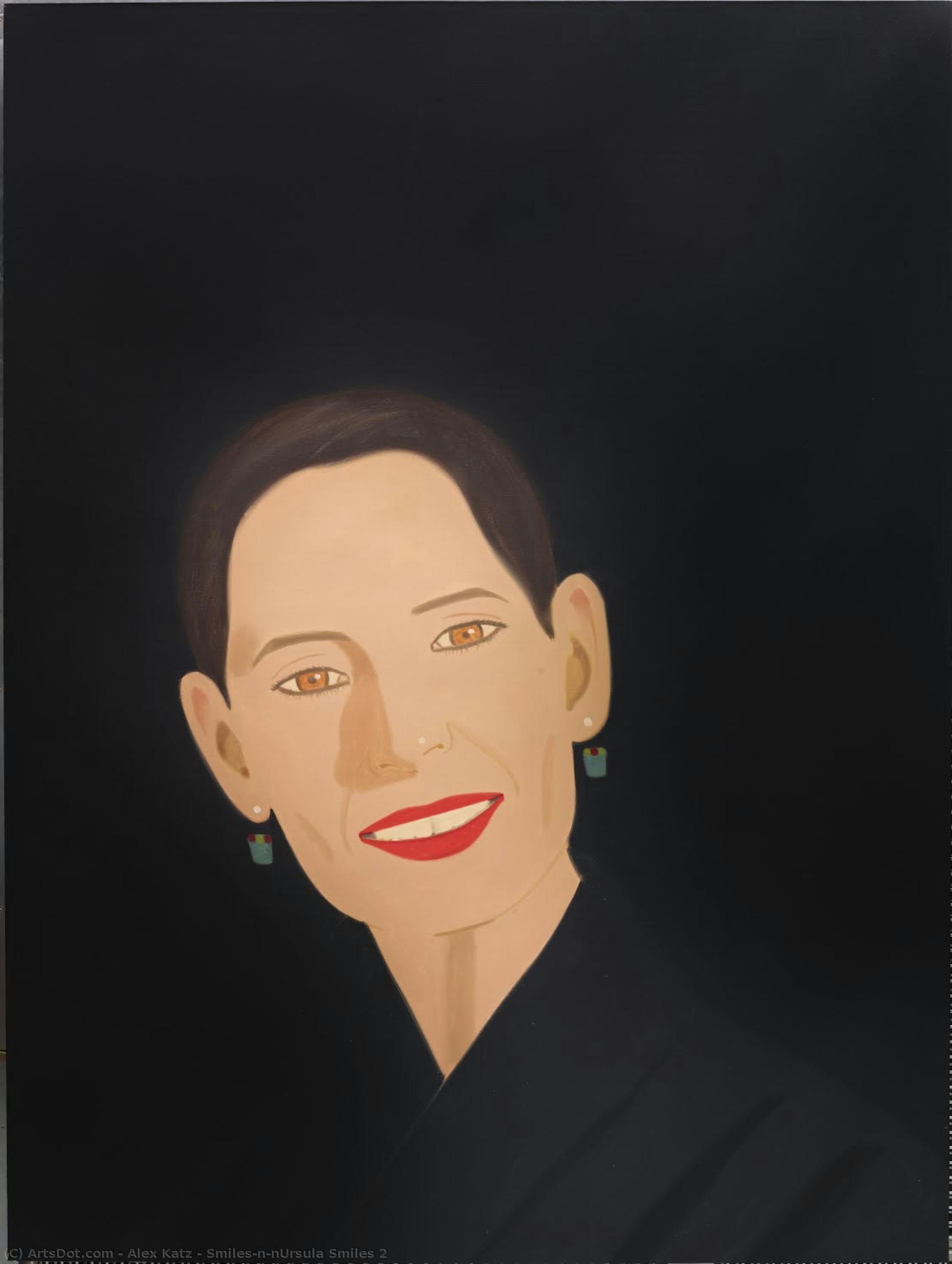
Alex Katz's 1994 painting, “Smiles,” isn’t a celebration of overt joy; it’s an invitation to contemplate the subtle complexities of human connection. Within its deceptively simple composition – a woman bathed in a stark, neutral background – lies a profound exploration of representation and perception. Katz, known for his deliberate detachment and minimalist approach, eschews narrative or emotional excess, instead focusing on the fundamental act of looking and being seen. The painting’s power resides not in dramatic gesture but in the quiet intensity of the subject's gaze, an invitation to engage with a moment suspended in time.

The work emerged during a period when Katz was actively challenging conventional notions of portraiture. He deliberately distanced himself from the traditional role of capturing a sitter’s personality, opting instead to dissect and reconstruct the image itself. This shift reflects a broader artistic trend – a move away from subjective representation towards a more conceptual engagement with the very act of painting. The stark background serves not as mere backdrop but as an active participant in the composition, amplifying the figure's presence and forcing the viewer to confront her directly.

A Masterclass in Flatness and Form

Katz’s technique is characterized by a remarkable economy of line and color. He employs a distinctive style that prioritizes flatness – a deliberate rejection of illusionistic depth. The canvas itself becomes the primary subject, its surface treated as a carefully constructed plane. This approach, reminiscent of early modernist painters like Giorgio Morandi, creates an immediate sense of immediacy and intimacy. The colors are muted yet vibrant, carefully calibrated to create a harmonious balance within the composition. Katz’s use of oil paint is precise and controlled, resulting in a smooth, almost photographic quality.

  • Cutout Technique: Katz frequently utilized cut panels of wood or aluminum, creating works that resembled sculptures while retaining the characteristics of paintings.
  • Monochrome Backgrounds: The consistent use of neutral backgrounds emphasizes the figure and contributes to the painting’s overall sense of stillness.
  • Precise Lines: Katz's meticulous attention to detail is evident in the sharp, clean lines that define the woman's features and the surrounding space.

Symbolism and the Portrait as a Study

The repeated motif of the smile itself holds significant weight within the series. It’s not a boisterous or exuberant expression but rather a subtle, almost melancholic curve of the lips – a suggestion of contentment tempered by an underlying sense of introspection. Katz has described his subjects as “research tools,” using them to explore the fundamental relationship between figure and ground. The women in "Smiles" aren’t simply portraits; they are embodiments of a visual experiment, prompting us to consider how we perceive images and how those perceptions shape our understanding of human experience.

Furthermore, Katz's choice of subjects – often close friends and family members – adds another layer of complexity. These figures represent not just individual identities but also the artist’s own personal relationships and memories. The repetition of this motif across multiple canvases suggests a meditation on time, memory, and the enduring power of human connection.

A Timeless Reflection

“Smiles” is more than just a portrait; it's a carefully constructed visual puzzle that invites repeated viewing and contemplation. Its quiet intensity, combined with Katz’s masterful technique, creates an artwork that resonates deeply with the viewer long after the initial encounter. It stands as a testament to the artist’s ability to distill complex emotions into their most essential form – a subtle smile, a neutral background, and a profound exploration of representation itself. Reproductions capture much of this essence, offering a window into Katz's unique vision for those seeking to bring a touch of contemplative beauty into their own spaces.


A művész életrajza

Early Life and Education

Alex Katz, a name synonymous with cool detachment and vibrant color, was born on July 24th, 1927, in the bustling borough of Brooklyn, New York – specifically in Sheepshead Bay. His early years were shaped by a move to St. Albans, Queens, a shift that instilled within him a keen observation of everyday life and its subtle nuances. From a young age, Katz displayed an undeniable passion for art, a spark ignited by the world around him. This nascent interest led him to pursue formal studies at the Cooper Union in 1946-1949, where he immersed himself in the theories and techniques of Modern art under the guidance of Morris Kantor. However, it was his time at the Skowhegan School of Painting and Sculpture in Maine that truly proved transformative. This experience, spanning from 1949 to 1950, fundamentally altered his approach to painting, emphasizing direct observation and capturing subjects *from life* – a principle he would carry with him throughout his illustrious career. The emphasis on plein air painting at Skowhegan provided Katz with a profound understanding of light, color, and composition, laying the groundwork for his distinctive style.

Artistic Style and Influences

Katz’s artistic signature is instantly recognizable: a captivating blend of simplicity, bold colors, and an almost unnerving emotional distance. His work often falls into two distinct categories – portraiture and landscape – yet these genres rarely exist in isolation; they frequently intertwine to create complex and layered compositions. His style isn't simply minimalist; it’s carefully constructed, a deliberate choice of elements designed to evoke a specific mood or feeling. It is believed that Katz was profoundly influenced by the Japanese woodblock artist Kitagawa Utamaro, whose meticulous attention to detail and ability to capture human emotion resonated deeply with the young painter. Interestingly, comparisons have also been drawn between Katz’s work and that of contemporary artists like Andy Warhol and Keith Haring – a testament to his innovative approach and willingness to challenge conventional artistic boundaries. A key element of Katz's technique is his experimentation with "cutouts" – meticulously painting on panels of wood or aluminum before carefully removing sections, creating an almost architectural quality within the artwork. Furthermore, he developed a signature method of directly applying paint to shaped aluminum sheets, resulting in freestanding portraits that exist as tangible objects within the space around them. Perhaps most notably, Katz is recognized for his use of monochrome backgrounds – a bold departure from traditional portraiture and a deliberate move towards Pop Art aesthetics, separating him from many of his gestural figure painter contemporaries.

Notable Works and Development

Katz’s artistic journey began modestly in the late 1950s with small collages featuring figures set within landscapes. These early works served as a crucial stepping stone, allowing him to refine his compositional skills and explore the relationship between human form and its environment. As the decade progressed, portraiture became increasingly central to his work, with paintings of friends and his wife, Ada, forming a recurring theme – a testament to their enduring connection and mutual influence. A pivotal moment in Katz’s career arrived in the 1960s when he began experimenting with dramatically cropped faces, drawing inspiration from film and advertising techniques. This stylistic shift resulted in iconic images like "Alex Katz: Thursday Night" and “Ada in Black Sweater,” instantly recognizable for their stark simplicity and arresting composition. Simultaneously, Katz embarked on a prolific career in printmaking, producing numerous editions of lithographs, etchings, silkscreens, woodcuts, and linoleum cuts – expanding his artistic vocabulary and reaching new audiences. In the late 1980s and 1990s, Katz turned his attention to landscapes, creating “environmental” paintings that sought to immerse the viewer in a sense of place. These works moved away from traditional landscape painting, emphasizing looser edges and painterly brushstrokes, conveying an almost tactile quality. More recently, Katz has explored new avenues, including night pictures – a departure from his sunlit landscapes – and floral paintings bursting with blossoms, demonstrating a continued willingness to push the boundaries of his artistic practice.

Achievements and Historical Significance

Alex Katz’s impact on contemporary art is undeniable. He stands as one of the most important painters of our time, recognized globally for his distinctive style and unwavering commitment to his vision. His work has been exhibited in over 200 solo shows and nearly 500 group exhibitions worldwide, solidifying his position as a leading figure in the art world. Katz’s influence extends beyond individual artworks; he is credited with pioneering techniques that continue to inspire artists today. He was awarded an honorary doctorate from Colby College in 1984, recognizing his contributions to the arts and his dedication to artistic excellence. Throughout his career, Katz has maintained a close relationship with institutions such as the Whitney Museum of American Art, Tate Gallery, Guggenheim Museum Bilbao, and numerous museums across Europe and Asia. His work is held in prestigious private collections, further cementing his legacy as an artist of enduring significance. Beyond his individual achievements, Katz’s artistic journey reflects a broader cultural shift – a move away from traditional representational art towards a more direct and immediate engagement with the world around us. He remains a vital voice in contemporary art, continually challenging conventions and pushing the boundaries of what is possible.
Alex Katz

Alex Katz

1927 - , Egyesült Államok

Rövid tények

  • Artistic Movement Or Style: Pop Art, figuratív művészet
  • Artists Or Movements Influenced By This Artist:
    • Andy Warhol
    • Keith Haring
  • Artists Who Influenced This Artist: ['Kitagawa Utamaro']
  • Date Of Birth: 1927. 07. 24.
  • Full Name: Alex Katz
  • Nationality: Amerikai Egyesült Államok
  • Notable Artworks:
    • Thursday Night
    • Ada in Black Sweater
  • Place Of Birth (City And Country): Brooklyn, USA