Adja értékesésre műveiét
x
ElőnézetElőnézet AR előnézetAR előnézet Áttérés a kézzel festett másolatra Áttérés a kézzel festett másolatraKépváltás Képváltás MegosztásMegosztás
RészletekRészletek Kedvencekhez ad Kedvencekhez ad LetöltésLetöltés Hasonló alkotásokHasonló alkotások X-ray felvételX-ray felvétel DiavetítésDiavetítés

The dancers

Experience David Hockney’s ‘The Dancers’! Vibrant colors & joyful figures in a dynamic circle scene. A captivating pop art reproduction – perfect for art lovers.

David Hockney ikonikus alkotásai és egyedi művészi stílusa révén ismertetőjele az európai művészet története során. Együtt ismerjük meg a brit művészet nagy alakját! Érdemes felfedezni a Pop Art jellegű színes és dinamikus költészete valamint számos jelentős tárlatában szerepelő alkotásait.

Giclée / Műnyomat

Múzeumi minőségű giclée vagy vászonnyomat, gyors gyártással és rugalmas finomítási lehetőségekkel. (Áttérés a kézzel festett másolatra Áttérés a kézzel festett másolatraKépváltás Képváltás)

P118B $10
P118H $10
P118W $10
P438Z $10
P508JH $12
P508YH $12
P805H $10
P805Z $10
P919BZ $10
P919G $10
P919XJ $10
P959ZH $10
P968JZ $12
W106C $8
W218G $10
W218JH $8
W218Y $10
W307PJ $10
W316G $10
W316PJ $8
W316Y $10
W398PJ $8
W4111J $10
W500HY $15
W500JH $15
W692G $12
W849H $8
W940BG $15
W953PJ $8

Standard
custom
CM
INCH

Válasszon előre meghatározott méreteink közül, amelyek megfelelnek a műalkotás eredeti arányainak.

szélesség
magasság

Megadhat saját méreteket is egy konkrét kerethez vagy helyszínhez igazítva. Amennyiben a kiválasztott méret nem egyezik az eredeti kép arányokkal, a műalkotást le fogjuk vágni, vagy kiegészítjük a képet tükrözött vagy egyszínű szélekkel. A gyártás megkezdése előtt egy digitális tervezetet küldünk jóváhagyásra.
Kérjük, vegye figyelembe, hogy a képernyőn látható előnézet nem tükrözi a tényleges levágást vagy kiegészítést. Csak a tervezet mutatja pontosan a végső kompozíciót.
Bár az egyedi méretek is elérhetőek, az eredeti arányok megőrzése érdekében azt javasoljuk, hogy válasszon a előre meghatározott listából származó méretet.

Világszerte történő kiszállítás területére 2 hét alatt, a szokásos 4-5 hét helyett. 30 július

why_choose_icon
Ingyenes globális expressz szállítás
why_choose_icon
Prémium minőségű len vászon
why_choose_icon
Teljes szállítási biztosítás
why_choose_icon
Vámvisszatérítési Garancia
why_choose_icon
Tökéletes színpontosság garancia
why_choose_icon
60 napos visszaküldési lehetőség (csak gyártási hibák esetén)
why_choose_icon
100%-os pénzvisszatérítési garancia
why_choose_icon
Kedvezmény több termény esetén

Összesen

$ 75

reproduction

The dancers

Giclée / Műnyomat

A reprodukció mérete

-

Összesített ár

$ 75

Rövid tények

  • Location: Private Collection
  • Title: The Dancers
  • Dimensions: 20 x 24 inches (51 x 61 cm)
  • Influences:
    • Matisse
    • Cubism
  • Medium: Acrylic on Canvas
  • Year: 1960

Művészeti kvíz

Minden kérdésre csak egy helyes válasz létezik.

Kérdés 1:
What is the primary subject matter of ‘The Dancers’?
Kérdés 2:
Which of the following best describes the color palette used in ‘The Dancers’?
Kérdés 3:
Who is the artist behind ‘The Dancers’?
Kérdés 4:
What artistic movement does 'The Dancers' most closely align with?
Kérdés 5:
Based on the description, what is the overall atmosphere of the painting?

Termékinformációk

A Symphony of Light and Movement – "The Dancers"

David Hockney’s “The Dancers” isn't merely a depiction of movement; it’s an embodiment of joy, energy, and the very essence of dance itself. The painting captures a group of figures engaged in a circular dance, their forms blurred with a deliberate sense of fluidity – a hallmark of Hockney’s approach to portraying dynamic subjects. The vibrant palette, dominated by reds, blues, greens, and oranges, explodes across the canvas, creating an immediate visual impact that draws the viewer into the scene's lively atmosphere.

Pop Art Roots & Matisse’s Influence

Created in 2014, “The Dancers” firmly establishes itself within the Pop Art movement, echoing the bold colors and simplified forms championed by artists like Andy Warhol. However, its genesis is deeply rooted in the influence of Henri Matisse's celebrated "Dance" (1908). Hockney consciously references this iconic work – a pivotal moment in modern art that liberated painting from representational constraints – through his own exploration of rhythm, color, and the expressive potential of abstract forms. The composition’s circularity mirrors Matisse’s masterpiece, creating an immediate connection for the viewer.

Technique & Composition: A Hockney Signature

Hockney's technique is instantly recognizable. He employs a loose, almost sketch-like approach to his brushwork, prioritizing capturing the *feeling* of movement over meticulous detail. The figures are rendered with broad strokes and overlapping planes, creating a sense of depth and layering that contributes significantly to the painting’s dynamism. Notice how Hockney uses color not just for representation but as an active element – each hue contributing to the overall rhythm and energy of the composition. The mountainous backdrop, painted in muted tones, provides a grounding contrast to the vibrant foreground, further emphasizing the dancers' movement.

Symbolism & Emotional Resonance

"The Dancers" transcends a simple depiction of a dance party; it’s an exploration of human connection and shared experience. The circular form itself symbolizes unity, harmony, and the cyclical nature of life. The bright colors evoke feelings of joy, exuberance, and liberation – emotions intrinsically linked to the act of dancing. Hockney masterfully translates these abstract concepts into a visually compelling narrative that resonates with viewers on an emotional level, inviting them to participate in the painting’s vibrant celebration of movement and human spirit.

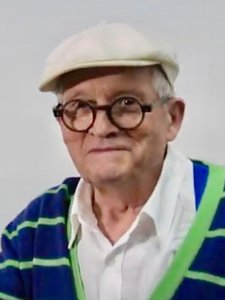
A művész életrajza

A Life Painted in Light: The World of David Hockney

David Hockney, born July 9, 1937, in Bradford, England, is more than simply a painter; he’s a visual polymath whose career has spanned painting, drawing, printmaking, stage design, and photography. His story begins amidst the grit and determination of Bradford, a landscape that instilled within him a keen observational eye, even as his father, Kenneth Hockney, fostered a spirit of independent thought through conscientious objection during World War II. This early environment shaped a young artist who would consistently challenge conventions and forge his own path. Formal education at Wellington Primary School and Bradford Grammar School laid the foundation for a career that would redefine British art in the 20th and 21st centuries, culminating in studies at Bradford College of Art and later, the prestigious Royal College of Art in London. It was during these formative years that Hockney began to articulate a unique artistic voice, one that blended Pop sensibilities with a distinctly British perspective.

The Rise of a Pop Icon and Beyond

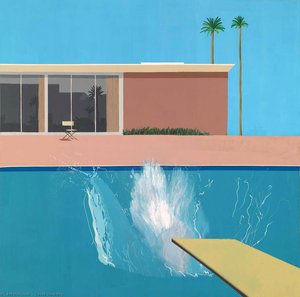
The 1960s witnessed Hockney’s ascent as a pivotal figure within the burgeoning Pop Art movement. However, unlike some contemporaries who wholeheartedly embraced American commercial culture, Hockney brought a uniquely British sensibility to the genre. His work exploded with vibrant color and bold lines, depicting scenes that were both familiar and subtly subversive. A Bigger Splash (1966), perhaps his most iconic early piece, encapsulates this perfectly – a seemingly simple depiction of a swimming pool becomes a meditation on Californian leisure, artifice, and the very act of seeing. This wasn’t merely representation; it was an exploration of how we perceive reality. Critics noted Hockney's masterful use of color theory, mirroring the influence of Bauhaus principles. His double portraits, like American Collectors (Fred and Marcia Weisman), demonstrate his remarkable ability to capture not just likeness but also the essence of personality and relationship—a technique that foreshadowed later explorations into psychological portraiture. Hockney’s stylistic choices reflected a deliberate rejection of traditional academic conventions, aligning him with the rebellious spirit of the era.

Experimentation, Innovation, and The Rescue Of Painting

Hockney's artistic curiosity has never been confined to a single medium. Throughout his career, he relentlessly experimented with new technologies and approaches. From his early embrace of lithography and etching to his later explorations of photography – particularly his use of Polaroid composites in the 1980s – Hockney consistently pushed the boundaries of what art could be. He famously declared painting wasn’t dead but needed “rescuing” from its own conventions, leading him to develop innovative techniques like perspective distortions and fragmented viewpoints. This desire to revitalize painting led to ambitious projects such as Pearblossom Hwy., 11–18th April 1986, a complex photomontage that challenged traditional notions of space and representation—a bold statement against the prevailing artistic trends of his time. His stage designs for opera, including sets for Mozart's The Magic Flute and Stravinsky’s The Rake’s Progress, further demonstrate his versatility and ability to translate his visual language into a different artistic realm. Hockney’s meticulous attention to detail—evident in both his paintings and stage productions—established him as one of the foremost artists of his generation.

Recognition, Legacy, And Enduring Influence

David Hockney’s contributions to the art world have been widely recognized throughout his illustrious career. He was appointed Order of the Companion of Honour (CH) in 2018, a testament to his profound impact on British culture—a prestigious honor bestowed upon him for his lifetime achievements. Prior to that, he was elected a Fellow of the Royal Society (FRS) in 2003 and received the Laureate of the Praemium Imperiale for Painting in 2000—a globally acclaimed award recognizing his exceptional artistic talent. His works are held in major museum collections worldwide, ensuring his art continues to inspire new generations. Hockney’s influence extends beyond the visual arts; he has become a cultural icon, celebrated for his wit, intelligence, and unwavering commitment to artistic exploration—a figure who embodies the spirit of innovation and creative freedom. He remains an active force in the art world, continually challenging expectations and inspiring artists across disciplines.
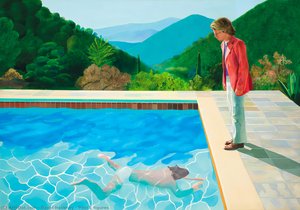
  • Notable Paintings: Including *A Bigger Splash*, *Portrait of an Artist (Pool with Two Figures)*, and *We Two Boys Together Clinging*.
  • Techniques: Hockney’s pioneering use of acrylic paint and Polaroid photography revolutionized artistic practice.
  • Stage Design Achievements: His designs for opera productions solidified his reputation as a visionary artist who seamlessly blended visual artistry with theatrical storytelling.
David Hockney

David Hockney

1937 - , Egyesült Királyság

Rövid tények

  • Artistic Movement Or Style: Pop Art
  • Artists Or Movements Influenced By This Artist: ['Pauline Boty']
  • Artists Who Influenced This Artist: ['Francis Bacon']
  • Date Of Birth: July 9, 1937
  • Full Name: David Hockney
  • Nationality: British
  • Notable Artworks:
    • A Bigger Splash
    • Portrait of an Artist
    • We Two Boys Together
  • Place Of Birth: Bradford, UK
Fedezze fel a műalkotásokat témák, stílusok és jellemzők szerint csoportosítva.