Kézzel festett olajvastú vászon, az Ön által választott méretben és keretben, művészeink készítik meglévőre. ( Switch to Print Switch to Image)
Válasszon előre meghatározott méreteink közül, amelyek megfelelnek a műalkotás eredeti arányainak.

Ön megadhat saját méreteket egy adott kerethez vagy térhez igazításhoz. Ha a kiválasztott méret nem egyezik az eredeti kép arányával, akkor a műalkotást levágjuk, vagy további kézzel festett elemekkel meghosszabbítjuk a festményt. A gyártás megkezdése előtt küldünk Önnek egy digitális előnézetet jóváhagyásra.
Kérjük, vegye figyelembe, hogy a képernyőn megjelenő előnézet nem tükrözi a tényleges vágást vagy kiterjesztést. Csak az előnézet fog pontosan mutatni a végső kompozíciót.
Bár egyedi méretek állnak rendelkezésre, javasoljuk, hogy válasszon egy méretet az előre meghatározott listából az eredeti arányok megőrzése érdekében.
Világszerte elérhető szállítás () 3-4 hét alatt a szokásos 5 hét helyett. (29 július). A minőség nem kérdőjelezhető.


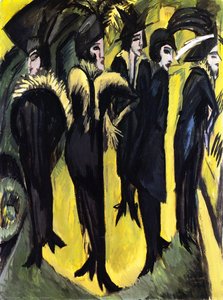
Five cocottes
A reprodukció mérete
Ernst Ludwig Kirchner’s “Five Cocottes” is not merely a depiction of five figures; it's a visceral plunge into the turbulent heart of German Expressionism. Executed around 1908, this woodcut print, born from Kirchner’s profound engagement with the anxieties of his era, immediately confronts the viewer with an unsettling dynamism. The composition, deliberately chaotic and crowded, eschews traditional notions of perspective and spatial harmony, opting instead for a flattened, almost claustrophobic space where the figures – likely women – are locked in a silent, palpable struggle. Kirchner’s masterful manipulation of line is central to this effect; thick, jagged lines dominate, not to delineate form with precision, but to convey raw emotion and an underlying sense of unease. The stark contrast between black and white amplifies the drama, creating areas of intense shadow that seem to press in on the figures, mirroring perhaps a psychological state of confinement or distress.
Kirchner's use of line is far more than a stylistic choice; it’s the very language through which he communicates his subject’s emotional state. The angular, almost violent lines that define the figures’ bodies suggest a fractured sense of self, reflecting the anxieties of a society undergoing rapid industrialization and social upheaval. The geometric shapes – triangles, rectangles, sharp angles – are not decorative elements but rather structural components contributing to the overall feeling of agitation. They reinforce the impression of instability and disrupt any attempt at harmonious composition. The deliberate lack of smooth curves or flowing lines further intensifies this sense of unease, mirroring a world perceived as fragmented and chaotic.
Created during a period of significant social and political change in Germany, “Five Cocottes” reflects the anxieties of a nation grappling with modernity. Kirchner, like many artists of his time, was deeply concerned about the dehumanizing effects of industrialization and the erosion of traditional values. His work is often seen as a response to these concerns, offering a bleak yet profoundly honest portrayal of the psychological toll of modern life. Born in Aschaffenburg in 1880, Kirchner’s early life was marked by instability and displacement, experiences that undoubtedly shaped his artistic vision. He initially studied architecture but quickly gravitated towards painting, finding in it a means to express his innermost thoughts and feelings. His association with other Expressionist artists like Fritz Bleyl further solidified his commitment to this radical approach to artmaking.
“Five Cocottes” is more than just an artwork; it’s a powerful statement about the human condition. Its raw emotional intensity and innovative technique make it a compelling addition to any collection, offering a unique glimpse into the mind of one of Germany's most important Expressionist artists. A hand-painted reproduction allows you to bring this evocative piece into your own space, transforming your interior with its haunting beauty and profound psychological depth. Consider this artwork not just as decoration, but as an investment in artistic legacy – a tangible connection to a pivotal moment in the history of modern art.

1880 - 1938 , Németország

Fedezze fel a monokróm belsőépítészet rejtélyeit! Szakértői útmutató a fekete, fehér és szürke harmonikus egységéhez. Inspiráció hotelprojektekhez és elegáns otthonokhoz. Tippek a textúráktól a világításig!

Fedezze fel Kazimir Malevich 25 legikonikusabb művészeti alkotását! Ismerje meg a szuprematizmus forradalmi világát, a Fekete Négyzet történetét és inspirálódjon modern lakberendezési ötletekkel. Múzeumi minőségű reprodukciók a BuyPopArt.com-on!

Explore the powerful world of Ernst Ludwig Kirchner and German Expressionism. Discover his iconic paintings, Die Brücke group, and the movement's exploration of urban anxiety & modern identity. Expert analysis for collectors & enthusiasts.
Fedezze fel a 10 leghíresebb festményt, melyeket a 'Mars Black' mély árnyalatai dominálnak! Rembrandt, Goya és Picasso remekművei – történetük, technikájuk és időtlenségük. Múzeumi minőségű művészeti reprodukciók otthonába. Fedezze fel a teljes gyűjteményt a BuyPopArt.com-on!

Fedezze fel a Német Expresszionizmus 10 legikonikusabb műalkotását! Kirchner, Munch és más német mesterek érzelmi festményeinek történetét bemutatva. Vászonképek, faliképek otthonába – BuyPopArt.com kínálata.


Maradjon naprakész a legfrissebb művészeti hírekkel, exkluzív ajánlatokkal és dekorációs ötletekkel.
Írja le nekünk projektjét, és művészeti szakértőink 3 személyre szabott műalkotási javaslatot készítenek Önnek.
Hagyjuk, hogy mi válogassunk ki Önnek 3 legjobb opciót – Ingyenesen!


 Megosztás
 Megosztás
 Részletek

 Letöltés
 Hasonló alkotások
 Diavetítés

 Tovább olvasom




































 Az üvegkeretes opció csak 110 cm alatti méretben érhető el