Kézzel festett olajvastú vászon, az Ön által választott méretben és keretben, művészeink készítik meglévőre. ( Nyomat rendelése Kép letöltése)





























Válasszon előre meghatározott méreteink közül, amelyek megfelelnek a műalkotás eredeti arányainak.

Ön megadhat saját méreteket egy adott kerethez vagy térhez igazításhoz. Ha a kiválasztott méret nem egyezik az eredeti kép arányával, akkor a műalkotást levágjuk, vagy további kézzel festett elemekkel meghosszabbítjuk a festményt. A gyártás megkezdése előtt küldünk Önnek egy digitális előnézetet jóváhagyásra.
Kérjük, vegye figyelembe, hogy a képernyőn megjelenő előnézet nem tükrözi a tényleges vágást vagy kiterjesztést. Csak az előnézet fog pontosan mutatni a végső kompozíciót.
Bár egyedi méretek állnak rendelkezésre, javasoljuk, hogy válasszon egy méretet az előre meghatározott listából az eredeti arányok megőrzése érdekében.
Világszerte elérhető szállítás () 3-4 hét alatt a szokásos 5 hét helyett. (14 augusztus). A minőség nem kérdőjelezhető.


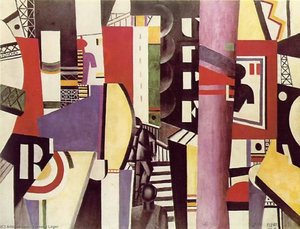
Composition (detail)
Reprodukció mérete
To stand before Fernand Léger’s Composition (detail) is to step directly into the vibrant, pulsating heart of the machine age. This work, dating from 1934, is not merely an arrangement of shapes; it is a manifesto rendered in pigment and form. The immediate impact is one of structured energy. Léger masterfully employs bold, primary planes—a dominant red field serving as the backdrop against which stark black and white geometric forms collide and coexist. These are not soft suggestions; they are assertive declarations of structure, drawing the viewer into an intellectual dialogue about order versus chaos.
Léger’s artistic journey was inextricably linked to the burgeoning industrial revolution. For him, modernity was not something to be escaped through pure abstraction, but rather something to be embraced, dissected, and celebrated in its purest formal elements. In this piece, the recognizable shapes—the imposing triangle juxtaposed with the solid square—feel almost architectural, as if they have been cut from actual blueprints or constructed from industrial materials like cardboard or sheet metal. This fascination with mechanical rhythm and geometric purity places the work firmly within the currents of Cubism and early Constructivism, yet it retains a distinctly vibrant, almost joyous physicality that elevates it beyond mere diagram.
The technique employed here is deceptively simple, which contributes immensely to its power. The use of flat planes against each other creates an illusion of three-dimensionality, making the shapes appear as if they are popping off the canvas surface. This interplay between flatness and perceived depth is a hallmark of Léger’s genius. The rich, saturated red background acts like a powerful visual amplifier, forcing the viewer's eye to trace the crisp, decisive edges where black meets white. It is a controlled explosion of color and line that demands close contemplation.
What does this geometric interplay symbolize? One might interpret the triangle as representing dynamism or ascent—a point of energetic focus—while the square suggests stability, foundation, and the solid reality of man-made structures. Together, they speak to the human condition navigating a rapidly changing world: the tension between rigid order and dynamic potential. For the collector or designer, this piece offers more than mere decoration; it offers an intellectual anchor for a space. It injects a sophisticated, modernist pulse into any room, suggesting intelligence, forward-thinking design, and an appreciation for art that is both beautiful and profoundly thoughtful.

1881 - 1955 , Franciaország

Discover the power of Neo-Abstract art. Explore how bold geometric forms and high-impact visual energy are redefining modern design. Learn to curate sophisticated, high-energy spaces with the latest trends in contemporary abstraction and structural color.

Discover the high-impact world of Geometric Abstraction. From Cubist roots to modern urban trends, explore how bold shapes and colors redefine contemporary design. Elevate your space with expert art insights and custom-made abstract masterpieces.

Master the high-impact world of contemporary abstraction. Discover how bold colors, textures, and modern movements like Abstract Expressionism can transform your space with premium, high-energy art curated for the design-conscious professional.


Maradjon naprakész a legfrissebb művészeti hírekkel, exkluzív ajánlatokkal és dekorációs ötletekkel.
Írja le nekünk projektjét, és művészeti szakértőink 3 személyre szabott műalkotási javaslatot készítenek Önnek.
Hagyjuk, hogy mi válogassunk ki Önnek 3 legjobb opciót – Ingyenesen!


 Megtekintés
 Küldés
 Megosztás
 Részletek

 Letöltés
 Hasonló darabok
 X-ray felvétel
 Diavetítés

 Összes részlet megjelenítése







 Az üvegkeretes opció csak 110 cm alatti méretben érhető el