EncausticWallArtPop Art
 1982Contemporary
 171.0 x 244.0 cm
Múzeumi minőségű giclée vagy vászonnyomat, gyors gyártással és rugalmas finomítási lehetőségekkel. ( Kézzel festett másolat rendelése Kép letöltése)





























Válasszon előre meghatározott méreteink közül, amelyek megfelelnek a műalkotás eredeti arányainak.

Megadhat saját méreteket is egy konkrét kerethez vagy helyszínhez igazítva. Amennyiben a kiválasztott méret nem egyezik az eredeti kép arányokkal, a műalkotást le fogjuk vágni, vagy kiegészítjük a képet tükrözött vagy egyszínű szélekkel. A gyártás megkezdése előtt egy digitális tervezetet küldünk jóváhagyásra.
Kérjük, vegye figyelembe, hogy a képernyőn látható előnézet nem tükrözi a tényleges levágást vagy kiegészítést. Csak a tervezet mutatja pontosan a végső kompozíciót.
Bár az egyedi méretek is elérhetőek, az eredeti arányok megőrzése érdekében azt javasoljuk, hogy válasszon a előre meghatározott listából származó méretet.
Világszerte történő kiszállítás területére mindössze 2 hét alatt, a szokásos 4-5 hét helyett. (19 augusztus)


Perilous Night
Reprodukció mérete
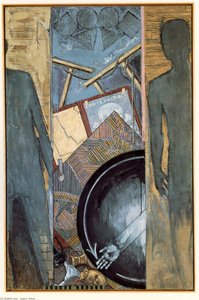
In the vast landscape of American postmodernism, few works command attention with such visceral complexity as Jasper Johns’ Perilous Night. Created in 1982, this monumental piece serves as a profound meditation on the act of seeing and the layers of meaning embedded within our visual culture. At first glance, the viewer is met with a striking vertical division, a structural duality that splits the canvas into two distinct realms. To the left, an abstract expanse of steel and charcoal grays swirls with streaks of white and amethyst purple, evoking a turbulent, nocturnal sky. This side of the composition feels atmospheric and boundless, yet it is anchored by a heavy, textured presence that suggests the weight of memory itself.
The right side of the painting introduces a more structured, almost architectural element, where the surface mimics the grain of weathered wood in shades of nickel and slate gray. Here, the boundaries between reality and illusion begin to blur. A stylized white cloth, rendered with such precision it appears to hang from a physical nail, invites the eye to question what is truly tactile and what is merely paint. This interplay of trompe l'oeil—the trick of the eye—is a hallmark of Johns’ mastery, transforming a flat canvas into a multidimensional stage where objects and abstractions coexist in a delicate, precarious balance.
Perhaps the most arresting feature of Perilous Night is the trio of three-dimensional casts of human hands and forearms that descend from the top edge. These sculptural elements are not merely attached; they are integrated into the very soul of the work. Painted in a camouflage pattern of peach and irregular gray patches, these limbs possess an eerie, lifelike quality. The artist has infused them with vibrant primary colors—cherry red, canary yellow, and royal blue—which drip down the arms like melting wax or fresh pigment, splattering onto the faux wood panel below. This technique creates a sense of kinetic energy, as if the painting is still in the process of being created before our very eyes.
The symbolism of these hands is deeply evocative, suggesting themes of touch, agency, and the vulnerability of the human condition. They hang suspended, caught in a moment of stillness that feels both heavy and fleeting. Behind these limbs, layers of printed imagery—including fragments of sheet music and colorful bands of pine green and pumpkin orange—create a dense thicket of information. This layering reflects Johns’ lifelong fascination with the concept of "decoding," where the viewer must peel back the visual strata to find meaning, much like deciphering a cryptic message or an ancient manuscript.
For the discerning collector or interior designer, Perilous Night offers more than just aesthetic grandeur; it provides a profound emotional resonance. The title itself, inspired by a pivotal musical composition by John Cage, hints at the underlying tension and the "peril" found in the unknown. The artwork evokes a sense of fragmentation and unease, yet there is an undeniable beauty in its chaotic harmony. It is a piece that demands engagement, rewarding those who linger to observe the subtle interplay of encaustic wax, ink, and oil.
Integrating a high-quality reproduction of this masterpiece into a curated space can transform an environment, providing a sophisticated focal point that sparks conversation and intellectual curiosity. Whether placed in a contemporary gallery setting or a refined private study, the work’s complex textures and bold color palette serve as a testament to the enduring power of Jasper Johns' vision. It is an invitation to step into a world where the boundaries between the seen and the unseen are perpetually redefined.


1930 - , Egyesült Államok
Fedezze fel John Singer Sargent 25 legikonikusabb művészeti alkotását! Portrék, impresszionista stílus és a fény játéka – inspirálódjon Sargent életrajzából és vászonképeiből. Művészeti reprodukciók otthonába a BuyPopArt-on!
Fedezze fel John Constable 25 legszebb művészeti alkotását! Ismerje meg a romantika ikonikus tájképeit, Dedham Vale szépségét és a természet lenyűgöző ábrázolásait. Vászonkép reprodukcióinkkal eleganciát csempészhet otthonába – BuyPopArt.com

Immerse yourself in the sacred artistry of Saint John. Explore profound Renaissance and Baroque masterpieces through an expert lens, uncovering divine symbolism and light. Discover the enduring legacy of devotion with our curated insights into museum-quality, hand-painted reproductions.

Explore the profound emotive power of hands in art history. From Dürer’s anatomical precision to Van Gogh’s expressive gestures, discover how masterworks capture human touch and connection through timeless oil paintings and fine art studies.

Master the nuances of three-dimensional art with our expert guide. Explore sculptural history, from Phidias to Neoclassicism, and learn to evaluate materiality, form, and technique like a true connoisseur. Elevate your collection with profound insights into the world of sculpture.


Maradjon naprakész a legfrissebb művészeti hírekkel, exkluzív ajánlatokkal és dekorációs ötletekkel.
Írja le nekünk projektjét, és művészeti szakértőink 3 személyre szabott műalkotási javaslatot készítenek Önnek.
Hagyjuk, hogy mi válogassunk ki Önnek 3 legjobb opciót – Ingyenesen!


 Megtekintés
 Küldés
 Megosztás
 Részletek

 Letöltés
 Hasonló darabok
 X-ray felvétel
 Diavetítés
 Összes részlet megjelenítése







 Az üvegkeretes opció csak 110 cm alatti méretben érhető el